

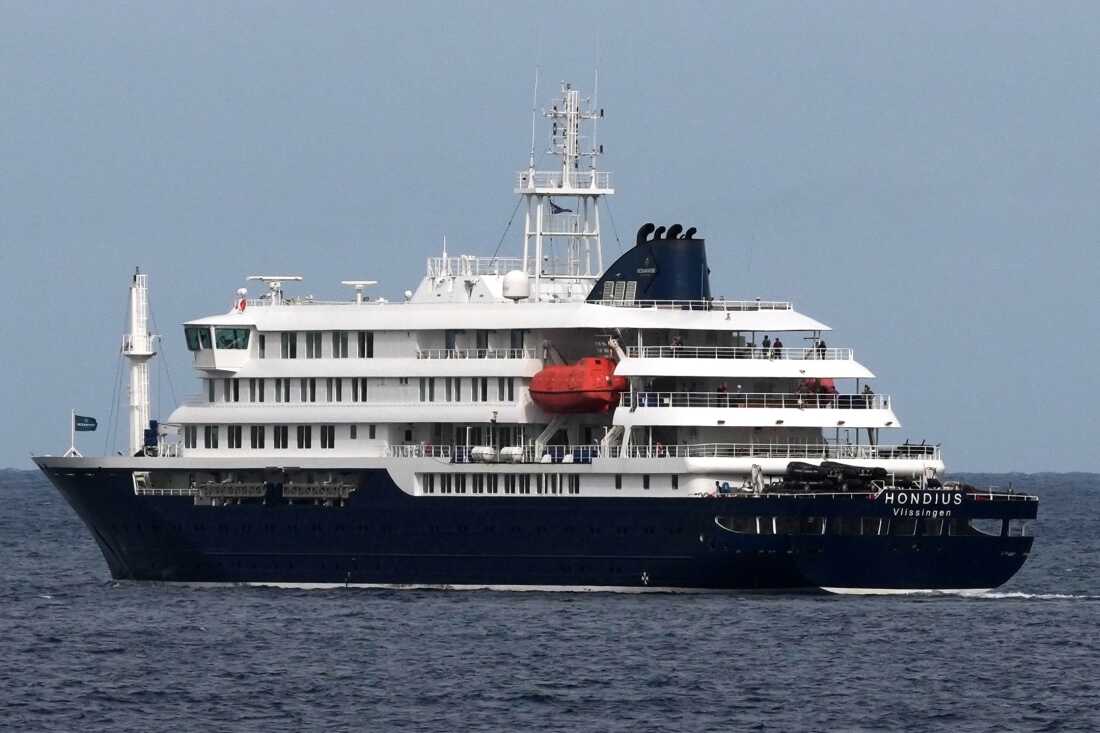
A passenger evacuated from the cruise ship at the centre of a hantavirus outbreak developed symptoms while being flown back to France, raising fresh concerns among health authorities overseeing an international repatriation effort involving more than 90 travellers.
French Prime Minister Sébastien Lecornu said the passenger became unwell during a charter flight from Tenerife to Paris after being removed from the MV Hondius, a Dutch-operated expedition vessel linked to several confirmed infections and three deaths. Following the incident, all five French nationals from the ship were placed in strict isolation upon arrival in the French capital.
Emergency workers wearing protective equipment met the passengers on the tarmac before they were transferred to Bichat Hospital in Paris for further monitoring. French officials said the group would remain under observation for 72 hours before continuing a lengthy period of self-isolation.
The Hondius arrived near Tenerife over the weekend after Spanish authorities coordinated a large-scale evacuation operation with the World Health Organization. Medical teams boarded the vessel shortly after dawn as passengers, many wearing white face masks, waited on deck to be escorted ashore in carefully managed groups.
Scenes at the port reflected the scale of the health response, with transfer boats carrying socially distanced passengers to land, where officials in full protective suits guided them directly to waiting transport. Some evacuees were seen filming the operation or waving to gathered media as they travelled towards the airport.
British passengers have since returned to Manchester, although the UK Health Security Agency said none had reported symptoms so far. In the United States, health officials confirmed that one American passenger had tested mildly positive for the Andes strain of hantavirus after leaving the ship, while another had developed mild symptoms. Both were transported in specialised biocontainment units as a precaution.
Hantaviruses are usually spread through contact with infected rodents, although the Andes strain has been associated with limited human-to-human transmission. Symptoms can include fever, muscle aches, vomiting, fatigue, and breathing difficulties.
The outbreak has reignited concerns over how infectious diseases are managed aboard cruise ships operating far from major medical facilities. Helen Clark, co-chair of the Independent Panel for Pandemic Preparedness and Response, said the incident highlighted weaknesses in global outbreak control.
“Passengers disembarked and dispersed to the four winds when there had been a death of a potentially infectious pathogen on board,” she said.