

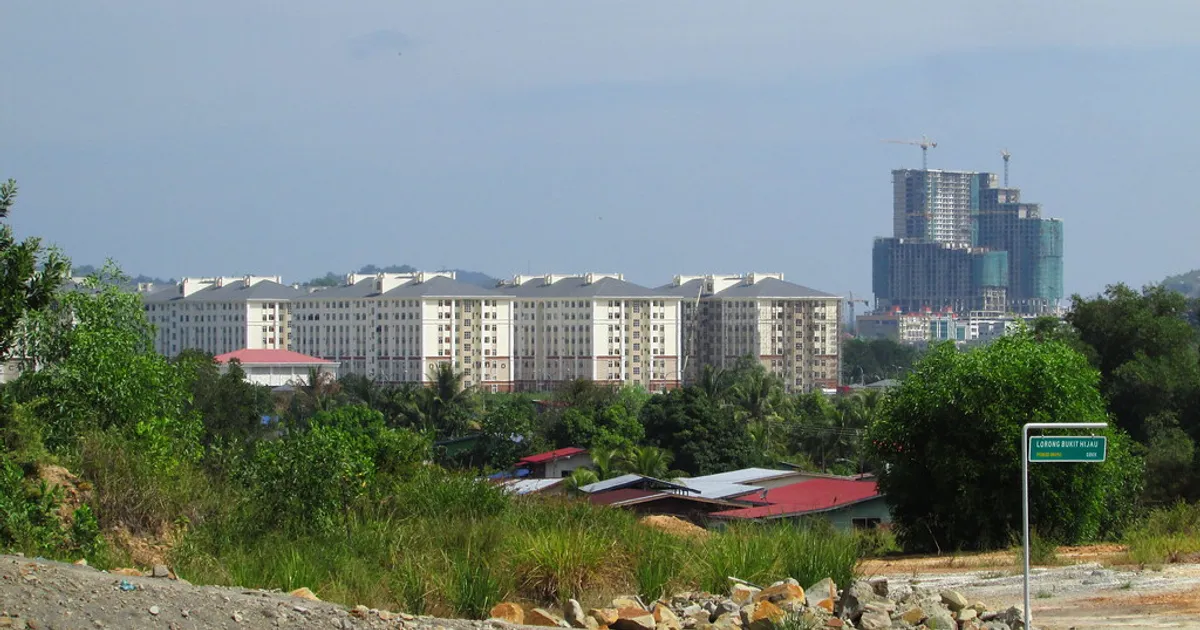
A strip of hillside versus 2,000 homes
Upper Hutt needs 7,931 new dwellings by 2051 to accommodate projected population growth of 18,200 people. The Silverstream Forest development would deliver up to 2,040 of those homes across 330 hectares, with 70% of the land retained as natural open space.
But the project cannot proceed without road access through the Silverstream Spur, a 35-hectare strip of hillside that Upper Hutt City Council purchased in 1989 for passive reserve use. Developer Guildford Timber Company has been trying to unlock this land since 2007. That is 18 years of procedural warfare over a road corridor.
The deal that died
In 2016, UHCC and Guildford signed a Memorandum of Understanding for what looked like an elegant solution. The developer would receive the 35-hectare Spur in exchange for giving the council 132.5 hectares on Pinehaven and Silverstream Hills. Nearly four times the land, transferred to public ownership, in exchange for a road corridor.
In September 2021, the council voted to end those discussions. It then ran Plan Change 49, formally rezoning the Spur as natural open space with no roading or development permitted. The cost to ratepayers: $211,000 spent not on building anything, but on blocking something.
Guildford appealed that decision on 20 November 2024, the final day of the submission window. The case is now before the Environment Court.
Two processes, zero resolution
Simultaneously, the Silverstream Forest development was listed in the government’s Fast-Track Approvals Bill as one of 149 projects nationally. Fast-track was designed precisely to cut through the kind of planning gridlock this project has encountered.
But even that process became contested. In May 2024, five Upper Hutt councillors issued a joint statement saying the chief executive’s letter to fast-track the project did not accurately reflect the council’s position. Professor Dean Knight of Victoria University’s Faculty of Law called it a “schemozzle” that revealed the tensions in expedited ministerial approval processes, where developers “can cut themselves adrift from the processes of local democracy.”
So the project now sits in two parallel systems, both unresolved. The Environment Court handles the plan change appeal. The fast-track pipeline handles the development consent. Neither has produced a spade in the ground.
The landfill complication
Hutt City Council has its own reason to resist. A Tonkin + Taylor report found the nearby Silverstream Landfill could struggle to renew its operating licence past 2039 if 2,000 homes are built 250 metres away. If operations ceased, HCC faces alternative disposal costs and reduced aftercare funding, with rates potentially increasing 4-10% annually.
That is a legitimate fiscal risk. But it is also a risk that exists because two councils have had nearly two decades to negotiate buffer zones, design mitigations, and staged development plans, and have instead spent that time in procedural entrenchment.
The national disease
Silverstream is not an outlier. It is a precise specimen of a documented national condition.
New Zealand consented 37,239 new dwellings in the year ended December 2023, down 25% from the prior year. Upper Hutt’s own building consent performance in Q3 2024 showed a median processing time of 19 days, nearly 50% above the national median of 13.3 days. Nationally, 64.6% of all building consent applications required Requests for Further Information in the year ended June 2025.
The NZ Initiative put the macro cost plainly in October 2024: the RMA contributes to a worsening infrastructure deficit by increasing the time and cost of approving projects, estimated at “$1.3 billion per annum.”
But the NZ Initiative also identified fast-track’s own weakness: “Getting projects on the fast-track list could be incredibly valuable for proponents… the process heightens the risk of bad outcomes, ranging from misallocation of resources reducing economic efficiency to encouragement of corruption and cronyism.”
The incentive problem nobody will fix
The uncomfortable truth is structural. Upper Hutt City Council does not pay the cost of the housing shortage. Developers, buyers, and renters pay that cost. But the council does face political pressure from existing residents who prefer the hillside to stay green. The incentives point one way; the housing need points the other.
Fast-track was supposed to resolve this tension by lifting decisions above local veto points. But ministerial discretion is a symptom fix for a structural disease. The real answer, deeper reform based on property rights and clearer rules rather than case-by-case intervention, is politically harder and takes longer.
In the meantime, up to 2,040 homes sit waiting on a 35-hectare strip of hillside that a council bought in 1989 and has never developed. The region needs nearly 8,000 new dwellings. The road corridor exists on paper. The land swap was agreed in principle nine years ago. And the planning system continues to do what it does best: convert genuine housing demand into years of procedural attrition.
Sources
- Upper Hutt Southern Growth Area
- Silverstream Forest Development – Fast-track Approvals Application FTA089 (2024-12-19)
- Silverstream Spur Decision Appealed (2024-11-20)
- Upper Hutt Council’s PC50 fast tracking ‘schemozzle’ (2024-05-23)
- Fast-track approvals: Wellington housing developments Silverstream Forest and Plimmerton Farm given green light
- Wellington landfill at threat from new housing development
- Building consents issued: December 2023 (2024-02-02)
- Fast-track approvals are necessary but should be temporary (2024-10-10)