

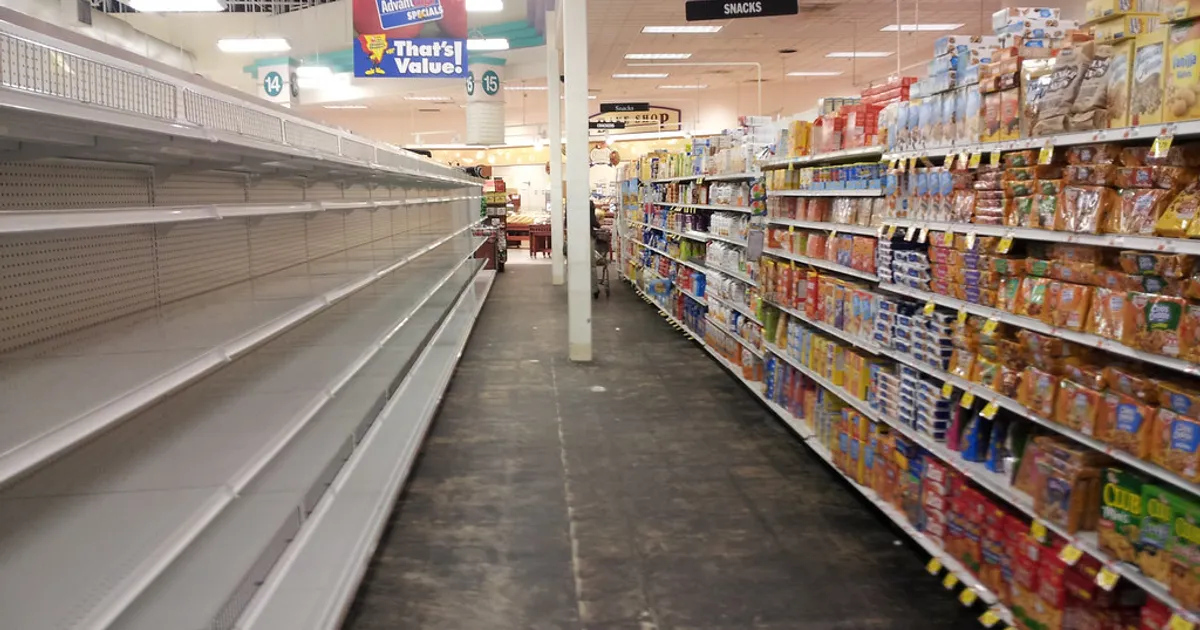
The search came back empty
The government went looking for a hero. It contacted 21 overseas supermarket groups, launched two rounds of requests for information, and Economic Growth Minister Nicola Willis even planned a meeting with Tesco in June 2025. That meeting never happened due to personnel changes at Tesco. Aldi and Lidl were both invited to participate and neither opted to do so. Aldi confirmed it has no plans to expand into New Zealand.
By July 2025, Cabinet documents acknowledged what the industry already knew: entry of a new major competitor is unlikely within the current market and immediate opportunities for increased competition on a significant scale are limited.
Willis herself had framed the problem clearly in February 2025: “Competition between grocery retailers is muted, profits are high, product ranges are limited, and shoppers pay higher prices than people in many other countries”. Correct on every count. But diagnosing the disease is not treating it.
Why nobody will build 150 stores in a market of five million
The economics are punishing. Semi-retired consultant Ernie Newman estimated a new entrant would need 120-150 stores across New Zealand before the business case stacked up. Costco spent NZ$100 million and three years to open one store in Auckland, gaining 4% market share in that city alone. One store. Four percent. One city.
International precedent is worse. University of Sydney and University of Auckland researchers documented that Aldi took 20 years to reach scale as Australia’s third major player, and it entered by acquiring a failing chain, not building from scratch. Kaufland purchased sites, hired 200 staff, then abandoned Australia entirely in 2020. Australia has five times our population. The barriers here are steeper.
The regulatory regime has barely scratched the paint
The Commerce Commission’s 2024 Annual Grocery Report shows the three regulated retailers hold 82% of total grocery market revenue, unchanged from 2023. Outside Auckland, that figure is 88%. Retail food prices rose 4.6% annually in early 2025.
The wholesale access regime, the centrepiece reform of the Grocery Industry Competition Act 2023, has delivered just $15.3 million in total sales over 19 months, representing less than 0.03% of retail grocery sales. Foodstuffs had 70-80 wholesale retail customers. Grocery Commissioner Pierre van Heerden was blunt: “We don’t believe it’s fulfilling its potential.”
Meanwhile the incumbents extract over $5 billion annually in rebates, discounts and payments from suppliers across more than 50 payment types. That complexity is a moat, not a market.
The fix they won’t take
The government has one option with evidence behind it: structural separation. Researchers from the University of Auckland proposed breaking up Foodstuffs into smaller entities and rebranding Pak’nSave as an independent national brand, moving from three to five or more competing companies. Their argument is straightforward: “Breaking up the local dominant supermarket players is simply faster, and more straightforward, than waiting for a foreign company to enter New Zealand.”
But a 2023 MBIE analysis warned forced divestment could carry a $3.8 billion net cost over 20 years, and that number has given every minister since an excuse to defer. RNZ’s March 2026 investigation revealed officials’ own documents acknowledged structural separation “is the only option which ensures greater competition”, yet successive governments chose caution.
Van Heerden has put the ball squarely in politicians’ court: “It’s really a political decision that needs to be taken. We’ve been clear that competition isn’t working well for Kiwi consumers.”
What this means for every business buying groceries
This is not just a consumer story. Hospitality operators, food manufacturers, and small retailers all operate in a market where two purchasing blocs control $18 billion in annual procurement and the wholesale alternative barely functions. The Commerce Commission found excess profits of approximately $1 million per day. That money comes from somewhere, and it comes from every business and household that buys food in this country.
The government’s three-stream work programme remains active. Willis indicated potential legislation could come to Parliament by year-end. But until ministers are willing to accept the political risk of structural intervention, the duopoly’s position is secure, the RFI is a dead letter, and New Zealand’s grocery prices will keep climbing.
Sources
- Nicola Willis’ planned Tesco meeting on breaking supermarket duopoly revealed (2025-03-27)
- Govt seeks to boost supermarket competition (2025-02-13)
- Stop waiting for a foreign hero: NZ’s supermarket sector needs competition from within (2025-03-18)
- 2024 Annual Grocery Report (2025-08-06)
- Wholesale Supply Inquiry Preliminary Findings Paper (2025-06-05)
- Supermarket duopoly: Grocery Commissioner doubles down on supermarket shake-up (2025-04-15)
- Why the government backed away from breaking up supermarkets (2026-03-17)
- NZ’s supermarket sector needs competition from within (2025-03-25)