

Thirty years of talk, three years of results
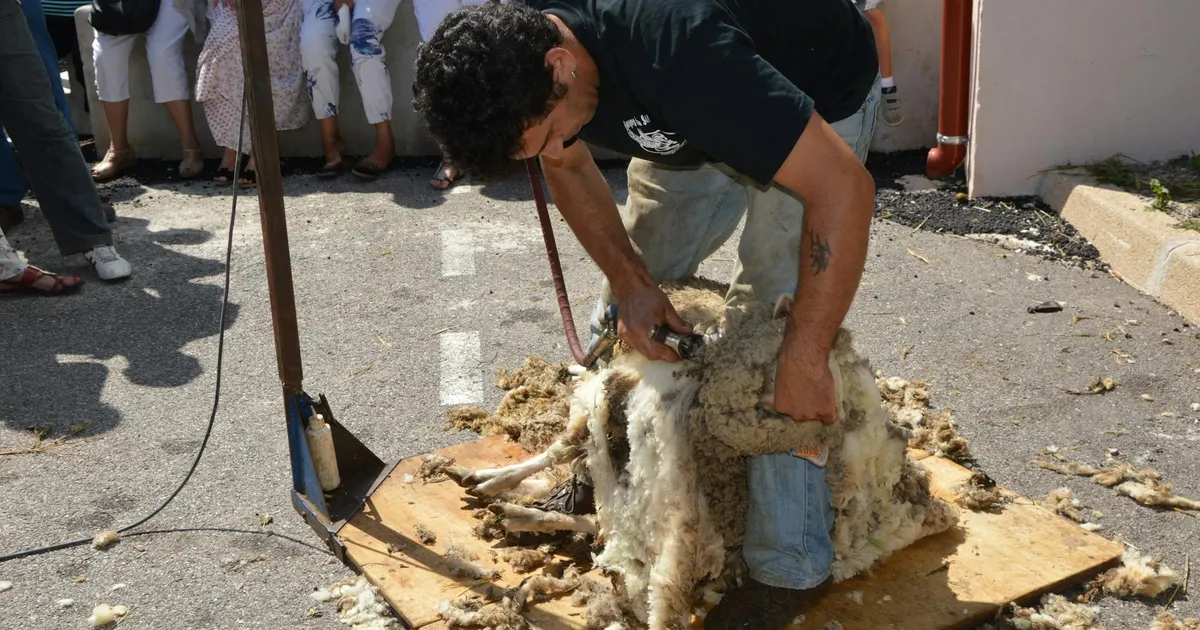
For a generation, strong wool was New Zealand’s most frustrating commodity. A natural, renewable, versatile fibre that nobody seemed to want at a price worth harvesting. Governments commissioned reports. Industry bodies ran campaigns. Farmers watched returns slide below the cost of shearing.
Then the market moved. The Fusca Strong Wool Indicator hit $5.34/kg clean by March 2026, more than doubling from $2.26/kg in mid-2022. Wool Impact CEO Andy Caughey says this is putting over $200 million in additional farm revenue per year back into growers’ pockets at current production levels.
The critical distinction: this isn’t a subsidy story. It’s a demand story. And the demand is coming from places no one in Wellington predicted.
Keraplast pays 40% above market because wool is a biomaterial now
The sharpest commercial signal arrived in February 2026. Wools of New Zealand signed a five-year supply contract with Keraplast at $6.88/kg clean, a 40% premium to prevailing market prices, covering 400 tonnes annually from 30 certified regenerative growers. Prices step up $0.50/kg each year.
Keraplast is an American-owned company operating from a factory near Hornby, Christchurch. It extracts keratin from wool and transforms it into advanced biomaterials for wound care, tissue repair, and personal care products sold across the US, Europe and Asia. Its overseas competitors source keratin from chicken feathers. NZ wool’s advantage is consistency and traceability.
Wools of New Zealand CEO John McWhirter framed the deal plainly: “When wool is connected directly to high-value end uses, returns can lift well beyond traditional commodity pricing.”
Keraplast CEO Howard Moore pointed to the supply chain credentials: “The consistency, traceability and quality of NZ wool is critical to Keraplast’s product performance.”
Eight product categories, not just carpet
The old story was carpet. The new story is diversification across eight product categories including commercial interiors, insulation, acoustics, filtration, furniture, bedding, and personal care. Wool Impact works with more than 30 domestic and 20 international brands, including a partnership with Gensler, the world’s largest architecture and design firm.
Wools of New Zealand’s brand partner network includes manufacturers across Turkey, China and other markets, embedding NZ wool into global supply chains spanning dozens of countries. Wool exports were worth $555 million in the year to June 2025, and MPI’s December 2025 SOPI report forecasts meat and wool export revenue rising 7% to $13.2 billion in the year to June 2026.
Domestic demand alone is expected to more than double from 15,000 tonnes to near 40,000 tonnes over the next five years.
The flock is shrinking faster than demand is growing
Here is the uncomfortable truth that makes this a business story rather than a feel-good one. NZ’s wool clip has fallen 4% annually since 2015, and McWhirter projects the total clip will halve from 2015 to 2030. An oversupply of 40,000-50,000 bales that had been dampening prices is now depleted. As McWhirter put it in January: “We have moved from oversupply to undersupply, which is favourable to farmers.”
Favourable for farmers who are still in the game. But the sector spent a decade converting sheep country to dairy, forestry and beef. Those conversions don’t reverse overnight, even at $5.34/kg.
Government helped at the margins
Associate Minister for Regional Development Mark Patterson described Wool Source’s first commercial export order, 8 tonnes to a Japanese personal care company, as “the Holy Grail” for the sector in December 2025. MPI co-funded an $8.72 million programme with WRONZ to develop new high-value uses for strong wool, and from 1 July 2025 Kainga Ora transitioned to wool carpets in new state houses.
These are helpful signals. But an 8-tonne export order against Keraplast’s 400-tonne annual contract tells you where the real commercial leverage sits. The private sector is generating volume. Government is generating press releases.
The window that took 30 years to open
Caughey captured the moment in January: “We are at a point where returns are meaningful for growers and not price prohibitive for manufacturers.” That equilibrium, where the price works for both buyer and seller, is what the wool sector has been trying to reach for three decades.
The risk is that it arrived too late for the supply base to exploit it. If demand keeps scaling through biomaterials, insulation and commercial interiors while the flock keeps shrinking, NZ wool becomes a premium product by accident rather than design. For the growers still standing, that’s excellent. For the sector’s aggregate export contribution, it’s a constraint that no amount of government co-funding will solve.
Sources
- Wool returns are ‘real dollars back in pockets’ (2026-03-12)
- Premium for growers in new Keraplast contract (2026-02-04)
- Demand for strong wool springs back (2026-01-22)
- Breakthrough Export Deal Signals New Era For Strong Wool (2025-12)
- Situation and Outlook for Primary Industries (SOPI) – December 2025 (2025-12)