

Thirty-three years, then nothing
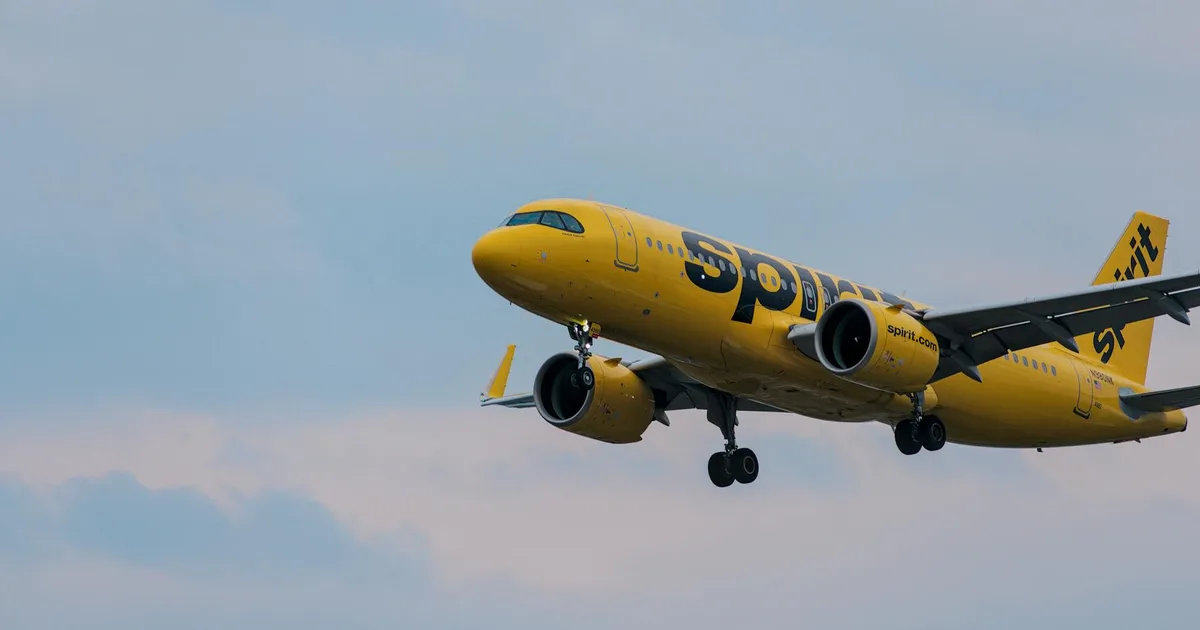
Spirit Airlines ceased all operations on 2 May 2026, cancelling every flight, shutting down customer service, and putting 17,000 employees out of work. The airline’s official statement was blunt: “All flights have been cancelled, and customer service is no longer available.” It is the first major US carrier to fold in a quarter century.
The immediate cause was fuel. Spirit’s restructuring plan, agreed with creditors in February 2026, assumed jet fuel at approximately US$2.24 per gallon. Three days after the deal closed, the Iran conflict began. By mid-April, jet fuel had reached US$4.24-4.51 per gallon, roughly double the assumption. J.P. Morgan estimated the shock would add US$360 million in incremental costs and push Spirit’s operating margin to negative 20%. The airline had US$273 million in unrestricted cash. The maths was terminal.
A US$500 million bailout request to the White House was rejected. The board met, found no rescue option, and wound down.
The model was already broken before the fuel hit
Fuel did not kill Spirit. It accelerated a death that was already underway. The airline had been unprofitable since the pandemic, filed for Chapter 11 bankruptcy in November 2024 and again in August 2025, and watched its domestic market share fall to 3.9% from 5.1% in a single year.
Mike Boyd, CEO of aviation forecasting firm Boyd Group International, told NPR: “No airline can shrink to survive. So it’s a matter of time with or without fuel costs. This just accelerates things.”
The ultra-low-cost model has a structural flaw in a fuel crisis. The entire proposition depends on base fares being cheaper than legacy carriers. When fuel doubles, large airlines raise fares across premium cabins, corporate contracts, and loyalty programmes. Spirit had none of those revenue buffers. Worse, legacy carriers had adopted basic economy fares that copied Spirit’s stripped-back product. The airline that invented the playbook found its competitors had learned it.
Regulators blocked the exit that might have saved it
In 2022, Spirit agreed to a US$3.8 billion merger with JetBlue. The US Justice Department blocked it, arguing it would hurt consumers by removing a low-cost competitor. William McGee, senior fellow at the American Economic Liberties Project, noted in April 2026: “Without Spirit flying those routes, everyone will be paying more.”
The regulator got exactly the outcome it intervened to prevent. Spirit is now gone entirely rather than absorbed into a larger carrier that would have maintained some competitive pressure. It is a textbook case of competition law optimising for a static market that no longer exists.
Why New Zealand should pay attention
This is not distant drama. New Zealand’s domestic aviation market is structurally more concentrated than the one Spirit just exited. The Commerce Commission’s May 2025 assessment found only two carriers of scale, identified high barriers to new entry, and concluded a competition study would not be effective.
Air New Zealand is not Spirit. Its FY2025 annual report shows NZ$6.8 billion in revenue, a loyalty programme, and premium cabin diversification. But net profit fell 14% to NZ$126 million in a year when fuel was actually a tailwind, saving NZ$208 million as prices averaged US$88/barrel. That tailwind has now reversed decisively.
For any New Zealand business dependent on air connectivity, whether tourism, hospitality, logistics, or regional services, Spirit’s collapse is a prompt to stress-test assumptions. Aviation is not discretionary infrastructure at the bottom of the world. It is the only infrastructure. And the cost environment that underpinned your last business plan no longer exists.
Sources
- Spirit Airlines canceled all flights and is going out of business (2026-05-02)
- Spirit Airlines says it will cease operations (2026-05-02)
- How the airline industry could be impacted if Spirit Airlines is liquidated (2026-04-22)
- Spirit Airlines Nears End as Rescue Talks Collapse (2026-05-02)
- Air New Zealand Annual Report 2025 (2025-08-28)
- Assessment of whether to self-initiate competition study into the domestic air travel sector (2025-05-01)