

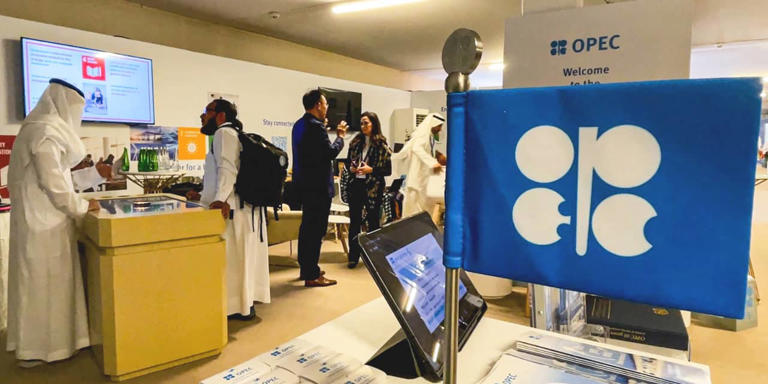
The United Arab Emirates has quit OPEC in a dramatic step that threatens to undermine the oil cartel’s influence and spark greater volatility in global crude prices. The move, announced this week, highlights deepening rifts within the group as regional conflicts intensify.
Experts say the loss of the UAE, OPEC’s second-most powerful member after Saudi Arabia, weakens the alliance’s ability to stabilise markets. Together, the two nations control the lion’s share of the world’s spare production capacity, over 4 million barrels per day, which can quickly offset supply shocks.
“The UAE’s departure therefore removes one of the core pillars underpinning OPEC’s ability to manage the market,” said Jorge León, head of geopolitical analysis at Rystad Energy, in a Tuesday note. OPEC will be “structurally weaker” as a result.
The decision comes amid Iran’s missile and drone attacks on shipping in the Strait of Hormuz, disrupting UAE oil exports and hitting its economy hard. Energy Minister Suhail Al Mazrouei told CNBC the timing was chosen to minimise disruption for other members, without directly blaming the conflict.

While markets showed little immediate reaction, with futures flat on Tuesday, longer-term risks loom. David Goldwyn, former U.S. State Department energy coordinator, noted Saudi Arabia retains strong leverage but a diminished hand without its UAE partner.
“There’s significant risk of higher oil price volatility as a result of this decision,” Goldwyn said. “But in the end when market conditions require cooperation, the UAE leaving OPEC doesn’t prevent it from cooperating with OPEC.”
The UAE seeks freedom from Saudi-led production cuts to hit 5 million barrels per day by 2027, chafing at quota cheats like Iraq and Russia.
“When the conflict between the USA and Iran ends and the Strait of Hormuz reopens, I expect that the UAE will produce as much oil as they can, utilising any spare capacity that they have held in reserve,” said Andy Lipow of Lipow Oil Associates.
Analysts from Reuters and the IEA warn of potential oversupply gluts if demand softens, with Brent possibly falling below $70 a barrel by 2028. This exit could push OPEC towards looser coordination, reshaping oil geopolitics.