

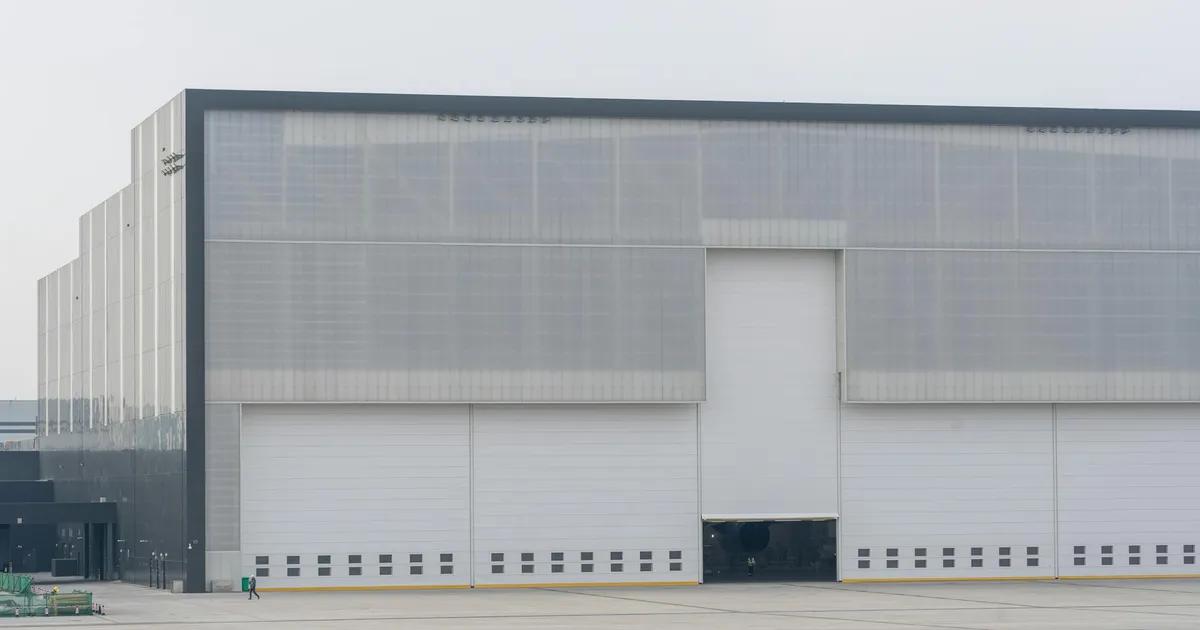
The numbers released today confirm what logistics operators, manufacturers and trade businesses in Auckland have been experiencing for years. Industrial and commercial land values averaged $1,190 per square metre in the 12 months to March 2026, the highest level in at least a decade. The average asking price for industrial buildings crossed $3.5 million for the first time. And the typical available property has shrunk to just 1,864 square metres, down from 5,212 square metres a decade ago.
This is not a cyclical squeeze. It is a structural failure of land supply that directly inflates the operating costs of every business that moves, stores or makes physical goods in New Zealand’s largest city.
The planning system built this problem
Realestate.co.nz chief executive Sarah Wood is blunt about the cause: “There simply isn’t enough development-ready land coming to market to meet demand, and that is now being reflected clearly in pricing.” She connects the dots to the wider economy: “Over time, that affects where businesses locate, how supply chains are structured, and the cost of operating across the wider economy, including the competitiveness of New Zealand’s exports.”
The most damning evidence comes from Treasury’s own analysis. A November 2024 Housing Technical Working Group paper estimated that Auckland’s Rural Urban Boundary added $378.40 per square metre to the price of urban land immediately inside the boundary in 2021. That is not a market premium driven by demand. It is a planning-imposed cost, a regulatory tax on every business that needs to be inside Auckland’s urban footprint.
The government has invested enormous political capital in housing supply reform through the NPS-UD framework. Industrial land has received nothing like the same attention. The result is a city where the planning system actively inflates the cost base of the productive economy.
Even hot precincts have gone a generation without new supply
Mount Wellington is one of Auckland’s most established industrial areas. A new development at 160 Marua Road, offering 10 units between 112 and 364 square metres, is being marketed partly on the basis that there has been virtually no new unit development in the precinct for more than 25 years.
Bayleys South Auckland broker Matt Dell says demand has deepened: “In that time demand has deepened, particularly from owner-occupiers, trade operators and smaller-scale investors seeking well-located, efficient space under 400sqm.” His colleague Jake Skeen frames the stakes for occupiers: “Industrial occupiers are becoming more location-sensitive, particularly those servicing urban populations where proximity directly impacts cost, delivery times and staffing.”
The pipeline is not empty, but it is not transformative either. JLL’s Q4 2025 Auckland Industrial Market Dynamics report shows a Puhinui Road site delivering approximately 60,000 square metres of warehouse supply in 2026. That helps large-format occupiers. It does nothing for the small-to-medium businesses that make up the bulk of Auckland’s industrial demand.
Businesses are leaving, but relocation is not free
The pressure is pushing firms towards regional alternatives. A 2.99-hectare industrial landholding in Tokoroa was marketed in April explicitly as an escape from Auckland’s constrained market. Brendon Bradley of Bayleys Tauranga says the trend is structural: “Large-format industrial land is becoming increasingly difficult to secure in major centres, where supply remains constrained, and pricing has moved sharply.”
But regional relocation carries its own costs. Moving a logistics or manufacturing operation out of Auckland adds transport expenses, complicates recruitment, and lengthens supply chains. For businesses serving Auckland’s 1.7 million residents, proximity is not a luxury. It is a cost input.
Stephen Hughes, chief executive of Drury South Crossing, one of the last large greenfield industrial developments in the Auckland region, notes that such projects are becoming increasingly rare. Rising electricity demand adds a further constraint, with many existing industrial locations unable to support modern automation, machinery and EV fleet requirements.
A productivity crisis dressed as a property story
The investment market tells its own story. JLL recorded $352.99 million in industrial sales transactions for the second half of 2025, with prime rents reaching $221 per square metre per annum. Capital is flowing in, but that capital is chasing scarcity, not productivity.
This problem was visible years ago. Back in 2019, the NZ Herald reported that businesses requiring yard space were already being pushed south to Drury and Takanini, with demolition clauses on three-month notice periods becoming standard in central Auckland industrial leases.
Seven years later, the same dynamic has intensified. Every dollar added to industrial land costs by zoning restrictions is a dollar added to the cost base of exporters, logistics operators and manufacturers. The government’s pro-growth rhetoric means nothing if the planning system keeps squeezing the physical space where productive businesses actually operate. Housing got its reform moment. Industrial land is still waiting.
Sources
- RNZ: Auckland industrial, commercial land shortage pushing prices to record-high levels (2026-04-27)
- OneRoof: New industrial units in Auckland’s ‘zero-supply pocket’ (2026-04-18)
- OneRoof: Industrial land offers scale without squeeze (2026-04-04)
- JLL: Auckland Industrial Market Dynamics Q4 2025 (2026-02-12)
- Treasury: Analysis of availability of land supply in Auckland (2024-11-28)
- NZ Herald: Squeeze on industrial yard space (2019-12-12)