

Booming while the rest of New Zealand stalls
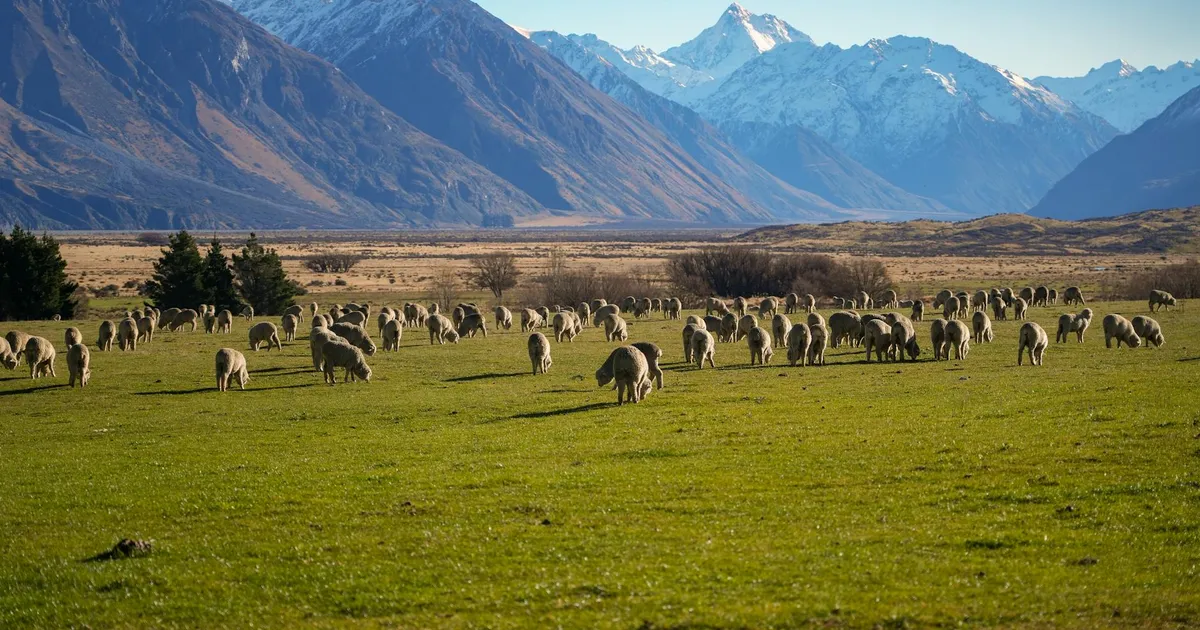
Selwyn is having the kind of year most districts would kill for. GDP grew 1.9% in the year to December 2025 while the national economy managed just 0.4%. Consumer spending climbed 4.2% against a 1% national decline. Employment expanded 3.3% while the rest of the country shed 1.2%. The number of businesses in the district jumped 3.6%.
The engine is obvious. Dairy payouts for Selwyn farmers are forecast to hit $780 million for the 2024/25 season, up 35% on the prior year. Lamb prices rose 10%, beef 15%. That money is flowing directly into confidence, spending and business formation.
But underneath the headline numbers sits a structural vulnerability that the people closest to the sector are trying to address before the cycle turns.
41% of GDP tied to one sector is a feature and a flaw
Food and fibre accounts for 22% of Selwyn businesses and 22% of its workforce. Factor in processing and indirect activity, and the sector touches roughly 41% of the district’s GDP. That concentration amplifies every upswing and every downturn.
A March 2026 Knowledge Symposium at Lincoln University, attended by about 90 farmers, scientists, entrepreneurs and industry leaders, was built around exactly this tension. Research presented at the event found that technology-led scenarios deliver the strongest outcomes but risk outstripping the district’s current workforce. The consensus was blunt: competing on volume alone is no longer viable.
Jolon Dyer from the Bioeconomy Science Institute framed the market access question in terms that should make every commodity-dependent producer uncomfortable: “If you can’t trace food right back to where it was produced in a very detailed way, you’re probably not going to be able to trade it at all, particularly in premium markets. Trust is the product that we’re selling.”
He noted that while global population is projected to grow about 25% by 2050, food demand is expected to more than double. The volume opportunity exists. The margin opportunity lies in premium positioning, not bulk supply.
Producers who already moved
Some Selwyn operators are not waiting. Hamish Guild from High Peak Station has shifted so that tourism now accounts for more than half the station’s income, with honey and wool repositioned for niche export markets. His view is unambiguous: “If we rely on commodities, we’ll get eaten up. We have to brand and add value, that’s the only way.”
Phil Caunter of Melton Estate applied the same logic to wine: “We’re not selling wine. We’re selling good times.” Experience, story and brand carry margin that the product alone cannot.
Then there is Leaft Foods, the sharpest proof point. Founded by Maury Leyland Penno, a former Fonterra executive, and her husband John, co-founder of Synlait Milk, the company extracts rubisco protein directly from leafy greens. It operates from Selwyn’s iZone with a 35-person team, working with arable farmers in Southbridge who grow lucerne specifically for protein extraction. Its products carry 97% lower CO2 equivalent impact compared to whey protein. In 2022, the company secured USD $15 million in Series A funding led by Khosla Ventures and aims to reach dairy-scale manufacturing within five years. This is not a farm-gate story. It is a Silicon Valley-backed bet on New Zealand’s farming infrastructure as the foundation for a new global protein category.
The official strategy has money behind it
Selwyn District Council formalised its response in early 2025 with the Kai Aku Rika Economic Development Strategy, a 10-year plan backed by $9 million in Long-Term Plan funding. Developed through engagement with over 250 local leaders, businesses and community members, it identifies agritech, clean energy and digital technologies as priority sectors. Plans include an Innovation Hub and Business Hub in Rolleston, a Food and Fibre Opportunities study, and a “Living Lab” concept for agritech testing.
International visitor spending in Selwyn jumped 18% in the year to March 2025, more than double the national increase of 7.7%, suggesting the experience economy is already growing alongside the commodity base.
Mayor Lydia Gliddon acknowledged the foundation while pointing forward: “Farming is at the heart of Selwyn. These figures reinforce the importance that agriculture has in our community, giving a good foundation for our economy to build from.”
Good times are the enemy of structural change
Here is the uncomfortable truth. When dairy payouts are up 35%, unemployment sits around 2% against a national average of 6%, and house sales have climbed 22%, the pressure to invest in transformation drops to near zero. The very success of the current model reduces the urgency to build what replaces it.
The leaders at the Lincoln symposium know this. That is why the event happened. The question for Selwyn is whether this commodity windfall gets channelled into the processing capacity, traceability systems, brand positioning and workforce development that the next decade demands, or whether it simply gets absorbed into the status quo. Regions that stay stuck at farm-gate economics eventually get punished by freight costs, margin compression and competitors who moved first. Selwyn has the money, the strategy and the proof points. What it may not have is the urgency.
Sources
- Rural boom powers Selwyn ahead of national slowdown (2026-03-30)
- Shaping Selwyn’s Food & Fibre Future (2026-03-31)
- From Innovation to Impact: Shaping Selwyn’s Food & Fibre Future – AgriTech New Zealand (2026-03-31)
- From kitchen experiments to global innovation: How Leaft Foods is revolutionising protein from Selwyn (2025-11-26)
- Selwyn defies national downturn with strong economic growth across key sectors (2025-03)