

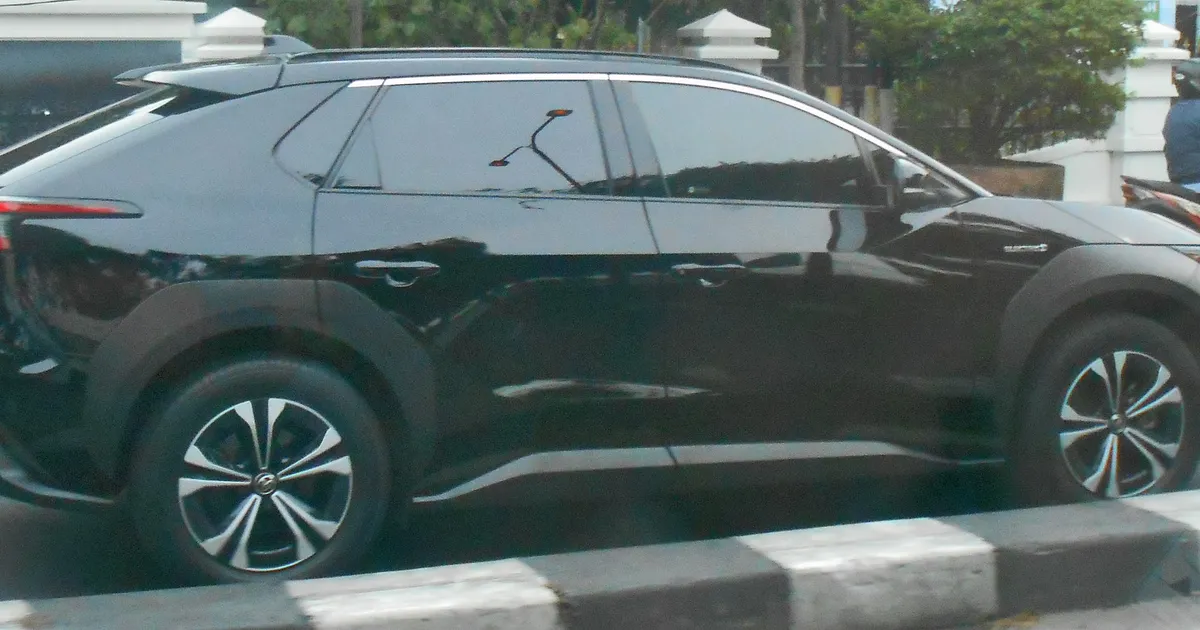
Toyota spent the better part of a decade hedging against full electrification. It bet on hybrids, lobbied against EV mandates, and told anyone who would listen that the world was moving too fast. So when the company quietly increases its battery electric allocation to New Zealand, the signal matters more than the volume.
In March 2026, the Toyota bZ4X outsold the Tesla Model 3 in New Zealand. That is not a typo. Toyota, the company that treated full battery electrics like a science experiment, beat Tesla in a segment Tesla defined. The allocation increase that made it possible tells you what Toyota’s internal demand models are seeing, and cautious incumbents do not send more product into weak demand.
The numbers are not subtle
New vehicle registrations hit 14,910 in March 2026, up 25.1% on March 2025 and the strongest March since 2022. But the structural shift underneath is what matters.
Battery electric vehicles claimed 16.2% of all new registrations, up from 5.4% a year earlier. That is a threefold increase in market share in 12 months. Within the light passenger segment, BEVs made up 22.6% of sales. Combined electrified vehicles, including hybrids and plug-in hybrids, accounted for 47.5% of all new cars sold. Petrol and diesel are now barely holding a majority.
New EV registrations jumped from 642 in February to 2,370 in March, a 265% monthly increase. By mid-April, 5,137 EVs had been registered year-to-date, up 116% on the same period last year.
Fleet managers, not enthusiasts, are writing the cheques
The detail most coverage is missing is who is buying. Business buyers accounted for 58.5% of March registrations, up from 55.6% a year earlier. Light commercial vehicle registrations surged 40.2% year-on-year. This is a fleet story. Procurement teams running total cost of ownership spreadsheets are reaching the same conclusion simultaneously.
The catalyst is not hard to find. Diesel prices rose 42.6% in March 2026 alone, the largest monthly increase since Stats NZ began tracking the measure in 2011. For any business running a diesel fleet, the economics shifted fast and hard.
Motor Industry Association chief executive Aimee Wiley said “rising fuel costs are influencing buyer behaviour and strong demand has begun to outpace supply, with available stock tightening across parts of the market”.
Chinese brands are compressing prices whether incumbents like it or not
BYD led all EV brands in March with 646 registrations, a 539.6% surge. Chinese brands collectively claimed nearly a quarter of the passenger market. That price pressure is exactly what forced Toyota’s hand. You do not increase allocation to a small Pacific market unless the alternative is ceding it permanently.
But fleet operators making five to seven year asset decisions should weigh the durability question. Motoring commentator Clive Matthew-Wilson has warned that “of the 128 currently in existence about 14 will be financially feasible by 2030”. Parts availability and brand survival are real risks when buying from manufacturers that may not exist in five years. Toyota’s boring reliability suddenly looks like a competitive advantage again.
The government removed the subsidies and the market moved anyway
The National-led government scrapped the Clean Car Discount at the end of 2023 and weakened the Clean Vehicle Standard from January 2026. EV imports fell more than 50% in value in the 12 months to June 2025 as a direct consequence. The 100,000 NZ-new BEV and PHEV milestone reached in early 2026 would have arrived at least a year earlier had the 2020-2023 growth trajectory continued.
The market is now surging despite the policy environment, not because of it. A fuel price shock has done what subsidies used to do. That is not an argument against stable policy. It is a reminder that when the economics become undeniable, businesses will move regardless of what Wellington signals.
In 2025, the EECA’s EV charging survey found only 52% of BEV and PHEV drivers agreed there was good distribution of chargers, and 75% primarily charged at home. Infrastructure is not yet a dealbreaker for most buyers, but it is a ceiling on the addressable market. The longer that ceiling stays low, the more it becomes a constraint on the fleet transition that is already underway.
What this means for the boardroom
The EVDB full-year 2025 data shows five successive quarters of BEV share sitting at 5-6% before the 2026 surge. The underlying trend was already established. The fuel shock accelerated it. Toyota’s allocation decision suggests the company believes the acceleration is structural, not transient.
For fleet operators, the calculation is straightforward. Diesel volatility is not going away. Chinese competition is compressing EV prices. And the most conservative automaker on the planet just voted with its supply chain. The question is no longer whether your fleet goes electric. It is whether you are buying from a brand that will still be servicing vehicles in 2032.
Sources
- Toyota BZ4X Outsells the Tesla Model 3 – CleanTechnica (2026-04-20)
- EV and PHEV demand surges as new vehicle registrations jump 25% in March (2026-04-01)
- NZ sells more EVs in March as new registrations increase 25% (2026-03)
- EV sales surge in NZ as global tensions and fuel prices drive demand (2026-04-01)
- Cheap to charge, but will they last? The big question hanging over the EV boom (2026-04)
- Battery-reliant fleet hits milestone, what next? (2026-03)
- NZ’s EV Market Highlights of 2025 (2026-01-29)
- EV charging research 2025 — survey results (2025)
- ChargeNet and Meridian report surge in EV charging as fuel costs jump