

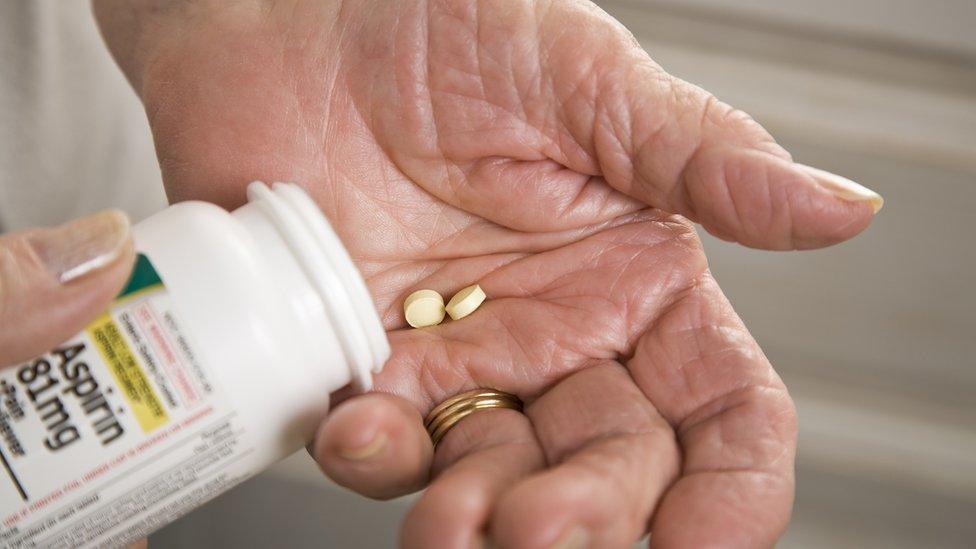
A humble painkiller with roots stretching back thousands of years is emerging as a powerful weapon against certain cancers, transforming guidelines for those at highest risk and sparking fresh scientific curiosity.
Consider Nick James, a 46-year-old furniture maker from Gosforth in Britain. Haunted by his mother’s death from cancer and his brother’s bowel cancer diagnosis—along with other family cases—he underwent genetic testing.
The results confirmed Lynch syndrome, a hereditary condition that elevates lifetime colorectal cancer risk to between 10 and 80 per cent. In 2014, James became the first volunteer in the groundbreaking CaPP3 trial, testing daily low-dose aspirin of 75 to 100 mg as a preventive measure. A decade on, he remains cancer-free. “He’s been on aspirin now with us for 10 years without any cancer so far,” says Professor John Burn of Newcastle University, who led the study.

Burn’s landmark 2020 CaPP2 trial tracked 861 Lynch syndrome patients over 10 years, revealing that 600 mg daily halved colorectal cancer rates after two years. The 2025 CaPP3 follow-up, involving 1,879 participants, showed even 75 to 100 mg doses matched that impact, with few side effects.
“The people who took aspirin for two years had 50 per cent fewer cancers in the colon,” Burn notes. “What we want to do is keep on going for a few more years because the data is going to get better as time goes on.” These findings prompted UK’s NICE to recommend aspirin from age 20 for most Lynch cases.
In Sweden, Professor Anna Martling’s 2025 Karolinska Institute study of 2,980 post-surgery colorectal patients with common PI3K mutations found 160 mg daily cut recurrences by over half. “That’s a large group of the patients,” she observes.
Sweden now screens routinely. UCL’s Ruth Langley leads the Add-Aspirin trial for 11,000 survivors of various cancers, eyeing 2027 results. “We really are the first to explore the role of aspirin in other tumour types,” she says.
From ancient Mesopotamian willow bark to modern labs, aspirin blocks enzymes like Cox-2 and clotting factors, unmasking tumours to immune cells. While risks like bleeding persist, experts urge doctor-guided use for high-risk groups. “Always speak to a doctor or other healthcare professional before starting aspirin,” Langley advises.