

One every eight days
New Zealand’s largest insurer has put a number on what property owners and business operators already feel. IAG’s Wild Weather Tracker recorded 46 storms in the 12 months to February 2026, generating more than 33,000 storm-related claims. IAG climate spokesperson Bryce Davies framed the long-run trajectory plainly: storms have jumped from about one a month to three or four a month over 15 years.
That is not a blip. It is a structural shift in the risk profile of every building, lease, and balance sheet in the country.
The October stress test
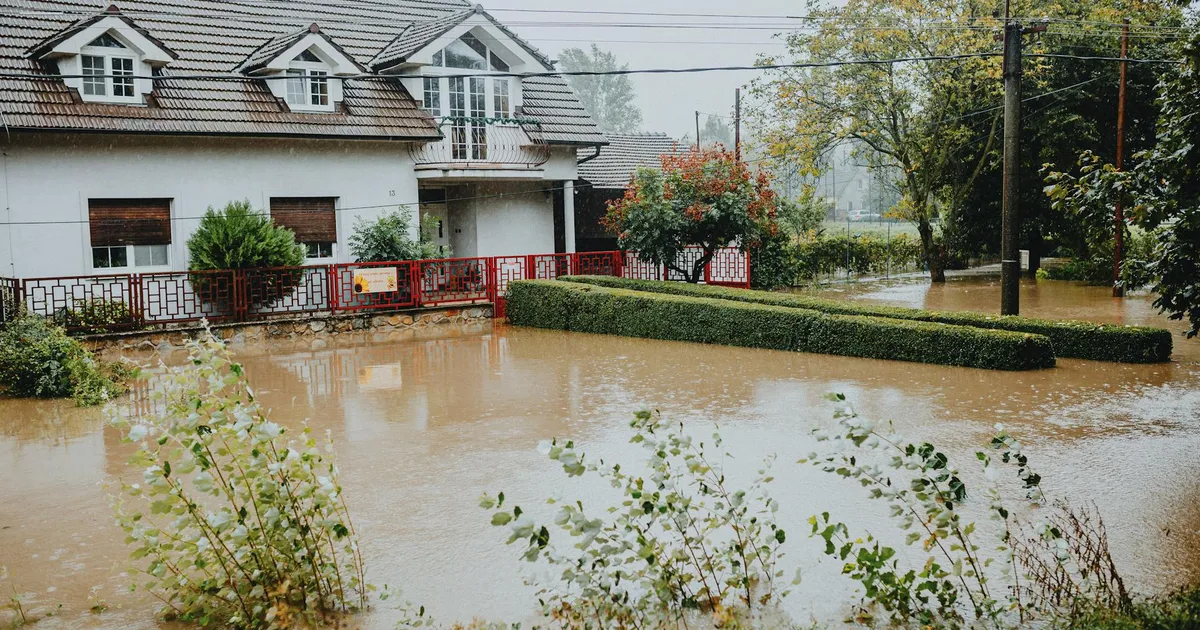
The Southland storm in October 2025 showed what a single event now costs. Roughly 10,000 claims were lodged nationally, with 70% from Southland and Otago. FMG, the country’s biggest rural insurer, received nearly 5,000 claims with expected payouts rising to $50 million. Only the 2023 Auckland Anniversary floods and Cyclone Gabrielle combined generated more FMG claims in the insurer’s 120-year history.
Farmers discovered the hard way that policies often did not cover damaged fencing or fallen trees. Three months later, more than 150,000 tonnes of trees remained on the ground at private properties. Coverage gaps are invisible until a claim is denied.
Premiums are already moving
Finity Consulting’s data collection for Treasury shows the national average cheapest home insurance premium rose 8.7% in just six months between April and October 2024. In high-risk regions the numbers are brutal: Gisborne up 42.1% to $826, Wellington Central and Hutts up 32.5% to $727. Over two years to October 2024, the average cheapest premium climbed $235.
Zoom out further: premiums have risen three times faster than inflation since 2011, according to University of Auckland Associate Professor Rohan Havelock. The increases reflect offshore reinsurance costs being passed through as global reinsurers reprice catastrophe risk.
More worrying than the price is the availability signal. Treasury data shows online availability for flood-risk profiles dropped 4% to 89%. That is insurers quietly declining to quote for properties they consider too exposed. Price rises are manageable. Market withdrawal is not.
Tower’s profit warning is the canary
Tower Insurance had already paid out $12 million of its $45 million large events fund following recent storms. CEO Paul Johnston warned that if the fund is fully exhausted, full-year underlying profit could fall from a record $107 million to $55-65 million. Outgoing chair Michael Stiassny was characteristically blunt: “Are we confident that our infrastructure is resilient and will cope with large storms that are no longer anomalies? The answer is a resounding no.”
Stiassny described the national response as “haphazard, inadequate, and painfully slow”. Three years after Cyclone Gabrielle, no decisive action has been taken to prevent building on flood plains.
The backstop is underfunded
The Natural Hazards Commission scheme that underpins all residential natural hazards cover is projected to be underfunded by approximately 34% over its first five years. In the first two months of 2026 alone, the NHC logged more than 800 natural hazard claims. Havelock makes the structural point clearly: the NHC model assumes most households can obtain and afford private insurance. “If that assumption weakens, the scheme’s reach shrinks.”
Prevention is cheaper than cleanup, and nobody is doing it
ICNZ chief executive Kris Faafoi argues that “cleaning up after disasters costs far more than reducing risk upfront”. The evidence backs him. The Awanui Flood Protection Scheme, built for $15 million, has already avoided an estimated $50 million in damage. In Hawke’s Bay, $4 million in Taradale stop bank improvements prevented billions in damage to around 10,000 properties during Cyclone Gabrielle. New Zealand has averaged over two months per year under declared emergency over the past five years. IAG’s Davies describes the current national approach as “very ad hoc, very fragmented”.
For any business with physical premises, the maths is simple. Premiums are rising faster than revenue, coverage is narrowing, and the public backstop is underfunded. The 2023 events generated $1.5 billion in business claims alone. New Zealand is repricing risk that was underpriced for decades, and the bill is arriving at a pace most operators have not factored into their planning, their leases, or their capital allocation. The question is not whether premiums keep climbing. It is whether your business can absorb the next jump.
Sources
- RNZ: ‘A storm every eight days’ – country’s biggest insurer calls for systemic response (2026)
- RNZ: Thousands of insurance claims lodged as result of wild October weather (2025)
- NZ Herald: Storm in October triggers 5000 FMG insurance claims (2025)
- Treasury/Finity Consulting: Insurance Data Collection Report – November 2024 (2025-02)
- University of Auckland: Rising house insurance costs raise tough questions (2026-03-11)
- Insurance Business Mag: Tower warns weather claims could slash profit (2026)
- Insurance Business Mag: NHC logs surge of early-2026 natural hazard claims (2026)
- ICNZ: Act now or pay later – Hazard resilience policies a must in the ’26 election (2026)
- ICNZ: North Island Weather Events – The Insurance Industry Response (2025-02)