

The provocation that isn’t entirely wrong
Christchurch City Councillor Sam MacDonald proposed this week that Selwyn and Waimakariri residents be tolled to enter the city unless their councils agree to merge with Christchurch into a single unitary authority. His argument is simple: Christchurch ratepayers fund stadiums, roads, and services that district residents use without contributing to. “If the councils are not prepared to take the leap of faith and join up as one, at some point the people of Christchurch need to stop subsidising,” he said.
Selwyn Mayor Lydia Gliddon fired back immediately, arguing that Canterbury functions as one interconnected region and that “looking at infrastructure through the lens of tolls and boundaries risks missing the bigger picture.”
She’s right on the mechanism. Tolling commuters is a blunt, politically toxic instrument that would punish freight operators, peri-urban businesses, and workers who had no say in where council boundaries were drawn. But MacDonald’s underlying arithmetic is harder to dismiss.
Canterbury’s transport funding doesn’t add up
Canterbury Regional Council Chairperson Dr Deon Swiggs put the structural problem plainly: “No matter what way you cut it, Canterbury and the South Island are in a transport funding crisis.”
The numbers back him. Canterbury comprises 13% of New Zealand’s population, produces around 12% of GDP, and accounts for roughly 15% of vehicle kilometres travelled. Yet the region received just 5% of National Land Transport Fund allocations in both the 2021-24 and 2024-27 periods. The entire South Island got 12% of NLTF funding despite comprising 24% of the national population.
South Island Minister James Meager countered that Canterbury received a record $1.8 billion in the current period, but Waimakariri District Council Chief Executive Jeff Millward called the result “a significant backlog and appears to be an unfair distribution.” Hurunui district alone has 286 bridges, with around one-third needing replacement over 30 years. For freight operators using those routes, that’s not an abstract statistic.
Forty-seven councils can’t balance a budget
Canterbury’s squeeze is a sharper version of a national crisis. Total council debt hit $29.9 billion in 2023/24, up 15% from $25.9 billion the year before and roughly double the 2017 level. Operating expenses across all councils reached $18.1 billion, well above the five-year average of $14.6 billion. Most strikingly, 47 councils failed to meet their balanced budget benchmark, up from 26 just two years earlier.
A 2025 parliamentary audit report found councils are underinvesting in asset renewals relative to depreciation, meaning the infrastructure backlog compounds year on year. LGNZ President Rehette Stoltz welcomed the Budget’s up to $400 million across four years for growth infrastructure, but warned bluntly that without new funding tools, “services being reduced or cut” is the likely outcome.
The merger clock is ticking
The government has given Canterbury’s 11 councils until 9 August 2026 to submit amalgamation proposals, with Environment Canterbury being disestablished from 2028. RMA Reform Minister Chris Bishop has been characteristically direct: “Lead your own reform, or we will do it for you.”
But the districts aren’t rolling over. Selwyn is the fastest growing district in the country, with GDP growth of 1.5% against national growth of 0.4%. It recently transferred $101 billion in assets including a centralised wastewater treatment plant to Selwyn Water Ltd. Gliddon’s argument that the original two-year timeline was compressed to three months is legitimate. Timaru Mayor Nigel Bowen has said openly that “for too long, the urban voice of Christchurch has dominated regional policy”, framing the fight as one about power, not just efficiency.
Federated Farmers has separately proposed reducing South Island councils from 28 to 12, a far more radical restructuring that has received almost no coverage.
Who actually pays
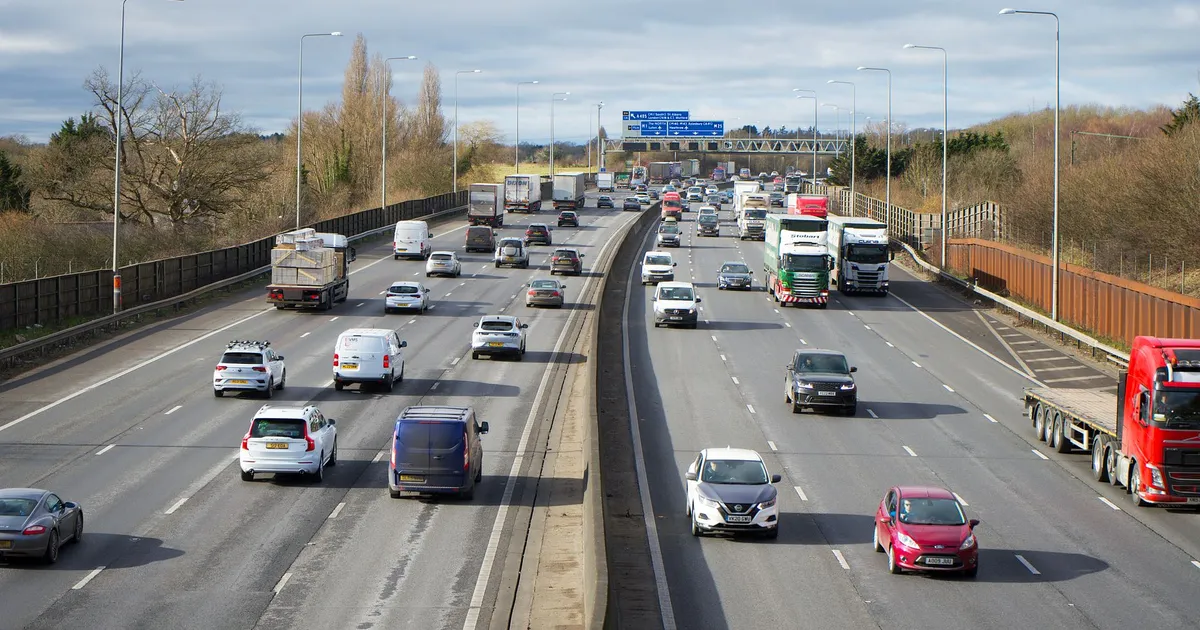
For businesses operating across greater Canterbury, the tolling debate is a proxy for the real question: who funds the infrastructure that makes cross-boundary commerce work? The Southern Motorway and Waimakariri corridor carry significant freight. Any tolling regime adds direct cost to logistics and supply chains for businesses split across council boundaries, which describes a large share of Canterbury’s industrial and agricultural sector.
But the alternative, continued underfunding and infrastructure decay, is also a business cost. It just arrives slowly enough that nobody sends an invoice.
The uncomfortable truth is that MacDonald’s provocation, Swiggs’s funding data, and Stoltz’s warning about service cuts all point to the same conclusion. Local government’s funding model is broken. Rates can’t stretch further, central government won’t fill the gap, and the merger process is being rushed on a timeline that virtually guarantees messy outcomes. Canterbury is simply the place where the contradictions are sharpest, because a fast-growing region is being asked to share infrastructure costs through a system designed for a different era. Tolling the neighbours is not the answer. But nobody has offered one that adds up either.
Sources
- Selwyn, Waimak residents should be tolled to enter city – councillor (2026-06-03)
- ‘Funding crisis’: Calls for fairer transport funding in the South Island (2026-06-02)
- Mayor determined to protect district’s identity as potential merger looms (2026-06-02)
- How Canterbury could be carved up under council reform (2026-05-29)
- Government sets merger clock ticking for Canterbury councils (2026-05-28)
- Local Authority Financial Statistics: Year Ended June 2024 (2024-05)
- Insights into local government: 2024 (2025)