

Buying a season instead of hoping for one
Coronet Peak will install a $2 million snow factory before the 2026 winter season, targeting a May 30 opening that natural snowfall could never reliably deliver. The investment is part of a $4 million capital works programme for the ski area and represents a fundamental shift in how alpine operators think about their product.
The technology, built by TechnoAlpin, freezes water internally through a closed circuit, producing up to 200 cubic metres of snow daily regardless of outdoor temperature. Traditional snow guns need sub-zero air to function. This system does not. Coronet Peak ski area manager Nigel Kerr called it a South Island first and framed the logic in blunt commercial terms: “Having guaranteed snow so early in the season sends a strong message that Queenstown is ready to welcome our winter visitors.”
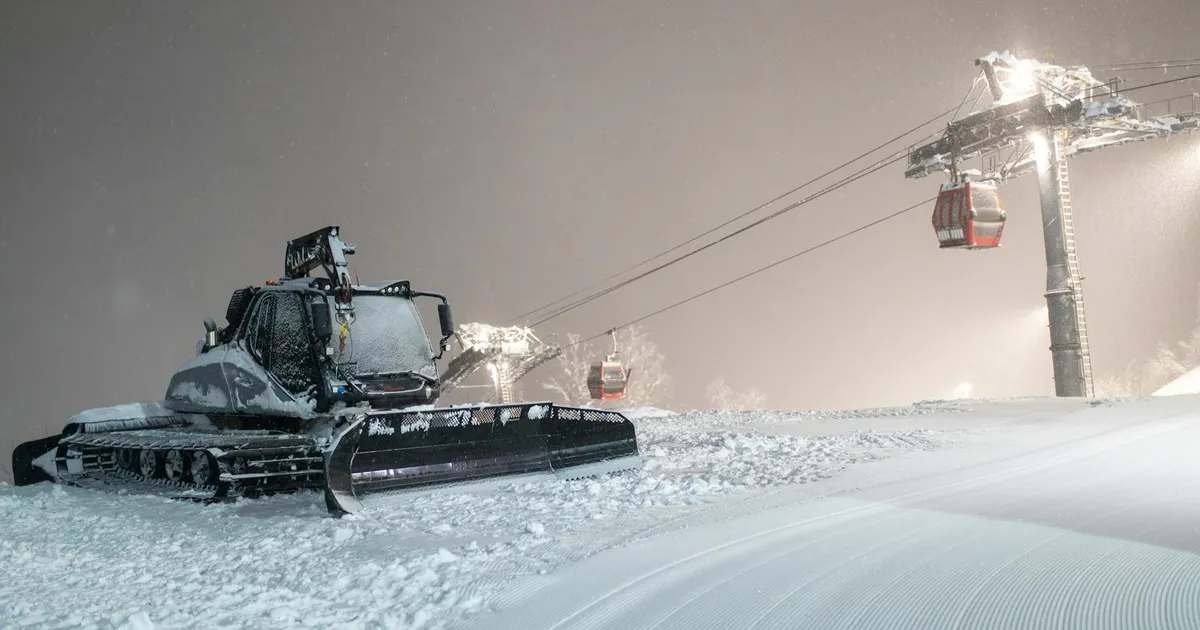
Coronet Peak already operates 217 fixed snow guns and seven portable units, the largest snowmaking setup in the Southern Hemisphere. The snow factory supplements rather than replaces that system, focusing on lower learner slopes where the field’s status as New Zealand’s lowest-elevation ski area makes natural coverage least reliable.
The Australian bookings problem
The commercial logic starts with a phone in Sydney. Australian visitors book ski holidays months ahead and need confidence the mountain will be open when they land. NZSki chief executive Paul Anderson has been direct about this: “From a customer perspective, snowmaking means they can book with confidence and still turn up knowing that we will mostly likely be open from when we say we’ll be open.”
The 2025 season proved the point. NZSki recorded 733,000 skier visits, up 7% from 686,000 in 2024. Australian visitors jumped 31% to 176,000. That growth came despite the second-driest July on record, going back to 1881. Snowmaking turned what should have been a terrible month into a record year.
But the broader tourism recovery remains incomplete. International visitor spend hit $12.1 billion for the year ending June 2025, up 4.3%, yet adjusted for inflation it sits at just 86% of pre-pandemic levels. Australian visitor spend actually fell 6.7% in the June 2025 quarter. Operators competing for a market that has not fully recovered cannot afford to lose days.
Variability is the enemy
Historical data makes the stakes concrete. Between 2003 and 2014, Coronet Peak’s open days ranged from 97 to 126 per season. In 2008, the field managed only 97 open days with 21 closures. A 29-day swing between a good year and a bad one cascades through staffing, accommodation, and the entire Queenstown hospitality chain.
Anderson has acknowledged the limits of even existing snowmaking: “There’s been one year in the last 10 where we had to close Coronet Peak for 10 days during the season because you need to get the right temperatures to make snow as well.” The snow factory eliminates that temperature dependency entirely.
NIWA hydrological forecasting scientist Jono Conway has quantified the forward risk: the elevation needed for 90 days of natural snow cover will move up by 200 metres by mid-century under 1.5 degrees of warming. Coronet Peak, already the lowest ski area in the country, is most exposed.
Spend or cede the market
Snowmaking is rapidly becoming the backbone of New Zealand ski operations, not a backup. Cardrona and Treble Cone general manager Laura Hedley has articulated the industry-wide pressure: “Any of us could have a season like RAL did this year. We just need to keep up with whatever we can do to invest in trying to make it as certain as we can.”
Capex is accelerating everywhere. The Remarkables added a new Shadow Basin chairlift. Cardrona invested in a hybrid electric groomer. NZSki’s three fields run on 100% certified renewable electricity through Meridian Energy. The arms race is real.
The lock-in risk nobody wants to discuss
Professor Paolo Aversa from King’s College London, researching artificial snow’s long-term implications, identifies a structural trap: “Resorts continue to invest heavily in snow cannons, reservoirs and grooming vehicles, even in areas where artificial snow may soon become unviable.” In Italian resorts, snowmaking consumes 30-40% of total energy and costs up to €100 million annually. European ski pass prices have risen around 40% since 2021, narrowing the customer base to high-income visitors.
Coronet Peak is applying for a 40-year DOC concession to underpin the investment. Environmental physicist Dr Inga Smith lodged the only formal objection, requesting the lease be shortened to 20 years with a 10-year review. It is a reasonable question. A four-decade infrastructure bet on a site whose natural snow viability is genuinely uncertain deserves scrutiny, even if the short-term economics are compelling.
For Queenstown’s accommodation providers, restaurants, and transport operators, the early-season certainty is unambiguously positive. But across the industry, the capital required to stay competitive is only going one direction. Climate volatility has turned alpine tourism from a business that waited for weather into one that manufactures it. The question is no longer whether to spend, but how long the spending can outrun the physics.
Sources
- Otago Daily Times: Snow factory to solidify skifield opening
- NZSki: Coronet and the snow factory
- RNZ: Some ski field operators poised to welcome season’s first skiers
- RNZ: Ski fields rely on snow-making tech as climate chaos rains down on businesses
- NZSki: Coronet Peak 2025 Winter Media Kit
- MBIE: International Visitor Survey – Year end June 2025
- Figure.NZ: Operating days of Coronet Peak ski field 2003-2014
- Snowfall.co.nz: Is snowmaking the new normal for NZ ski fields?
- King’s College London: Will artificial snow save the ski industry in the long run – or curse it?