

The price gap tells the real story
Forget volume. New Zealand whiskey is selling into international markets at an average export price of USD $11 per litre, well above the USD $4-7 range for bulk exports from Ireland and the United States. That is not a marketing claim. It is what overseas buyers are actually paying, and it puts NZ in the same bracket as Japan’s craft distilleries.
Total spirits exports sit at $40-50 million annually, modest by wine industry standards. But NZ wine exports now exceed $2 billion, up from under $20 million in the 1990s. The spirits producers building brands today are explicitly following that trajectory, and the early numbers suggest the model works.
Exports to Australia, Singapore, Germany and the UK have seen year-over-year growth of up to 30%. The 2024 NZ Spirits Awards attracted 451 entries, near record numbers. This is not a cottage industry anymore.
Consumers are drinking less but spending more
The domestic picture reinforces the premium thesis. Stats NZ data for the year ended December 2023 shows total alcohol available for domestic consumption fell 4.3% to 477 million litres. Spirit-based RTDs dropped 7.0%. But traditional spirits, vodka, whisky and gin, rose 1.4%.
Over the longer term, spirits’ share of NZ’s total alcohol consumption mix grew from 26% to 35% between 2009 and 2023. Beer fell from 36% to 26%. Wine dropped from 33% to 24%. Spirits NZ CEO Robert Brewer puts it plainly: “Although consumers are drinking less and less harmfully when they do spend they tend to buy premium which is right in the spirits industry’s sweet spot.”
Excise tax makes premium the only viable game
Here is what most coverage misses. 60-70% of the retail price for full-strength spirits is excise tax and GST. That means competing on price in the domestic market is structurally impossible for a small producer trying to generate viable margins. Premium export is not just an aspiration. It is the only escape route from a tax-distorted home market.
The excise burden is effectively pushing NZ’s best producers offshore for margin. The export outcomes are positive, but it says something uncomfortable about domestic policy when the tax system penalises the very quality it should be rewarding.
$30 million bets on terroir
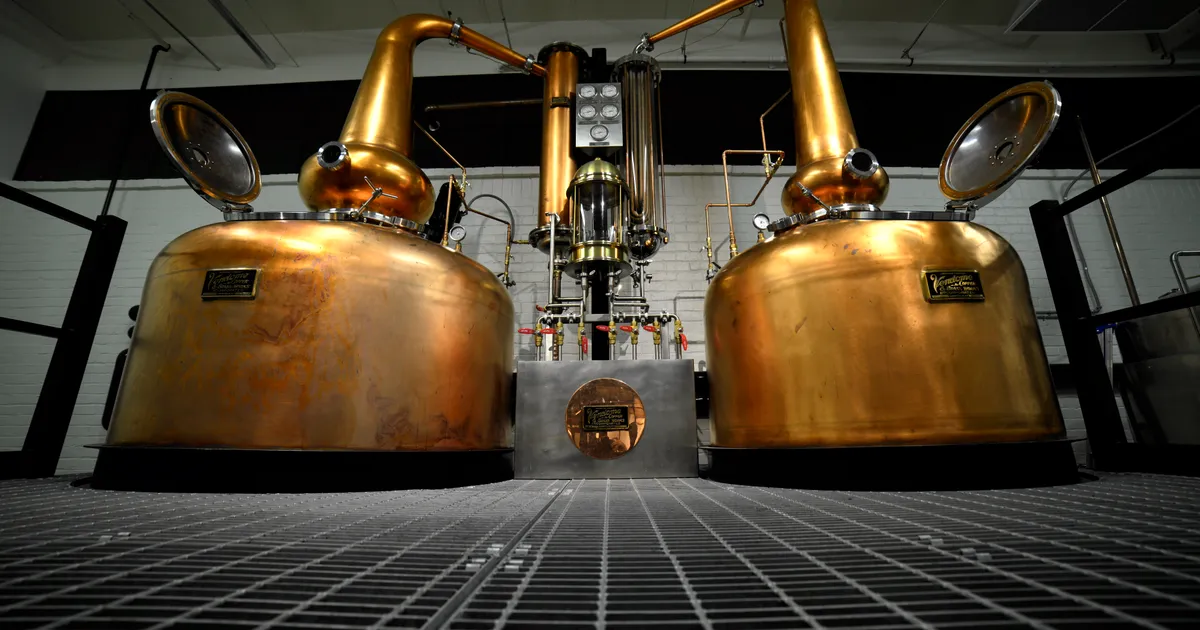
Scapegrace, which started as Rogue Society in a small Ponsonby office 11 years ago, has just opened a $30 million architecturally designed distillery on the shores of Lake Dunstan with capacity for 160,000 cases annually. It exports to about 40 markets. The board is chaired by Graeme Lord, former chair of Delegat Group, a wine industry veteran who knows exactly what the premium export playbook looks like.
The terroir argument is not just marketing. Co-founder Daniel McLaughlin explains that the 45th parallel location creates “really high temperatures in summer and really low temperatures in winter, and it creates a lot of torque between the whiskey and the casks.” Cardrona’s head distiller Sarah Elsom makes the same point about extreme temperature swings accelerating maturation, producing complexity faster than Scotland’s consistent climate allows. Cardrona’s The Falcon won double gold with 95 points at the 2025 San Francisco World Spirits Competition, the only NZ whisky to achieve that honour.
At the other end of the scale, Rhys Julian’s Strange Nature Gin shows the model works without massive capital. Distilled from sauvignon blanc grape spirit with traceable Marlborough vineyard sourcing, the brand is available in over 600 domestic outlets and distributed in 10 countries including the UK, US, Singapore and India after just three years.
The export lesson other sectors keep ignoring
The spirits story is a working model for any NZ exporter trying to escape commodity pricing. Lead with provenance. Validate through international competitions. Enter premium retail and duty-free channels first. Price above the market rather than into it.
Twenty years ago, fewer than 10 truly commercial NZ distilleries existed. Today there are almost 200. The MBIE/Coriolis report back in 2012 identified NZ-specific ingredients and super-premium positioning as the sector’s defensible advantage. That analysis has aged well. The producers winning internationally today are precisely those who leaned into it early.
The question for other export sectors sitting on distinctive New Zealand provenance, and there are plenty, is what exactly is stopping them from following the same logic.
Sources
- Economic Times: New Zealand’s emerging whiskey industry finds a global audience with export prices more than Ireland and the US
- RNZ: Premium liquor still going down well with consumers
- NZ Herald: The stunning $30m Kiwi distillery on the shores of Lake Dunstan
- Stats NZ: Decline in alcohol available domestically
- The Shout: Looking back on a year of two halves for the New Zealand spirits industry
- Drinks Biz: Hopes high for NZ’s premium spirits in 2025
- City AM: Whisky Business – A New Zealand brand blazing a trail
- NZ Herald: Strange Nature Gin founder on tackling an over-populated category