

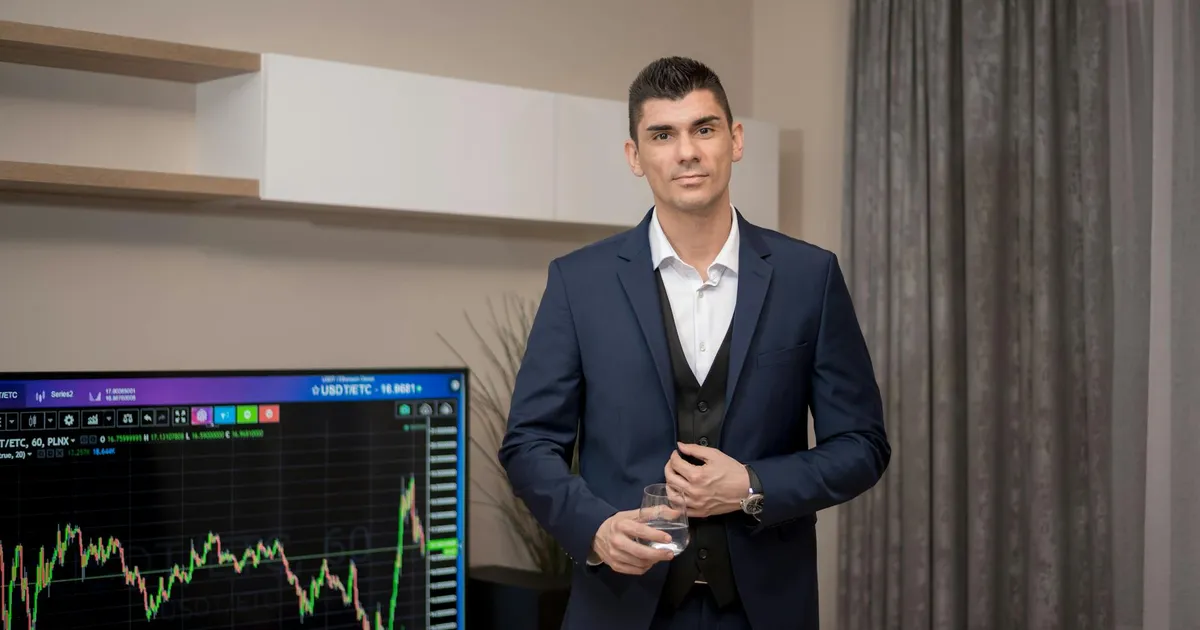
Mark Darrow is stepping down as chair of MTF Finance at the end of his current term in mid-2026, closing a six-year tenure that transformed a regional vehicle finance outfit into a $1.2 billion non-bank lender. The transition is orderly. The question it raises is not.
When did MTF Finance become this big, and why are so few business owners paying attention?
A hundred percent growth in the toughest credit cycle in a decade
The numbers under Darrow’s watch are difficult to dismiss. Finance receivables grew to $1.098 billion by the end of FY25. New lending hit $792.2 million, the third-strongest year on record. Profit after tax nearly doubled to $10.2 million from $5.2 million the year before. Total dividends rose 58% to 27.50 cents per share, plus a special dividend of 10 cents.
CEO Chris Lamers put it plainly: Darrow brought “a focus and drive to the organisation that kicked off an extraordinary expansion period, nearing 100% business growth.”
That growth happened while the major banks were tightening credit standards under regulatory pressure, making it harder for consumers and small businesses outside the main centres to borrow. MTF filled the gap.
Growing fast without blowing up the loan book
Growth during a tough cycle is one thing. Doing it without wrecking credit quality is another. Only 0.35% of MTF loans were 31 or more days in arrears at year end, a figure most bank treasurers would envy. The company’s Net Promoter Score of 81.9 sits against a financial services industry average of 16.
MTF actually pulled back slightly on new lending in FY25, with $792.2 million against $821.5 million the prior year, a deliberate decision to protect customer outcomes rather than chase volume. That discipline is worth noting. Non-bank lenders that grow recklessly tend to make headlines for the wrong reasons. MTF has avoided that trap.
The franchise model distributes real money to regional NZ
What makes MTF unusual is its cooperative-style structure. Across 55 franchises, originators who are often also shareholders earned a record $91.6 million in FY25. That is not corporate profit extracted to Auckland. It is economic value distributed to small business owners in towns like Dunedin, Invercargill, and Timaru.
Lamers flagged where the opportunity sits next: “We are seeing encouraging signs across New Zealand, in particular in regional New Zealand and the South Island, where improving confidence in sectors like agriculture, tourism, and construction is flowing through to customers and small businesses.”
The company’s stated growth priorities include SME lending, longer-tenure and specialist products, and continued investment in franchise and dealer networks. That is a deliberate move up the credit complexity curve, directly into territory that matters to B2B readers who need finance for vehicles, equipment, or working capital.
A technology spine that the next chair inherits
One of the less-discussed dimensions of Darrow’s tenure is the MTF Connect platform rebuild, a complete overhaul of technology infrastructure covering lending, customer management, data, finance, HR, and marketing systems. Rollout to originators began in FY25 with completion scheduled for the first half of 2026. The next chair inherits a modern platform, not a legacy system held together with spreadsheets.
Finding a replacement will not be easy
Noel Johnston, a shareholder since 1985 and motor vehicle dealer from Dunedin, will serve as Acting Chair while the board searches for a permanent independent appointment. Johnston represents continuity of the franchise culture. He said MTF “has always been about people, local people helping local people.”
But Darrow’s governance credentials are formidable. He simultaneously chairs TSB Bank, sits on the Auckland Transport board, and serves on the Inland Revenue audit committee, among other roles. Replacing that calibre of independent director is a genuine challenge in a market where experienced commercial governors are in high demand.
Darrow himself struck a forward-looking note at the 2026 AGM: “MTF enters 2026 with momentum, a strengthened platform, and a clear focus on execution.”
The business he leaves behind is in good shape. The real test is whether the next chair can convert a vehicle finance franchise into a serious SME lending platform. For the growing number of business owners the banks are not interested in serving, the answer matters.
Sources
- NZ Business: MTF Finance Chair Mark Darrow to retire in 2026 (2026-03-11)
- Autotalk: MTF Finance chair Mark Darrow to step down (2026-03-11)
- Autotalk: MTF Finance appoints Johnston as deputy chair (2026-03-11)
- MTF Finance: MTF Signals Next Phase of Growth Following Strong FY25 Performance (2026-03-10)
- MTF Finance: Annual Report 2025 news release (2025-12)
- MTF Finance 2025 Annual Report (PDF) (2025)
- MTF Finance: Board of Directors