

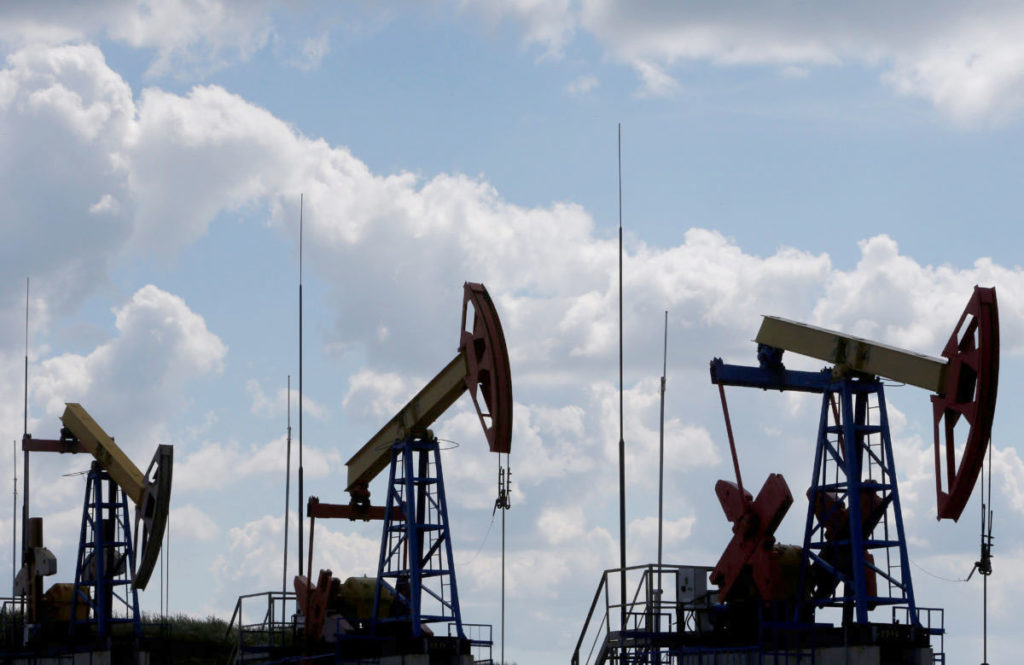
Crude oil prices have soared back above $100 a barrel as Asian markets reopened on Monday, driven by the collapse of U.S.-Iran talks and President Donald Trump’s announcement of a blockade on Iranian ports.
The global Brent crude benchmark climbed 7.3% to $102.30, while West Texas Intermediate rose 8.7% to $104.94. This sharp reversal highlights growing worries over a deepening worldwide energy shortage after weekend negotiations failed to yield a deal.
The fragile truce agreed last Wednesday had briefly eased restrictions on the Strait of Hormuz, a vital artery carrying one-fifth of global energy shipments. But hostilities, sparked by Tehran’s retaliation to U.S.-Israeli strikes on 28 February, have since stalled most traffic through the strait.
While countries like India and Malaysia secured safe passage for their tankers, the disruptions have sent fuel costs surging globally, with European petrol up 15% year on year and U.S. gasoline averaging £3.20 per gallon, Bloomberg reports.
Economist Chua Yeow Hwee from Singapore’s Nanyang Technological University noted that markets had watched the talks closely for signs of relief. “Oil prices are likely to remain elevated because expectations now depend on whether the blockade is fully implemented, whether shipping disruptions spread, and whether diplomacy resumes,” he said.
Asian stocks slipped in response, Japan’s Nikkei 225 down 0.7% and South Korea’s Kospi off 1%, reflecting the region’s heavy reliance on Middle Eastern oil, which accounts for 80% of its imports per Reuters. Wall Street futures also pointed lower.
Trump declared on Truth Social that the U.S. would begin “BLOCKADING any and all Ships trying to enter, or leave, the Strait of Hormuz.” U.S. Central Command confirmed the measure starts at 10:00 ET Monday, targeting vessels to and from Iranian ports impartially while sparing non-Iranian strait traffic.
Iran hit back forcefully. Parliamentary speaker Mohammad Bagher Ghalibaf said the country will not submit to any threat. The IRGC Navy warned that approaching warships would face severe action as ceasefire violators.
Analyst Saul Kavonic of MST Marquee told the BBC prices remain subdued relative to supply shocks due to lingering resumption hopes. “The truth is, oil prices are not as high as they normally would be given the scale of disruption to supplies because traders still hope shipments will resume soon,” he said. “But if that doesn’t happen, oil prices will head higher.”
JPMorgan predicts Brent could reach $120 by May if tensions mount, echoing 2019 tanker crises.