

$2.6 billion a year in lost time
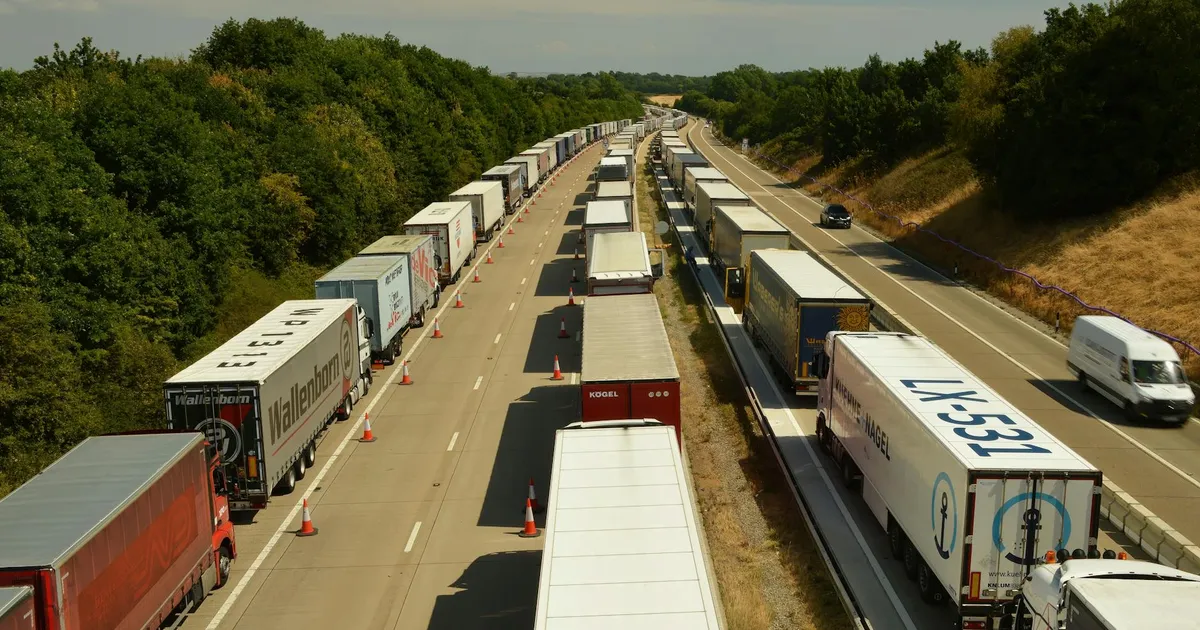
Auckland’s congestion problem has a price tag, and it is not small. A report commissioned by Mayor Wayne Brown from EY and ARUP estimates traffic congestion will cost the city $2.6 billion annually by 2026, split between $1.9 billion in delay costs and $0.7 billion in macro-economic drag. The average commuter already loses 66 hours a year stuck in peak-time traffic, and the city ranked 77th worst globally for congestion out of 500 cities in 2024.
This is not just Auckland’s problem. The city generates $157 billion in GDP, or 38% of the national total, with a 9% labour productivity premium over the rest of the country. Infrastructure New Zealand CEO Nick Leggett puts it directly: “if supply chains don’t move effectively through Auckland, it has a national impact.”
The tools exist, the willpower doesn’t
Parliament did its part. The Land Transport Management (Time of Use Charging) Amendment Bill passed unanimously in November 2025, giving local authorities the power to propose congestion pricing schemes. Revenue must be reinvested in transport infrastructure. The framework, modelled on systems in London and Singapore, is sound.
The business case is equally clear. EMA Head of Advocacy Alan McDonald says Aucklanders lose 22 million hours per year in traffic, equating to a $1.3 billion annual GDP hit. An NZIER focus group funded by EMA found time-of-use charging would give tradies roughly two extra jobs per day. Transport Minister Simeon Brown offered his own example: a concrete truck driver stuck completing two trips daily could manage three or four with congestion pricing, with revenue gains far exceeding the charge.
Proof of concept already exists in Auckland. The Port of Auckland’s truck container collection charges increased night traffic by 50% and reduced daytime congestion by the same proportion. Pricing works. Auckland proved it.
Two years of work, zero design parameters
Here is where the story curdles. The Auckland Transport and Auckland Council joint programme team has been working on time-of-use charging since 2023. As of its July 2025 update, the study had not yet considered price levels or times of day for charging. Two years of work without settling the most basic design parameters.
Mayor Brown has said Auckland motorists will not face peak-hour charges in the near term, with “extensive engagement” required first. The council’s transport committee won’t even decide whether to investigate a scheme until 2026. At this pace, actual charging is realistically 2028 to 2030, assuming no political reversal.
Leggett names the pattern: a “study loop” where projects are “revisited, often redesigned and delayed rather than actually delivered”. The second harbour crossing and light rail are Exhibit A.
The city deal is either the circuit breaker or the next talking shop
The Auckland city deal is supposed to change this dynamic. Committee for Auckland director Mark Thomas describes it as a structured long-term partnership between central and local government, modelled on UK frameworks. It has been on the agenda since National announced it in June 2023.
Thomas’s warning is pointed: “without substance, clearer commitments, and strong delivery architecture, the deal risks becoming another example of Auckland taking too long to make too little of too great an opportunity.” Auckland’s track record justifies the scepticism. The 2010 super-city amalgamation and subsequent deals have been “narrow, transactional, and tied to political moments.”
The Treasury’s own Regulatory Impact Statement concedes the status quo “has not been effective in maintaining network service levels over 25 years” and that Auckland underperforms similarly sized Australian cities like Perth and Canberra.
What businesses should actually watch for
EMA’s McDonald frames the stakes plainly: “If it’s not done right this time it will be years before we can have another shot at introducing the charges.” The governance complexity is real, spanning local roads, motorways, social equity, technology, and public transport alternatives.
For freight operators, service businesses, and anyone whose revenue depends on moving through Auckland, the question is whether the city deal provides the delivery architecture that forces decisions rather than studies. The legislation is done. The evidence is overwhelming. The proof of concept is local. Every month of delay costs Auckland businesses their share of $2.6 billion. The city deal is either the mechanism that breaks the study loop, or it is the study loop’s next iteration.
Sources
- Traffic congestion could cost Auckland $2.6 billion a year – RNZ (2024)
- Time-of-use charging – Auckland Transport
- Auckland Economic Quarterly Q1/Q2 2025 – Auckland Council Chief Economist Unit (2025)
- Auckland’s traffic woes threaten New Zealand’s productivity – RNZ (2025)
- Time of use charging schemes – Ministry of Transport
- Time of use charging a boost for business productivity – EMA
- Government accelerates congestion charging plans – RNZ
- Auckland Mayor Wayne Brown says motorists will be spared peak-hour charges for now – NZ Herald
- Auckland Time of Use Charging programme update July 2025 – Auckland Transport (2025-07)
- Auckland city deal: what the new agreement must deliver – NZ Herald
- Regulatory Impact Statement: Time of use charging
- Alignment needed for introduction of Auckland congestion charges – EMA