

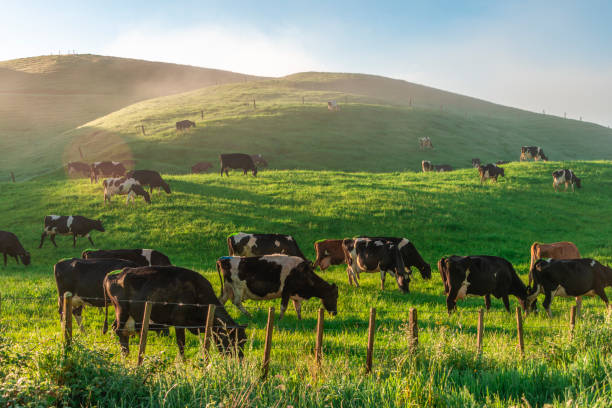
Fonterra chief executive Miles Hurrell has resigned after eight years at the helm. Greenpeace says the next CEO inherits a poisoned chalice of unresolved issues.
“Hurrell’s made millions, while the dirty dairy industry has poisoned rural communities’ drinking water and trashed lakes and rivers. Now he’s taking the money and running,” Greenpeace Agriculture Campaigner Sinéad Deighton-O’Flynn said.
“Under Miles’ leadership, Fonterra has been making a killing selling cheap and dirty milk powder overseas while selling out New Zealanders and destroying the environment. Whoever steps in to fill Hurrell’s shoes has a big mess to clean up.”
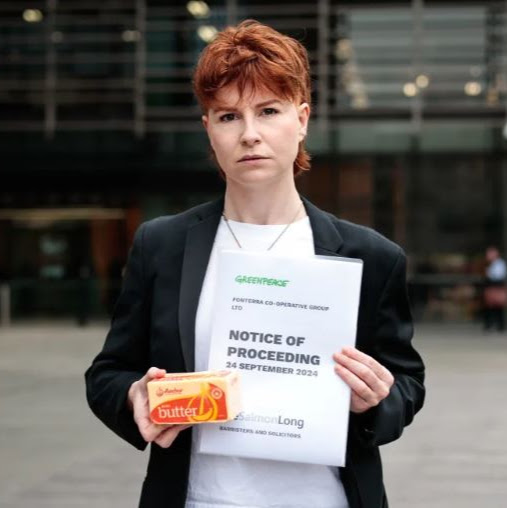
Greenpeace insists the issue runs deeper than Hurrell. For the organisation, Fonterra’s core business model is fundamentally broken.
“Under Fonterra’s intensive dairying model there are so many cows crammed into paddocks that the land can’t sustain them all.”
“So the industry relies heavily on destructive imported inputs, like synthetic nitrogen fertiliser and palm kernel expeller, to feed all of the cows.”
“Not only are these inputs harmful to the people and the environment, they’re becoming more expensive and less reliable due to global shocks, as we’re seeing with fertiliser stuck in the Strait of Hormuz. This puts Fonterra’s farmers in an increasingly vulnerable position.”
Greenpeace urges reform of New Zealand’s food systems, calling on Fonterra’s new CEO to back a shift from intensive livestock farming to regenerative, ecologically sound practices.
“Fonterra claims to ‘feed the world’, but right now, it’s not even feeding New Zealanders.”
“Most of what Fonterra produces is milk powder for chocolate and potato chips; meanwhile, people can’t afford to buy butter at the grocery store.”
Deighton-O’Flynn calls for resilient food systems that truly nourish Kiwis.
“It’s time to transform the way we farm in Aotearoa. We need fewer cows, less fertiliser use, and a transition towards ecological agriculture practices – which are better for the planet and better for us.”