

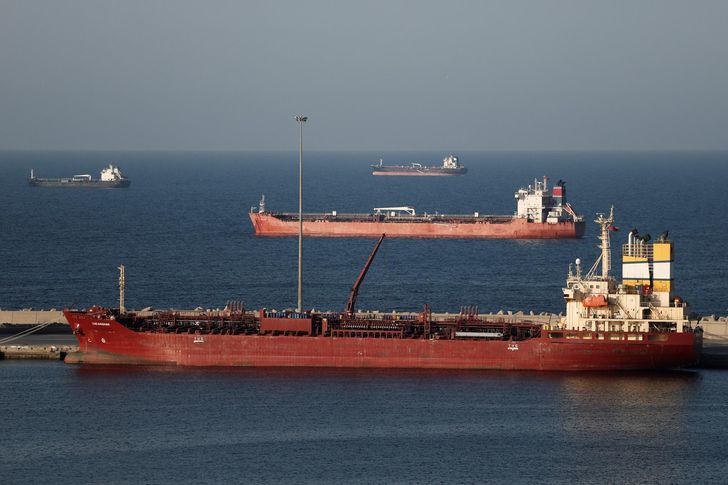
Kuwait has dramatically curbed its oil production and refining in response to Iran’s blockade of the Strait of Hormuz, leaving tankers stranded in the Persian Gulf and exacerbating a worldwide energy crunch.
Officials confirmed the precautionary reductions on Saturday, stressing they would be “reviewed as the situation develops,” though they disclosed no precise figures on daily barrel cuts. As OPEC’s fifth-largest producer with January output at 2.6 million barrels a day, the emirate’s state firm, the Kuwait Petroleum Corporation, insisted it “remains fully prepared to restore production levels once conditions allow.”
The U.S.-Iran war has unleashed chaos, propelling oil prices to record weekly highs amid acute supply fears. Brent crude surged 8.52 per cent or $7.28 to settle at $92.69 a barrel on Friday, marking its steepest gain since April 2020 at 28 per cent. West Texas Intermediate jumped even more sharply, up 12.21 per cent or $9.89 to $90.90, as U.S. crude logged a historic 35.63 per cent weekly rise, the biggest since futures began in 1983.

JPMorgan warns the strait, vital for 20 per cent of global oil flows, could trigger over 4 million barrels daily in shutdowns by next week if sealed longer.
“The market is shifting from pricing pure geopolitical risk to grappling with tangible operational disruption,” said Natasha Kaneva, the bank’s global commodities research head, in a Friday note to clients. She previously predicted Gulf storage exhaustion after three weeks, spiking Brent beyond $100 a barrel and halting wells.
Neighbours feel the pinch too. Iraq slashed 1.5 million barrels per day as tanks overflowed, per officials speaking to Reuters on Tuesday. Saudi facilities hover at 95 per cent capacity, Bloomberg reports, while Qatar suspended LNG output Monday following Iranian strikes, disrupting one-fifth of world supplies of the supercooled gas used for power and heating.
This chokepoint vulnerability threatens inflation surges and rationing worldwide, with the International Energy Agency alerting on shortages and the Financial Times highlighting recession risks for import-reliant regions.