

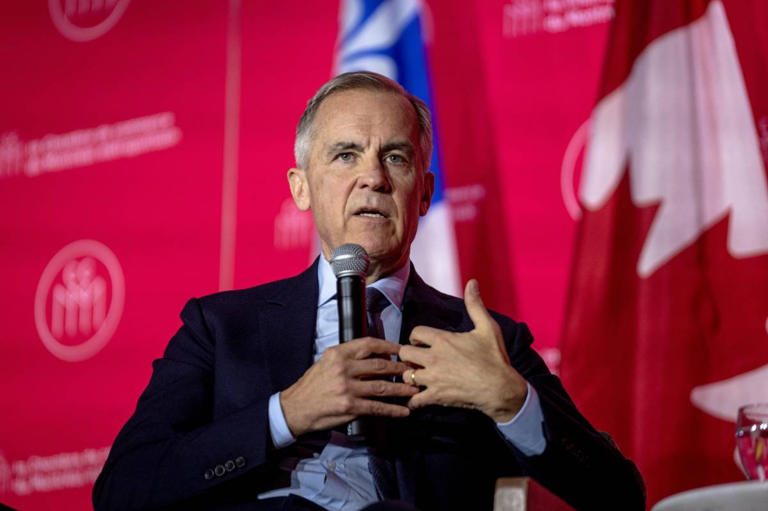
Canada’s Parliament has narrowly approved Prime Minister Mark Carney’s first federal budget, allowing his minority Liberal government to avoid an early election.
The budget, projecting a deficit of around C$78 billion, passed by 170 votes to 168 with vital support from opposition MPs including Green Party leader Elizabeth May.
Carney, former governor of the central banks of Canada and the UK, has called the plan a “generational investment” to strengthen the economy. The government, two seats short of a majority, relied on full Liberal support plus abstentions and votes from opposition members to pass the budget.
Key abstentions included two New Democratic Party MPs, the House Speaker, and Conservative MPs Shannon Stubbs and Matt Jeneroux. May supported the budget after Carney committed to respecting Canada’s climate goals, stating, “Without what I heard from the Prime Minister today, I would have voted no.”
The Conservatives, led by Pierre Poilievre, and the Bloc Québécois opposed the plan, criticising it for neglecting affordability. Poilievre described it as a “credit card budget,” warning it jeopardises Canada’s financial future. Liberal MP Nathaniel Erskine-Smith supported the budget but voiced concerns about its insufficient housing and climate measures.
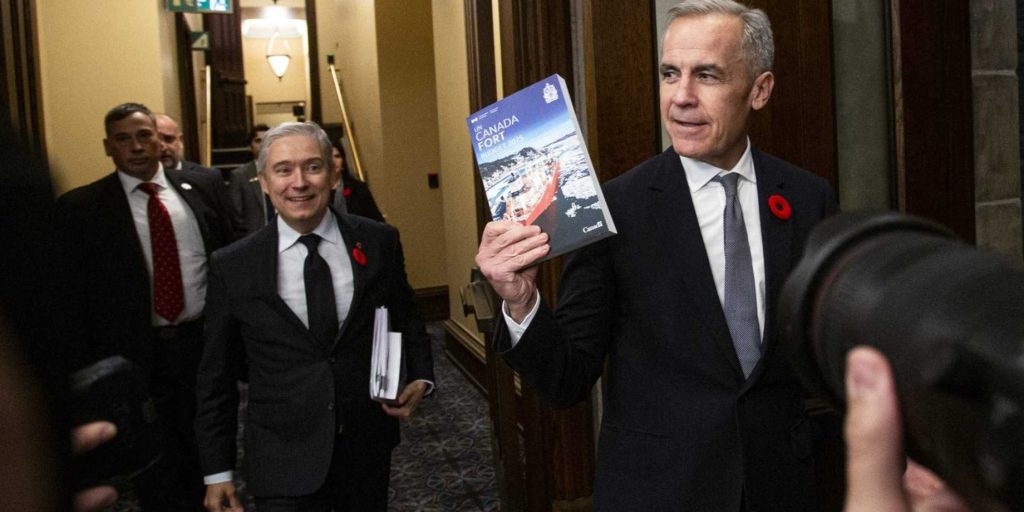
Budget 2025 allocates C$140 billion over five years to boost productivity, competitiveness, and economic resilience. A major initiative, the “Buy Canadian” policy, directs nearly C$186 million across government to prioritise Canadian materials and products, aiming to inject up to C$70 billion of public investment into domestic supply chains and industries.
The budget also commits to upgrading ports and trade infrastructure to double exports beyond the U.S. in a decade and supports businesses affected by the tariffs.
To finance the spending, the government plans to cut the federal workforce by 10%, provoking criticism from public sector unions concerned about efficiency.
The budget’s passage followed political upheaval, including the defection of Conservative MP Chris d’Entremont to the Liberals over leadership concerns and Jeneroux’s resignation. Despite these challenges, Poilievre affirmed his leadership commitment, promising to fight for an affordable Canada where citizens can afford essentials.
“My plan is to continue to lead and be the only leader that’s fighting for an affordable Canada where our people who work hard can afford a home and food,” he said.