

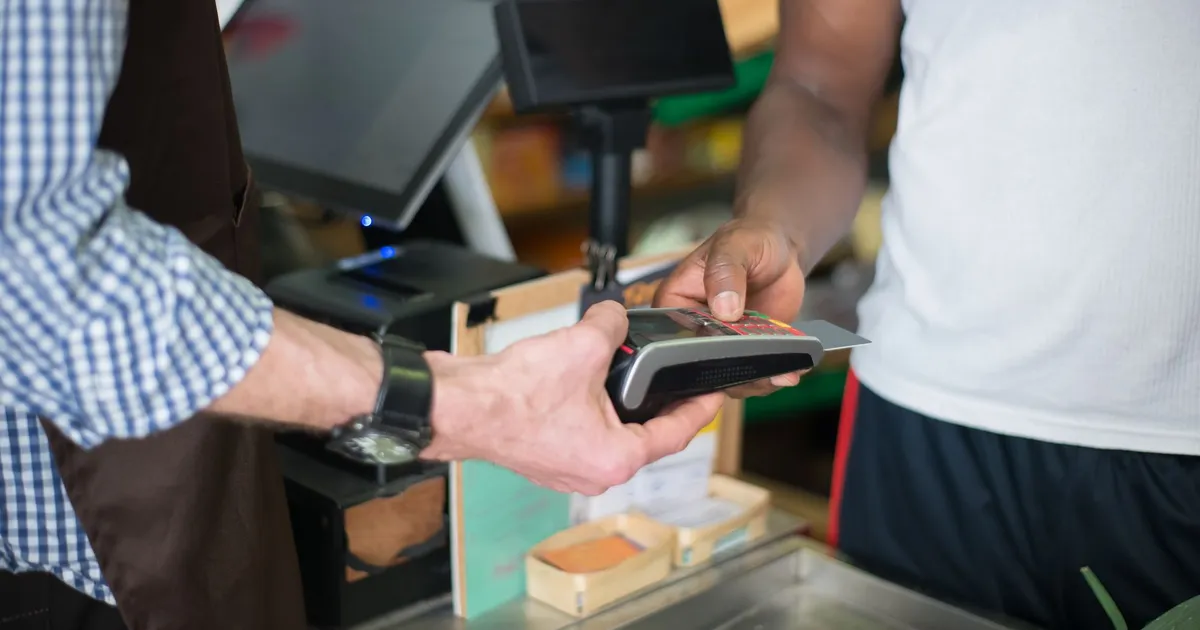
Nadine Higgins’ column in the Herald today describes being refused cash at an activewear shop, a food kiosk and nearly a supermarket self-checkout. Plenty of readers will recognise the experience. Cash remains legal tender, but as RNZ explained in 2024, a clearly displayed cashless policy effectively contracts customers out of the right to pay with notes at the counter.
The consumer irritation is the least interesting part of this. The real story is that retailers are quietly rewiring their payments infrastructure, and most are not pricing what they are taking on.
The shift has already happened
The Reserve Bank’s 2025 Cash Use Survey, published in October, found only 56.6% of people used cash for everyday purposes, down from 95.8% in 2019. Some 38.7% had not touched cash in the previous week, up from 30.9% in 2023. Cash use at supermarket checkouts fell from 38.0% to 28.5% over six years, and at other shops from 19.7% to 10.5%.
The exclusion number is the one businesses should note. The same survey found 19.5% of people were unable to use cash at some point in the past three months because it was not accepted. Rural cash use, at 65.5%, still runs well ahead of urban use at 53.6%. A cashless policy that works in Ponsonby may cost customers in Pahiatua.
Why owners are walking away from the till
The case for ditching cash is not imaginary. Back in 2024, Newsroom reported Boston Consulting Group research, commissioned by Mastercard, putting the all-in cost of cash for New Zealand businesses at 3.6% per transaction, against 2.1% for in-store cards. Treat that with appropriate scepticism given who paid for it. The Commerce Commission’s independent 2023 research found SMEs paid average Visa and Mastercard merchant fees of around 1.5%, against roughly 1% for large merchants.
Cost is only part of it. In 2025 the Restaurant Association told 1News its members cited bank deposit fees, staff safety and slow reconciliation, with then-chief executive Marisa Bidois saying “it’s not just about convenience, it’s a financial and operational decision” for small businesses. Takapuna Surf Club went cash-free that year to protect staff from rising armed robberies. Those are rational calls.
The bill lands somewhere else
The problem is where the money goes instead. The Commerce Commission’s June snapshot shows New Zealand businesses now pay about $1 billion a year to accept Visa and Mastercard, with three in four payments running on those networks. Flat-fee EFTPOS is losing share because it cannot handle contactless, online or phone payments.
Retail NZ, representing 29,505 retailers including more than 25,000 SMEs, argues in its October submission to the Reserve Bank that over 71% of card payments now come through credit, contactless or digital wallets rather than cheaper debit. Small retailers have no negotiating power over those fees. Every business that drops cash deepens its dependence on the most expensive rails in the system.
Cash is getting harder to handle, not just to spend
The under-reported angle is that keeping cash is becoming harder even for retailers who want to. Writing in Central Banking in August, Martina Horakova described merchants facing restricted deposit hours, difficulty getting change, longer trips to banks and rising fees as branch networks shrink, and being expected to absorb those costs voluntarily.
The Reserve Bank saw this coming. Its 2019 Future of Cash paper described a self-reinforcing spiral where falling use raises the per-transaction cost of cash infrastructure, prompting banks and retailers to withdraw, which cuts use further. Legal tender status does nothing to stop that ratchet.
When the network goes down
The other cost is resilience. Retail NZ points to Cyclone Gabrielle, when card and digital payments failed across parts of the Eastern North Island while big retailers with special banking arrangements kept trading. When a Transpower pylon collapsed on 20 June 2024, electronic payments went down across Northland. A card-only shop in an outage is a closed shop.
What happens next
The Reserve Bank’s payments modernisation work is now the forum that matters, and its settings on merchant fees, EFTPOS viability and cash access could move materially in the next 12 to 18 months. NZ First’s 2025 Member’s Bill to force acceptance of cash for purchases up to $500 is the blunt alternative, and the wrong one. Mandating that a café accept notes does nothing about the bank fees and deposit hassles driving it away from cash in the first place.
The better fix is competition on card fees and a working cash network for those who want it. Until then, owners going cashless should do the maths honestly: model fee exposure as card mix shifts, and keep an offline fallback for the day the network fails. Dropping cash is a reasonable business decision. Pretending it is free is not.
Sources
- NZ Herald: Why cash is becoming harder to spend in New Zealand – Nadine Higgins (2026-11-21)
- RNZ: Cash still king for many, despite push for card-only payments (2024-07-01)
- Newsroom: Card or cash? The hidden cost of currency (2024-10-23)
- Commerce Commission: Retail Payment System – Merchant Research Observations (2023-05-04)
- 1News: Passing the bucks – Can businesses refuse to let you pay in cash? (2025-07-13)
- Commerce Commission: Payments monitoring snapshot – Convenience of Visa and Mastercard sees businesses pay more (2026-06-30)
- Retail NZ: Submission on Modernising New Zealand’s Retail Payments System (2026-10-27)
- Central Banking: Merchants in the cash system (2026-08-19)
- NZ Herald (Northern Advocate): Is cash still king? The Northland shops going cashless and customers resisting it (2024-12-27)
Join the discussion
Add useful context, ask a good question, or challenge an idea — keep it specific and respectful.