

Environment Southland is preparing a formal submission on OMV New Zealand’s marine consent application for continued operations at the Maari Field, 80km off the South Taranaki coast. It is not opposing the consent. It wants something more useful: binding safeguards, and a clear rule that responsibility for any incident sits with the operator and response agencies “without putting unreasonable burdens on regional authorities”.
That last line is the story. A region with no consenting authority over a North Island oil field is asking, in effect, whether New Zealand’s system for pricing offshore energy risk actually adds up. On the current evidence, it doesn’t quite.
A distant field, a local exposure
Maari is New Zealand’s largest oil-producing field, 69% owned and operated by OMV. The Environmental Protection Authority notified the application on 29 October, with submissions closing 10 December. OMV declined to comment.
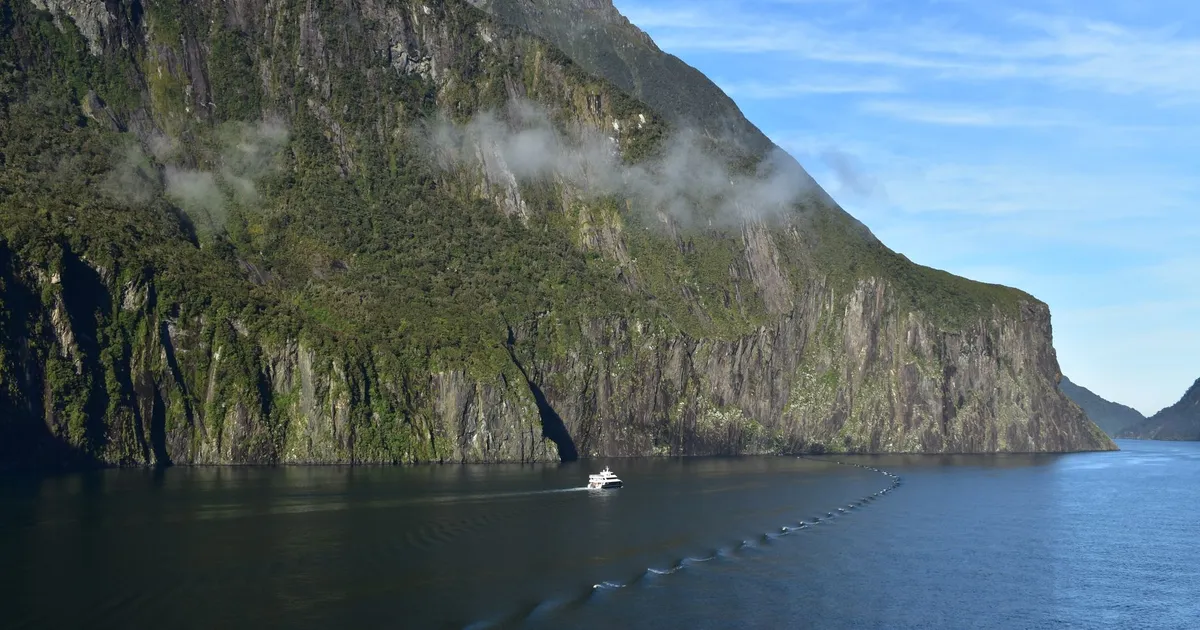
Southland’s draft submission seeks risk prevention, spill contingency planning, early notification protocols, response coordination and ongoing review. It describes the Fiordland coastline as “particularly sensitive due to its remote location, ecological significance, challenging maritime conditions, and limited accessibility for emergency response operations”.
To be clear about the science, nothing on the public record shows Maari oil is likely to reach Fiordland. OMV’s own 2020 stochastic modelling of a worst-case 5,000 cubic metre surface release found a 99% probability of shoreline oiling at a low threshold in summer and 96% in winter, with maximum shoreline accumulation reaching 564.9km at the 99th percentile. Up to ten marine reserves were exposed in winter. But the modelled risk centred on Taranaki and the wider North Island coast.
Southland’s move is precautionary and systemic, not a trajectory claim. That makes it more interesting, not less.
Fiordland’s price tag is already known
The exposure is not hypothetical. A peer-reviewed 2024 study in the Australian Journal of Agricultural and Resource Economics estimated a minimum of $140-154 million in direct costs from a spill in Milford Sound alone, covering clean-up, fisheries, tourism, recreation and environmental damage. That is one sound, at a minimum, before reputational damage to a tourism brand built on pristine wilderness.
The council has worried about this for years. Its 2018 regional contingency plan identified cruise ships and fuel-carrying vessels as the most likely sources of significant spills in the sounds and around Stewart Island.
The drills found the gaps
In April 2025, Maritime NZ ran the first joint spill exercise between Environment Southland and the West Coast Regional Council. Mick Courtnell, then Maritime NZ’s training manager, said at the time that the remote south was “quite a logistical nightmare to get there”. The drill exposed a concrete shortfall: every regional council has Maritime NZ spill gear, but none could lift sunken truck and trailer units from the seabed.
That is the response capability a remote coastline is relying on. Asking the operator to fund and coordinate more of it is not anti-industry. It is basic risk allocation.
The liability chain got shorter
The bigger worry is the backstop. When Tamarind Taranaki collapsed, the Crown had to set aside $443 million of taxpayer money to decommission the Tui field. A 2021 law change introduced trailing liability so previous permit holders could be pursued.
In 2025, then-Resources Minister Shane Jones moved to narrow that chain to the immediate past permit holder only. Officials warned him this was more lenient than Australia and the UK, which can pursue parent companies and associates, and confirmed the Crown could again end up paying if current and previous holders both went bust.
Operators must hold an approved contingency plan and proof of insurance under Marine Protection Rules Part 131. That layer matters. But insurance tested against a regulator’s expectations is not the same as a liability chain long enough to reach a solvent parent.
Modelling also carries uncertainty. Back in 2013, experts responding to separate deepwater projections noted that worst-case results can hinge on assumptions about flow control. Tail risk is exactly where the assumptions are weakest.
Mispriced risk is what kills the industry
For a pro-development audience, this is the uncomfortable bit. The surest way to lose public support for offshore oil and gas is not a protest. It is a Tui-style collapse, bigger and messier, with taxpayers and tourism operators picking up the bill. Every cut corner on liability brings that day closer.
Environment Southland has the right instinct. It is not trying to block a lawful, valuable activity. It wants the costs to sit with the party earning the returns. Charter operators in Milford, crayfish fishers and lodge owners have no say over Taranaki consents, but they would carry the losses.
The EPA will decide what conditions to attach after submissions close on 10 December. If it locks in binding notification, response and funding obligations, it strengthens the case for the industry. If it waves the application through on today’s thinner settings, the next government will be asked why the taxpayer is still the insurer of last resort.
Sources
- ODT: Council pushes to protect Fiordland against Taranaki oil spill (2026-11-20)
- EPA: OMV Maari Oil Spill Modelling Report (Marine consent application Appendix I) (2020-09-16)
- Scoop: Southern Councils Join Forces For Oil Spill Drill (2025-04-10)
- RNZ: Shane Jones told plans for limiting oil clean-up liability more lenient than Australia, UK (2025-02-10)
- Maritime NZ: Offshore Installation Oil Spill Contingency Plans and Insurance requirements
- Science Media Centre: Deep sea oil spill projections – experts respond (2013-10-23)
Join the discussion
Add useful context, ask a good question, or challenge an idea — keep it specific and respectful.