

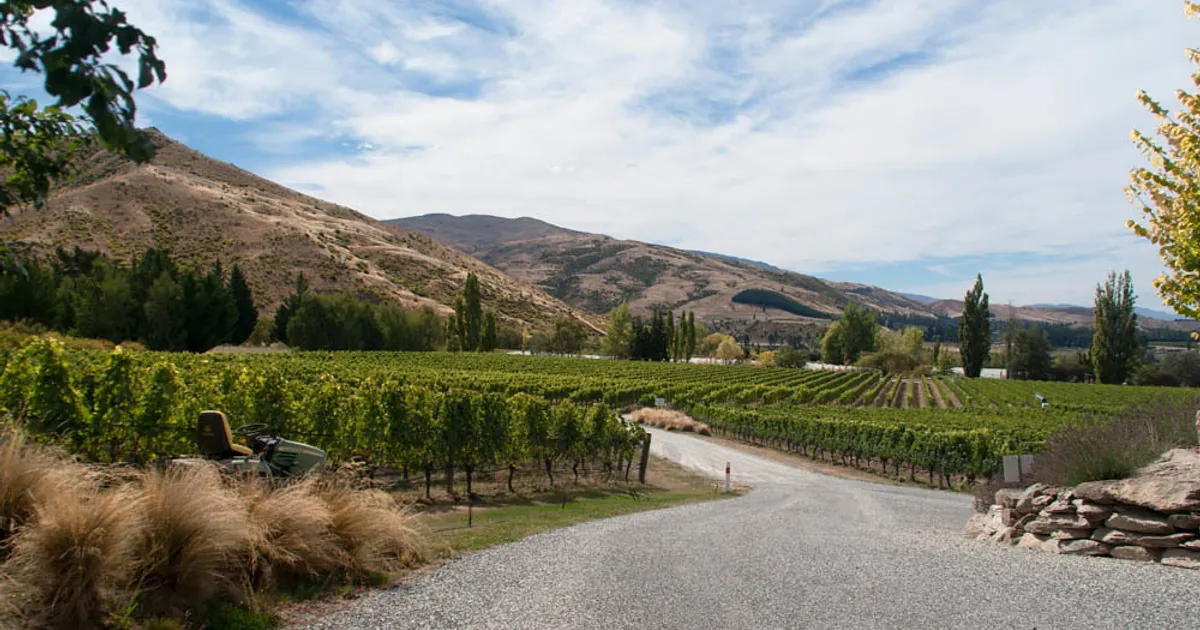
Foley Wines has done something most of the New Zealand wine industry would envy. It turned a loss into a profit in one of the worst global wine markets in a generation. But nobody should mistake the result for demand returning. The company is selling less wine, in fewer markets, and squeezing more out of every bottle to make the numbers work.
The NZX-listed owner of Mt Difficulty, Roaring Meg and Lighthouse Gin posted net profit after tax of $2.937 million for the year to 30 June 2026, up from a $1.857 million loss. Operating EBITDA rose 22.8% to $15.502 million. Over the same period, bottled case sales fell 9.5% to 552,000 cases and bottled revenue dropped 5.4% to $62.8 million. By our calculation, that is roughly 58,000 fewer cases than the year before.
Two big export markets went backwards
The regional figures tell the real story. Updated at the annual shareholders’ meeting in Blenheim, bottled case sales fell 26% in Australia and 10% in the US, while the UK and Europe rose just 2%, the only region to grow. The annual report shows Asia/Pacific down 21% and New Zealand down 4%.
The explanations matter. Foley attributes the Australian collapse to a swing to support locally produced products, which is a consumer preference shift, not a temporary glut. The US decline is linked directly to tariffs. Neither is a problem that cost-cutting in Marlborough or Central Otago can fix.
That sits awkwardly with the industry’s preferred framing. New Zealand Wine argues the pressure is largely a production issue rather than a demand one, and points out that New Zealand wine and Prosecco are the only styles holding steady in a contracting US category. BDO similarly describes the downturn as less about a collapse in demand for New Zealand wine and more about rebalancing after several very large vintages.
At the category level, that may be right. At the company level, Foley’s own numbers show demand-side and policy-driven weakness in two of its three biggest overseas markets.
Margin, not momentum
So how did profit improve? Average net revenue per case rose 4.7%, the core of the company’s premiumisation strategy. The rest came from reduced interest and administration costs, winery and viticulture efficiencies, and targeted promotional funding through distribution partners that kept brands in front of consumers as volumes fell.
It is competent execution. Chief executive Mike Higgins told shareholders 2026 had been a year of progress in a very challenging global economy, and that is a fair description. Operating earnings rose more than fourfold. Debt service costs fell. The business is leaner than it was a year ago.
But there is a cost buried in the result. Foley booked an unrealised loss on harvested grapes of $3.187 million, driven by lower yields and falling market grape prices. Vertical integration cuts both ways. The same oversupply that is depressing prices for independent growers is hitting Foley’s own vineyards, even while its finished wine earns better margins.
Management is not promising a rebound
In August, Higgins said the company was well positioned for growth as market conditions improve. The November update is considerably more sober. It describes a significant over-supply situation considered to be at least two years away from equilibrium, with upward pressure on costs and downward pressure on net price. The stated response is managing operating costs, cost of goods and capital expenditure, with emphasis on debt reduction.
That is the language of a company bracing, not expanding. And the market appears to agree. Despite the profit swing, shares were trading at 55 cents in late August, down 8% over the year. Investors are paying for the volume story, not the margin one.
A template the rest of the sector will struggle to copy
Foley has advantages smaller operators lack: recognised premium brands, a US distribution arm through the roughly 65%-owning Foley family, and the balance sheet to keep funding promotion. Many growers have none of that. BDO’s Rosie Jarvis describes Marlborough as a perfect storm, with growers hit by lower prices and lower volumes while labour, insurance and fertiliser costs stay high.
The lesson for the wider sector is uncomfortable. Premiumisation and cost discipline can rebuild profit without growth, but only for producers with pricing power. For everyone else, the next two years look like consolidation.
Foley has bought itself time. Whether that time ends in recovery depends on things it does not control: Australian buying habits, US tariff policy and how quickly the global surplus clears. Until those move, the company is running hard to stand still, and doing it better than most.
Sources
- Newsroom: Leading NZ wine company cuts cloth to fit ‘very challenging’ export market (2026-11-19)
- NZX: FWL – FY26 Result: Premiumisation Strategy Delivers Results (2026-08-28)
- Foley Wines Limited Annual Report 2026 (2026-08-28)
- Farmers Weekly: Foley Wines holds ground in tough times (2026-08-31)
- Economic News: Foley Wines Triples Profit with Premium Strategy Amid Sector Rebalancing (2026-11-20)
- NZX: Annual Shareholders Meeting – Current Trading Conditions (2026-11-20)
- New Zealand Wine: A World of Opportunity (2026-08-01)
- BDO: New Zealand’s wine future lies in quality, not quantity (2026-09-16)
Join the discussion
Add useful context, ask a good question, or challenge an idea — keep it specific and respectful.