

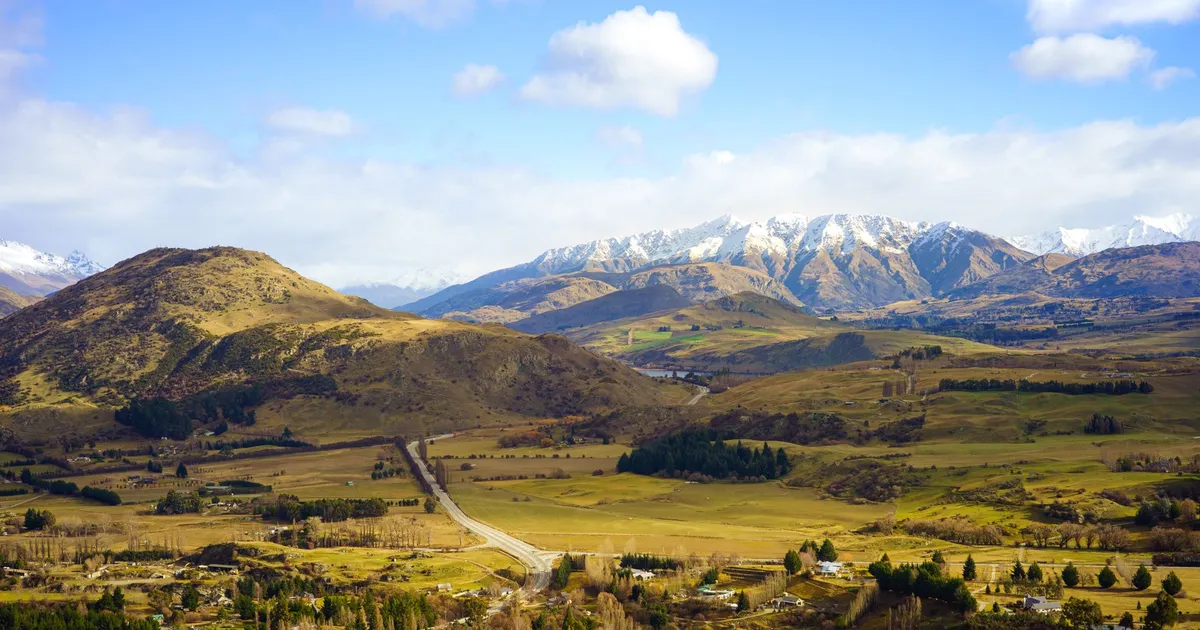
New Age Exploration did not lose its Otago gold project because the drilling disappointed, the regulators balked or the money ran out. It lost the project because its New Zealand company stopped filing documents with the Companies Office.
The ASX-listed miner has lost its three minerals permits covering the Lammerlaw gold-antimony project in Central Otago after its local holding company was struck off the Companies Register for failing to file required documents. The company calls it an “administrative oversight” and believes the permits could be worth billions.
That is the whole lesson for anyone investing in New Zealand resources. The geology was real. The housekeeping was not. In this permitting regime, that is enough to lose the asset.
A new company does not bring the permits back
New Age moved quickly, registering a replacement New Zealand company within six days. It did not help as much as the company would like. John Buick-Constable, MBIE’s national manager for petroleum, minerals and offshore renewable energy, confirmed that a new entity does not automatically inherit the permit interests. New Age has until 20 November to make its case before the responsible minister decides whether the permits are surrendered or transferred.
The company itself has conceded it cannot guarantee reinstatement to the Overseas Companies Register, or that its participating interest will vest back in it. For shareholders, a flagship asset now rests on ministerial discretion.
A boom that still checks the forms
The timing is awkward. This is meant to be New Zealand’s resource renaissance, and the numbers largely back that up. In October 2025, Resources Minister Shane Jones said mineral permit applications had surged 55% to about 450, almost all of them chasing gold.
NZPAM’s 2025 data, released in February 2026, showed 551 applications and 178 new permits, 163 of them for gold and 36 in Otago. The same report noted 61 applications were rejected for failing basic standards. The regulator is faster, but it is not looser.
The government has also cleared the historical backlog it inherited, down from 311 applications to two. But that release contained a less flattering number. On-time decisions for minerals applications fell from 94% to 75% in a year, while the regulator now administers 1,057 permits and licences, up 11.5%. Volume is outrunning capacity.
Even the compliant are waiting
New Age’s problem is self-inflicted. Santana Minerals shows the system can be slow even when a company does everything right. Its $4.4 billion Bendigo-Ophir project near Cromwell secured a 30-year Crown mining permit in January 2026, with royalties set at the higher of 2% net smelter return or 10% of accounting profits. Its fast-track environmental approval has since slipped to January 2027.
Chief executive Damian Spring said last month the company had invested $100 million in the application. Jones, who championed the fast-track regime, called it a “constipated bureaucratic beast”. A Newsroom commentary in May warned that “fast-track haste makes waste”, citing the earlier denial of a mining permit at Sams Creek as proof that procedural rigour still bites.
Put the two cases side by side. Santana shows doing everything by the book does not guarantee pace. New Age shows missing one corporate filing can cost you everything.
Bankability lives in the Companies Office
The sector has long argued the system is unforgiving to junior miners. Back in 2025, industry body Straterra described a “chicken and egg” problem, with lenders wanting permits before committing funds and the regulator wanting committed funds before granting permits. Royalties are also under review, after a 2025 analysis found most production runs on grandfathered rates roughly half current levels.
None of that excuses New Age. Filing annual returns is not a regulatory burden, it is the bare minimum. But it does mean due diligence on a mining counterparty cannot stop at the resource estimate. Investors, lenders and joint venture partners should be checking overseas company registration, annual return history, registered office details and who in the structure actually owns the permit. It is cheap to check and ruinous to miss.
The minister’s call on Friday
If the lapse was genuinely clerical, the sensible outcome is to let the permits move to the new entity. A government selling a resource renaissance to offshore capital gains nothing by forfeiting a promising discovery over a missed form, and plenty of ASX investors are watching.
But the rules exist for a reason, and the burden sits squarely with New Age. Whatever the minister decides, every foreign miner eyeing Otago has just been told that in New Zealand the paperwork is part of the asset.
Sources
- ODT: Australian mining company behind billion-dollar Otago gold find loses permits after ‘administrative oversight’ (2026-11-18)
- BusinessDesk: Australian miner needs NZ ministerial approval to regain lost permits (2026-11-16)
- BusinessDesk: Australian miner New Age Exploration loses Otago exploration permits (2026-11-10)
- IMARC: NZ mineral permits in demand in ‘evolving sector’, says Shane Jones (2025-10-21)
- InsideGovernment: Government clears backlog of historical minerals permit applications (2026-08-27)
- RNZ: Fast-track application for Otago gold mine hits another snag (2026-08-26)
- Santana Minerals: Quarterly Activities Report, period ending December 31, 2025 (2026-01-27)
- RNZ: ‘Constipated bureaucratic beast’: Shane Jones says Otago fast-track mine going too slow (2026-10-14)
- Newsroom: Santana gold mine bid excites logjam of 100 applications and permits (2026-05-26)
- Straterra: Submission to NZ Petroleum & Minerals Minerals Programme for Minerals (2025-02-01)
- NZ Herald: Mining royalty review, grandfathered permits costing Crown hundreds of millions of dollars (2025-11-28)
Join the discussion
Add useful context, ask a good question, or challenge an idea — keep it specific and respectful.