

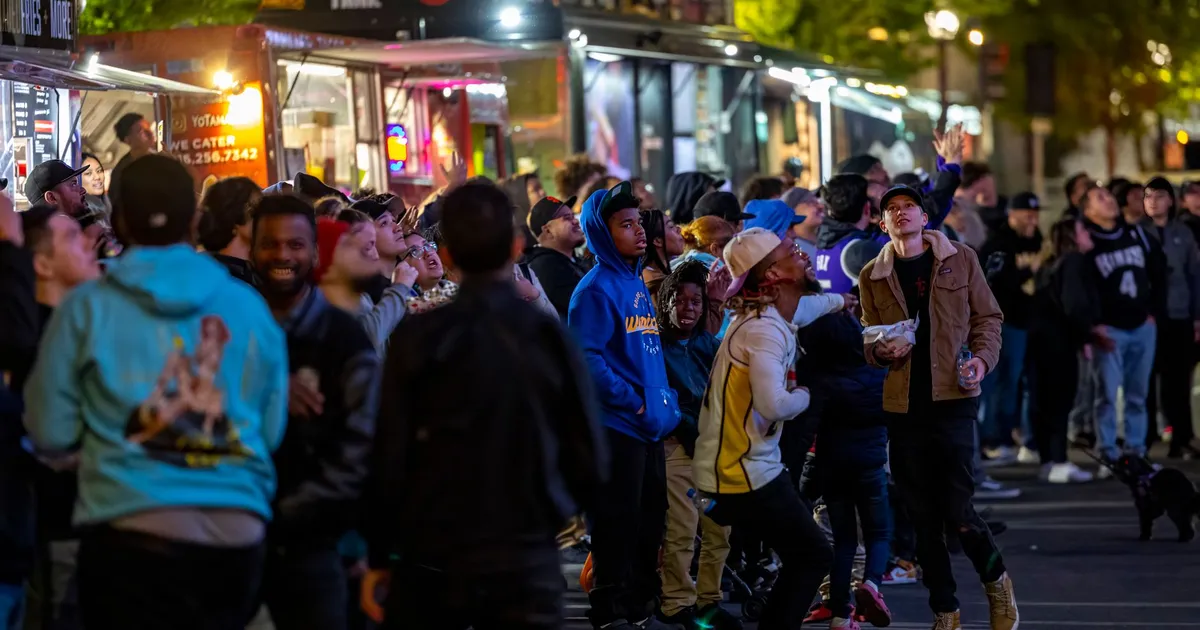
Queenstown Lakes District Council has managed something most regulators only dream of. It has turned a one-year emergency measure into an open-ended market restriction without ever settling what the permanent rules should be. The latest chapter of the town’s street food saga shows councillors still working out what comes next, while the ban stays in place.
That matters because the vacuum is not neutral. Every month without a framework is a month where bricks-and-mortar restaurants on Beach Street and the lakefront face no mobile competition at all.
The problem was real
This is not a story of council inventing a problem. Monitoring between November 2023 and December 2024 found between 6 and 22 stalls crammed into a 150m stretch of lakefront, where the 50m spacing rule should have allowed three or four. When inspectors checked, all nine pop-up food stalls had food safety issues, including no hand-washing facilities and poor temperature control. Police were also called at a New Year’s Eve event after traders refused to leave event zones.
So the April 2025 prohibition had a defensible basis. The question is why, a year and a half later, the answer is still “no” rather than “yes, under these conditions”.
A one-year ban that kept growing
In March 2026, rather than letting the ban lapse or replacing it with a licensing regime, councillors voted unanimously to continue the lakefront prohibition and extend it to The Mall and Beach Street. The Queenstown Business Chamber of Commerce and Hospitality New Zealand argued unregulated stalls were unfair competition for businesses paying rent and rates.
That argument has some force. Rates equity is a legitimate concern and nobody should get free use of prime public land. But the remedy for a free-rider is a fee, not a prohibition. Restaurateur Graeme McCarthy, a rare dissenting voice from the hospitality side, argued at the time that carts had been part of the town for decades.
The vendors, organised as the Street Food Vendors Society, had applied for judicial review in August 2025. Before the March 2026 vote, society chair Danna Burton said a “workable, enforceable framework” was achievable if council engaged. Council confirmed staff had no plans to meet the society before the vote.
The court struck the rules, the ban survived anyway
On 30 April 2026 the High Court declared two bylaw clauses unenforceable as applied to pop-up stalls, namely the one-hour relocation rule and the 50m spacing requirement. These were the very rules stallholder Poppy Prentice had called “simply not workable in practice” in 2026.
It was a partial win that changed little on the ground. Council’s broader prohibition power survived, no new permits have been issued for the banned areas, and existing permits simply ran out. Valid registrations fell from 56 in December 2025 to zero by May 2026. For roughly six months, Queenstown’s busiest tourist precincts have had no legal mobile food trade at all.
Officials know roughly what the answer looks like
The frustrating part is that a workable model is already sketched out. At a July workshop, councillors signalled The Mall and Beach Street were unsuitable, lakefront trading should shrink to a smaller area around Earnslaw Park, and corners at Shotover and Stanley Streets and Ballarat and Athol Streets deserved a look. Staff were asked to investigate fees and charges for commercial use of public land, with a short-term approach due back to council on 12 November.
That is a sensible design. Designated sites, capped numbers, food control plans checked at registration and a commercial licence fee would deal with the overcrowding, the hygiene failures and the rates gripe in one move. It would also give vendors something they have not had since 2025, which is certainty.
What the delay actually costs
Policy uncertainty is a tax on small operators. A food truck costs far less than a fitted-out restaurant, which is precisely why it is a common entry point for first-time hospitality owners. Nobody sensible buys or builds one for a market where the rules have been “under review” for 19 months.
Visitors lose too. Queenstown sells itself on experience, and cheaper, varied street food is part of what many travellers expect from a resort town. Fewer options during peak season pushes spending toward higher-priced sit-down venues, which suits incumbents nicely.
Centre-right instincts should be uncomfortable here. When established businesses lobby successfully to remove competitors from public space, and council then lets the prohibition run while it deliberates, that is regulatory capture by inertia, whatever the original justification.
Set the rules before summer
Council has the data, a court ruling telling it which rules failed, and its own councillors’ guidance on sites and fees. What it lacks is urgency. The 2026/27 summer peak is weeks away. If councillors cannot finalise a licensed, fee-paying, site-limited regime before then, the ban will have protected incumbents through another season, not because anyone decided it should, but because nobody decided anything at all.
Sources
- ODT: Street food saga simmers on (2026-11-14)
- RNZ: Queenstown Lakes District Council to permanently ban lakeside stalls (2026-03-19)
- ODT: Stallholders’ fate remains up in air (2026-03-06)
- Let’s Talk QLDC: Managing pop-up stalls in the future (2026-07-28)
Join the discussion
Add useful context, ask a good question, or challenge an idea — keep it specific and respectful.