

New Zealand’s apple sector is having the kind of year that makes the receivership notices look like a misprint. Export earnings are surging, premium varieties are selling and the biggest operators are describing record seasons. At the same time, a run of orchard businesses has fallen over with eight-figure debts. The industry line is that these are isolated casualties. The better reading is that apples are consolidating, and the good times are speeding it up rather than slowing it down.
A phenomenal season with a body count
NZ Apples and Pears chief executive Danielle Adsett told the NZ Herald this week that growers describe the season just finished as “phenomenal”, with quality great and returns that “exceeded the previous few years”. She says there is “no common theme” to the failures, blaming a tough run of post-Covid seasons plus hail and cyclones, and insists they are “not an overall loss to our system” because every failed orchard has since been bought, leased or re-grafted to another variety.
The numbers support the upbeat half of that message. NZAPI’s 2026 annual report shows gross export earnings of $1.26 billion in 2025, up 27 percent from $993 million, with export cartons climbing from 19.1 million to 21.4 million. Returns for the year to June 2026 are forecast at more than $1.3 billion.
The other half is harder to wave away. Rākete Orchards, grower of Rockit apples, went into voluntary administration in 2025 owing about $12 million. Mana Orchards followed, owing BNZ about $6.6 million. South Pacific Growers went into receivership in June with $26 million in liabilities, and Kiwi Crunch Hawke’s Bay and Crasborn Fresh Harvest both went under in July, the Herald reports. The Post described Kiwi Crunch as the country’s second-largest apple grower and exporter, placed into liquidation owing $19 million in unpaid taxes.
Adsett’s re-grafting point is correct, and it is the whole story. The land is not leaving the industry. It is changing hands, usually into stronger ones.
Fewer growers, more fruit
Buried in the same annual report is the tell. Registered grower numbers slipped from 943 to 937 while export tonnage rose from 344,707 to 386,106 tonnes, and the count of exporters shipping more than one container barely moved, from 58 to 60, according to NZAPI’s figures. More than half the national variety mix is now licensed IP fruit. The drop in grower numbers is small, but the direction is unmistakable: output is rising on a flat or shrinking base.
Paul Paynter, general manager and owner of The Yummy Fruit Company, is blunter than the industry body. He told Farmers Weekly that “another round of consolidation is quite likely to occur”, warning that investors who arrive during the froth “only project a straight line of ongoing returns”. He said Yummy Fruit and Scales are probably having their best year ever, but credited premium varieties, China’s tariffs on US apples and a favourable exchange rate, factors he called extraneous. He also cautioned that it will be “a decade before we get back to where we were before Gabrielle”.
Robots are doing the heavy lifting
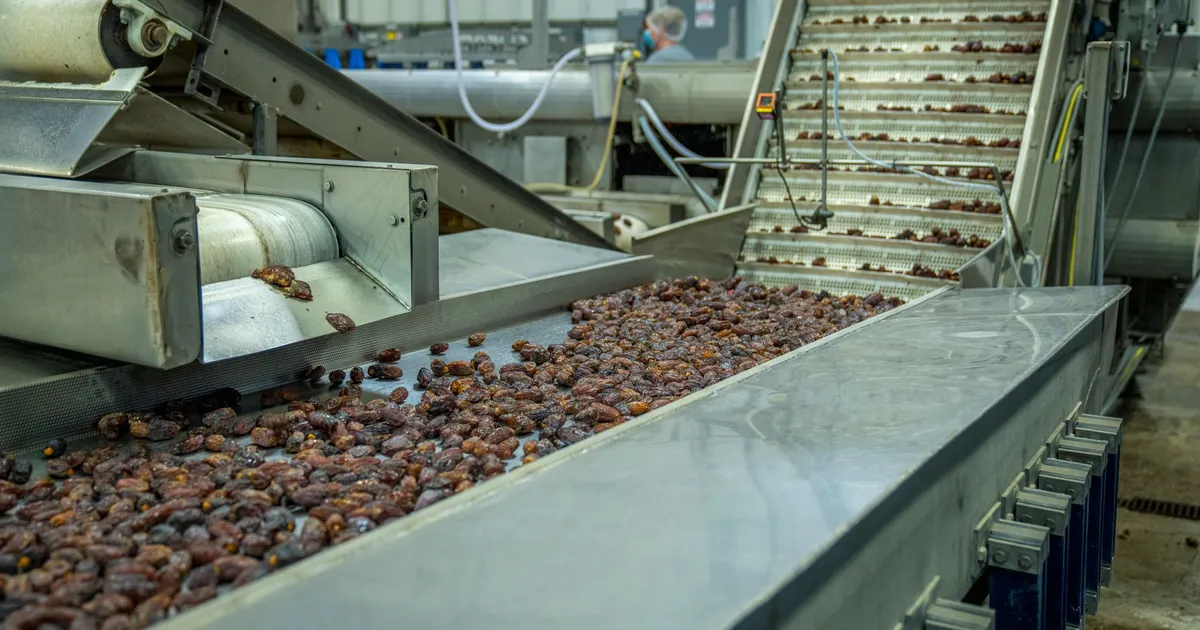
The winners look like Taylor Corp Apple. After Cyclone Gabrielle destroyed its packhouse in 2023, the Hawke’s Bay family firm rebuilt with AI and robotics, and its Napier site now handles 12,000 to 14,000 cartons a day, about 3,000 apples a minute. Headcount stayed at roughly 400 at peak while tonnage doubled. “What we are doing is keeping the same amount of staff but going through way more tonnage,” fourth-generation grower Cameron Taylor told RNZ.
That matters because labour makes up 60 to 70 percent of capital expenditure behind the farm gate in horticulture. MPI chief transformation officer Chris Kerr calls automation “absolutely mission critical” to the sector’s growth targets. A small grower cannot fund a packhouse that photographs every apple 500 times. A large one cannot afford not to.
The industry saw this coming. At its 2025 conference, the sector set a goal of a sustainable $2 billion industry by 2035 and devoted its sessions to efficiency, technology and market development. That same year, NZAPI reported the sector had delivered $2.5 billion in total economic impact by the end of 2024.
Bigger balance sheets, same weather
Consolidation concentrates strength, but it also concentrates risk. The USDA’s latest assessment shows horticultural borrowing has doubled since 2018 to $8.55 billion. It forecasts 2026/27 production of 590,000 tonnes, the second-highest on record, with exports of 410,000 tonnes, while flagging cost inflation in fuel, freight, power and packaging, and a strong El Niño threatening eastern regions including Hawke’s Bay.
Scale is the recovery
This is not a sector in trouble, and it should not be written up as one. It is a sector doing what healthy markets do: moving land, capital and fruit towards operators who can run them most productively. The $2 billion target is credible precisely because of that reshuffle, not in spite of it. The real test comes with the next hailstorm or cyclone. If the bigger, more automated, more leveraged players ride it out, consolidation will have made apples stronger. If they do not, the industry will discover it has simply swapped many small failures for a few very large ones.
Sources
- NZ Herald: Apple growers report strong season despite string of orchard failures (2026-11-12)
- NZ Apples and Pears: Annual Report 2026 (2026)
- FreshPlaza: New Zealand’s apple sector looks to automation to reach $2b export target (2026-08-01)
- The Post: Apple sector confidence lifts after two strong seasons and India deal (2026-07-23)
- Farmers Weekly: At its core apple sector is sound, top grower says (2026-07-23)
- RNZ: AI and robots help Hawke’s Bay apple exporter double processing capacity (2026-06-09)
- The Post: How automation can help NZ’s apple industry hit $2billion exports target (2026-08-01)
- Rural News Group: NZ Apples and Pears Conference 2025 (2025-08-14)
- NZ Apples and Pears: Annual Report 2025 (2025)
- USDA FAS: Fresh Deciduous Fruit Annual Report – New Zealand (2026-10-22)
Join the discussion
Add useful context, ask a good question, or challenge an idea — keep it specific and respectful.