

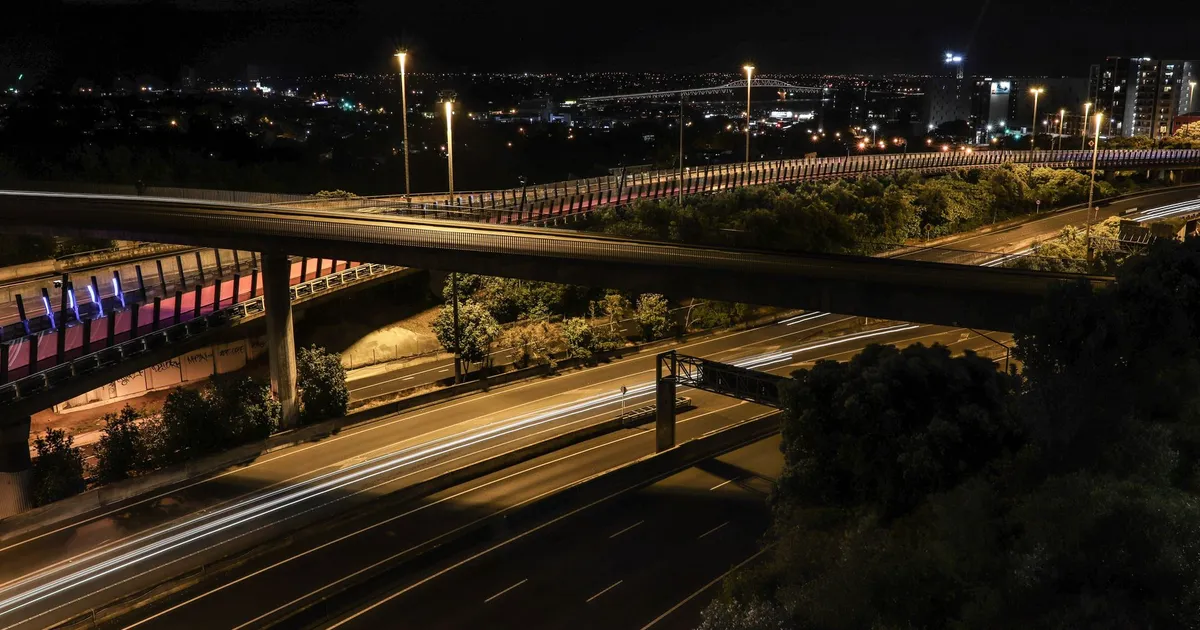
Auckland Council’s congestion charge consultation offers three charging options and no box marked ‘do not support’. The gap is wide enough that North Shore councillor John Gillion and Albany councillor John Watson are now telling opposed residents to use the ‘other’ field to say no.
The problem behind the charge is real. The consultation is built to avoid testing whether Aucklanders accept the cure. That matters to every business that has to move a van, a truck or a workforce through the isthmus at peak times.
Three flavours of yes
All three options run 7am to 10am and 3pm to 6pm, with modelled example charges of $2 to $5 in the morning peak. The council’s own summary sets them out:
- Option A, a city centre cordon, cuts congestion 4% and saves an average 2.5 minutes at peak.
- Option B pushes into the city fringe, including Auckland Hospital, for a 6% reduction and 4 minutes saved.
- Option C adds core motorway sections between the Harbour Bridge, Point Chevalier and Mount Wellington, delivering a 28% reduction and 7 minutes saved.
The council says 93% to 97% of drivers would pay nothing under any option, and that congestion costs the economy around $2.6 billion a year. Those are serious numbers. The fix for a $2.6 billion problem deserves a process that can survive scrutiny.
A process steered toward an answer
The ‘no’ option did not go missing by accident. In August, Waitākere councillor Ken Turner’s ‘do not proceed’ amendment was voted down, and Gillion seconded a later failed attempt to add a no box.
Gillion says “there is a huge amount of opposition to this out there”, and admits there is no guarantee ‘other’ responses will be properly counted when the data is analysed. Watson calls it “the rather blinkered consultation agreed to by a majority but certainly not all councillors”. Gillion also flags hospital appointments, which people cannot reschedule around a charging window.
The practical result is predictable. When the results land, the council can report which option respondents preferred, while opposition sits scattered in free-text fields. That is not a test of consent. It is management of it.
Freight tolerance is setting the price
The more consequential flaw sits in the pricing. At a committee hearing this week, officials acknowledged that “the freight sector’s tolerance for paying the charge effectively sets the prices within a scheme”.
With trucks charged at four times the car rate, the ceiling freight will bear caps what everyone else pays. Road pricing is meant to be set to deliver a traffic outcome. Here it risks being set at whatever one sector will swallow.
The freight industry has been clear about its limits. In May 2026, Transporting New Zealand’s Billy Clemens called the 4x ratio “less of a demand-shift measure and more of a cash-grab”, noting that trucks already avoid peaks where they can and that the extra cost would be passed down the supply chain.
The sector is not opposed outright. Policy adviser Mark Stockdale says “even a modest improvement in traffic flow could make a meaningful difference”, but warns that most freight trips cannot easily shift because they are tied to port bookings and delivery schedules. Retailers and wholesalers should read that as a signal of where the bill ends up.
Where is the behaviour meant to go
University of Auckland researcher Timothy Welch puts it bluntly: “A congestion charge only works when people have meaningful alternatives to driving.” The plumber whose van is their job, he notes, cannot be waved toward a train.
London paired its charge with 560 extra morning-peak bus trips. Auckland has not said how many extra buses would accompany any option, nor how revenue would be spent. Without that, a charge drifts toward a toll, collecting most from people least able to change their trip.
A no box costs nothing
Feedback closes on 11 December, results go to committee in March 2027, and charges would not go live until 2030 or 2031. There is ample time to do this properly.
Stockholm won public support through a trial and a referendum, not a multiple-choice form with the exit removed. Congestion pricing has a genuine pro-market case: it prices a scarce resource and rewards businesses that can flex their timing. That case is strong enough to win a fair fight. Auckland Council should add the no option, publish the bus numbers and set prices on traffic outcomes rather than freight tolerance. Otherwise the results in March will be dismissed before anyone reads them, and the city’s $2.6 billion problem will still be sitting on the motorway.
Sources
- 1News: No ‘no’ option – Councillors tell Aucklanders how to oppose congestion charges (2026-11-12)
- Transport Talk: Feedback opens on Auckland congestion charging, freight sector signals support (2026-11-11)
- RNZ: Auckland commuters may pay up to $7 a trip as congestion charge options revealed (2026-08-25)
- BusinessDesk: Freight sector tolerance could set congestion charges for all, Auckland Council says (2026-11-12)
- Transporting New Zealand: Proposed congestion charges for trucks will hit freight customers and consumers (2026-05-01)
- Transporting New Zealand: Road freight welcomes Auckland congestion charging conversation (2026-11-11)
- The Conversation: Auckland now has a plan for congestion charging. But where are the extra buses? (2026-09-01)
Join the discussion
Add useful context, ask a good question, or challenge an idea — keep it specific and respectful.