

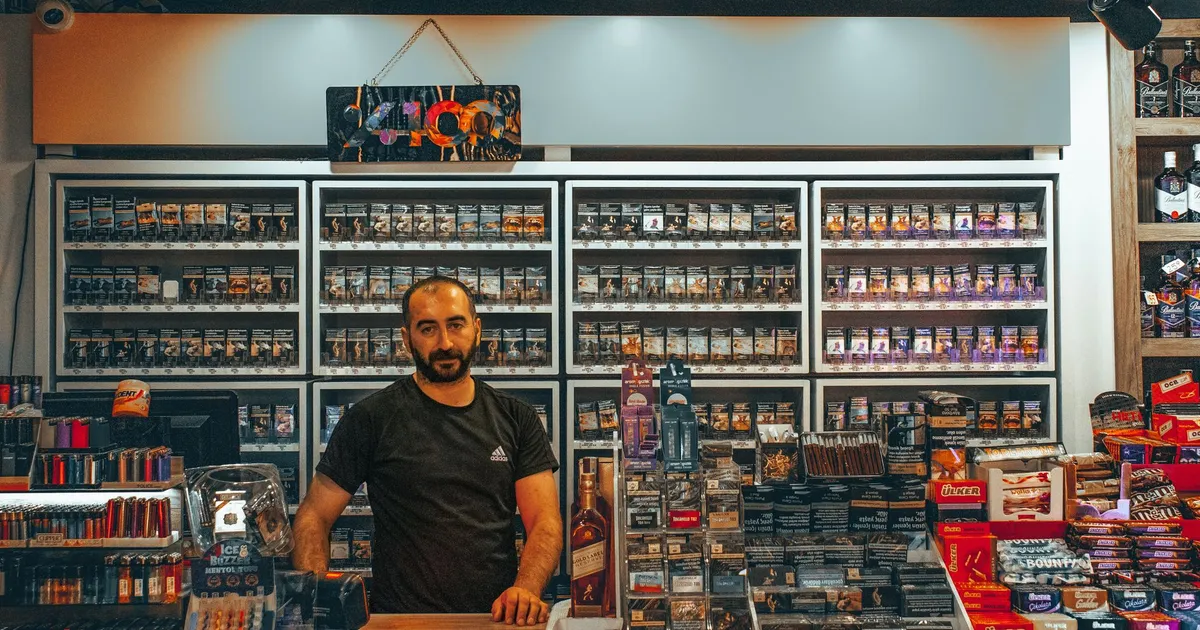
A legal pack of cigarettes in New Zealand sells for $36 to $40. In East Auckland, RNZ found illicit packs without mandated health warnings going for as little as $13. The retailer charging full price collects excise for the Crown and carries the compliance burden. The one charging $13 does neither, and the state still has no fast way to close its doors.
That is the commercial reality behind new OIA figures showing the government’s Illicit Tobacco Action Group, set up in May by Customs, Police and Health, received 250 tips from the public between May and September. The tips are coming in. The stores are still trading.
Three agencies, three partial mandates
Customs Assistant Comptroller Terry Brown says referrals are assessed and acted on, though not always overtly, because “a single referral may contribute in more ways than one over the course of an operation.” That may be operationally sound. It is cold comfort to a dairy owner watching customers walk past to a shop selling packs at a third of the price.
Retail NZ’s April 2026 report laid out exactly why nothing happens. In one precinct it documented, Health NZ got illegal street signage removed but “lacked the statutory power to seize illicit stock or shutter the business.” Customs said the product had already cleared the border and was outside its jurisdiction. Police said illicit tobacco retail was not a high priority for frontline officers. The result, Retail NZ concluded, was “a safe zone for illegal activity.”
That is a design failure, not a resourcing quibble. Retail NZ’s Carolyn Young says new illicit stores have opened recently, the problem is spreading into the South Island, and MPs are approaching Retail NZ for help in their own electorates. She wants urgent legislation giving agencies power to close stores and seize stock, because they currently have “limited resources and limited tools.”
Fewer busts, far bigger loads
Customs Deputy Controller Jamie Bamford says organised crime is “starting to get its claws into New Zealanders”, and the numbers show it. Customs seized 11,971,995 cigarettes and cigars across 486 seizures in 2026, against 8.2 million across 2,434 busts in 2023. Nearly four million more sticks from a fifth as many seizure events means shipments are getting much larger. That is what professional supply chains look like.
How big the market is remains disputed. An industry-commissioned FTI Consulting report estimated 33.5% of tobacco consumed in 2025 was illicit, costing $817 million in excise and GST. Treat that with the caution any industry-funded number deserves. Customs’ own estimate for 2023 was 23.6%, driven mainly by falling legal consumption. But every data series, seizure volumes, tips, store openings, points the same way.
Action for Smokefree Aotearoa director Ben Youdan calls it “a much more organised illicit market” and flags the gap between falling legal sales and stable smoking prevalence as a worrying sign that smokers are buying elsewhere.
Excise built the margin, weak enforcement lets crime cash it
The tax settings are not innocent. In 2025, RNZ reported excise on manufactured cigarettes had climbed from $393.03 per kilogram in 2009 to $1812.61 in January 2025, with tax making up about 80% of a pack priced just under $50. Excise revenue still fell every year, from $1.86 billion in 2022 to $1.47 billion in 2024. When a tax rises 361% and collects less, that is a fiscal warning light.
But cutting excise is not the clean fix the industry suggests. Otago public health professor Janet Hoek argues “lowering excise taxes will not eliminate illicit markets”, which thrive on weak enforcement, criminal networks and high profits, and warns of an unwinnable price war with suppliers whose costs are far lower. In May 2026 the Public Health Coalition Aotearoa noted 2024 research found NZ’s illicit market had “remained small and relatively stable” even at high prices, while pointing to Australia, where illicit product is estimated at up to 55% of sales.
Read together, the evidence is fairly clear. High excise created a fat margin. What turned that margin into a booming trade was a regime where nobody could close a known offender. Price signals got the incentive moving. Enforcement gaps let it scale.
What compliant retailers need now
The fix businesses should push for is not a tax cut, it is end-to-end enforcement. One agency, or one task force, with the power to investigate, seize stock, close premises and prosecute, as Retail NZ has proposed. Hoek’s supply-chain licensing idea would add compliance costs for legitimate operators, but a licence that can be revoked is at least a tool regulators currently lack.
Until Parliament closes that gap, the Crown keeps losing revenue, organised crime keeps its margin, and the dairy owner doing everything right keeps subsidising both. The Action Group has the tips. What it needs next is the power to act on them.
Sources
- ODT: Illegal cigarettes are getting easier to find, and harder to stop (2026-11-11)
- RNZ: Illegal cigarettes are getting easier to find – and harder to stop (2026-11-11)
- Retail NZ: Illicit Tobacco in NZ Report (2026-04)
- 1News: Organised crime eyes ‘fat profit’ in NZ’s ‘attractive’ illicit tobacco market (2026-09-10)
- RNZ: Has tobacco tax hit its limit? (2025-04-01)
- The Post: Cutting excise tax is not going to solve illicit tobacco (2026-06-19)
- Public Health Coalition Aotearoa: Responding to illicit tobacco trade but not at the expense of sound tobacco control policy (2026-05-13)
Join the discussion
Add useful context, ask a good question, or challenge an idea — keep it specific and respectful.