

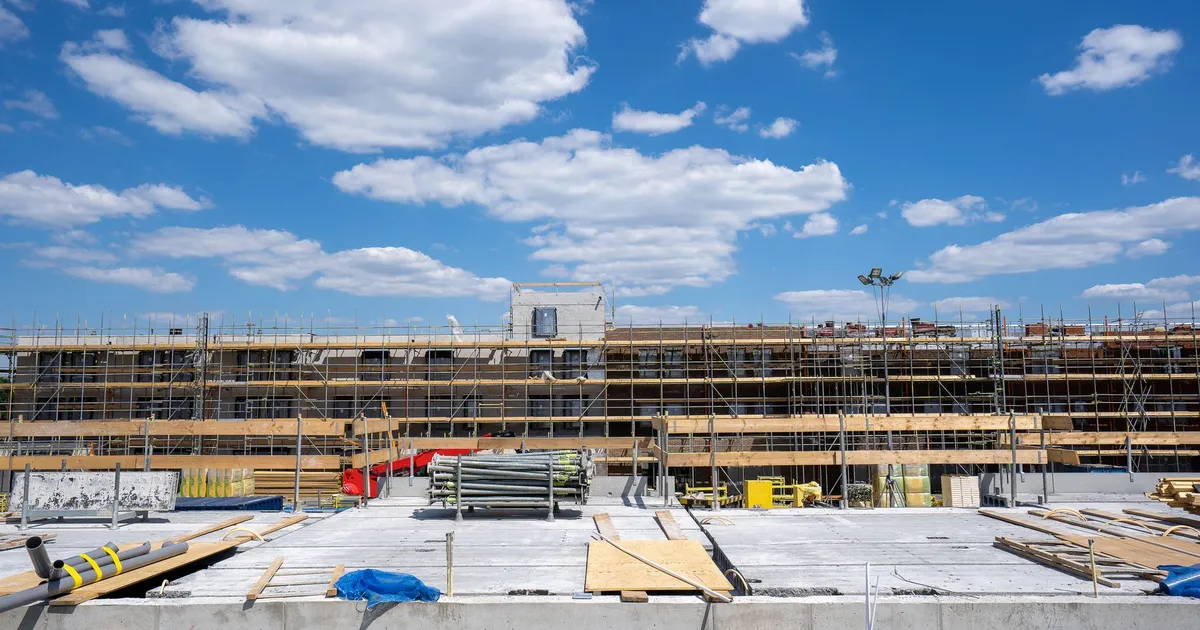
Radius Health lifted half-year net profit after tax 27% to $8.0 million and confirmed 10 new care homes adding 980 beds to its five-year pipeline. Most of those buildings will be leased, not owned. That is the real story. New Zealand’s aged care capacity is not waiting for a funding settlement in Wellington. It is being built wherever private capital can make the numbers work.
A result strong enough to fund ambition
The six months to 30 September were solid across the board. Profit before tax rose 17% to $10.0 million, earnings per share climbed 27% to 2.8 cents and the interim dividend rose 10% to 1.1 cents. Care occupancy held at 95.1% despite a mid-winter influenza A outbreak, according to the NZ Herald’s coverage. Investors liked it, with shares edging up to $0.43, near the top of their 52-week range.
The pipeline is concrete. The 100-bed Applefields community in Belfast, Christchurch, is under construction and due to open in May 2028. An 80-bed Hokitika facility starts in early 2027 in partnership with Development West Coast. The remaining eight projects cover South Auckland, Canterbury and Northland at 100 beds each, plus five Waikato and Bay of Plenty facilities totalling 500 beds.
Founder and executive chair Brien Cree says the company is “actively progressing additional opportunities with private investors” to build 80 and 100-bed care hospitals around the country. Acquisitions are adding scale too, with the Sprott House purchase in May taking the portfolio to 25 care homes.
Landlords carry the concrete
The clever part is the structure. Back in May, Radius ran 24 homes with 1,898 beds, half owned and half leased. Andrew Peskett, then chief executive, said at the time that “the best way we can help to bridge the gap for that need is to build,” including in provincial towns like Hokitika where facilities are lacking.
The longer-term goal, flagged at the August shareholder meeting, is to more than double bed capacity over a decade through up to 20 new hospitals. Forsyth Barr’s analysts note this will be largely funded by private investors. They estimate each 100-bed facility adds about $22.5 million to a $141.5 million lease liability, which sits outside bank covenant leverage, while Radius chips away at roughly $85 million of core bank debt. A mature 100-bed hospital could earn about $1.0 million a year after tax.
That is aged care as infrastructure. Property investors get long-dated leases to an operator with 95% occupancy and a demographic tailwind. Radius keeps its own capital for running homes and growing.
The maths no government wants to own
The demand case is brutal. Radius’s investor materials, citing Sapere, put current supply at about 40,000 beds, with a shortfall of almost 12,000 by 2032 and roughly 40,000 by 2040. The country already has around 900,000 people aged over 65.
Funding has not kept up. Westpac economists found the sector’s funding gap widened from about $170 million in 2014 to around $650 million in 2025, nearly quadrupling.
Aged Care Association chief executive Tracey Martin has pushed back hard on calls for more public provision. At about $400,000 per hospital-level bed, she says, a government wanting to reach 66,500 beds by 2048 would need “about $26.6 billion in capital alone.” No Crown balance sheet is stumping up that sum, and every party knows it.
Two tiers are already forming
Martin’s other numbers point to the uncomfortable part. Around 60% of providers are charities, not-for-profits or small owner-operators, many operating at a loss, with some large charities sitting on deferred maintenance backlogs of up to $10 million. They cannot tap private investors the way a listed operator can. Martin wants a split funding model separating care from accommodation costs, which would at least make the true cost of a bed visible.
The risk is a sector where well-capitalised operators build modern hospitals in growth regions while charitable homes slowly fall behind. That is not Radius’s fault. It is the predictable result of subsidies that have failed to match costs for a decade.
Settings will decide the pipeline
For business, the signal is clear. Aged care is now an investable asset class, and Radius has shown private capital will fund beds when returns stack up. The danger is political. If funding settings move against operators, the lease economics Forsyth Barr has modelled weaken and the pipeline slows.
The election debate has barely touched this. Whoever governs next should treat Radius’s model as a template to encourage, not a problem to regulate. The beds the country needs will come from investable settings, or they will not come at all.
Sources
- NZX: Radius Residential Care Limited – Half Year Results for Period Ended 30 September 2026 (2026-11-11)
- NZX: Radius Health Investor Presentation – Half Year for Period Ended 30 September 2026 (2026-11-11)
- Investing.com: Radius Health 1H27 slides – profit jumps 27%, expansion accelerates (2026-11-11)
- Investing.com: Earnings call transcript – Radius Health H1 2026 profit rises 27% as stock edges up (2026-11-10)
- Radius Care: Annual Report for Year Ended 30 June 2026 (2026-06-29)
- The Post: Radius Care forges ahead with ambitious aged care development plans (2026-05-17)
- LinkedIn: Radius Residential Care 2026 Annual Shareholders’ Meeting and Investor Session (2026-08-12)
- Forsyth Barr: Radius Residential Care – 2026 ASM Analysis (2026-08-13)
- Radius Health: Investor Presentation – Aged Care Demand and Demographics (2026-08)
- Westpac: Aged residential care economic report (2026-08-14)
- RNZ: Aged Care Association hits back at report on public money going to private sector (2026-10-28)
Join the discussion
Add useful context, ask a good question, or challenge an idea — keep it specific and respectful.