

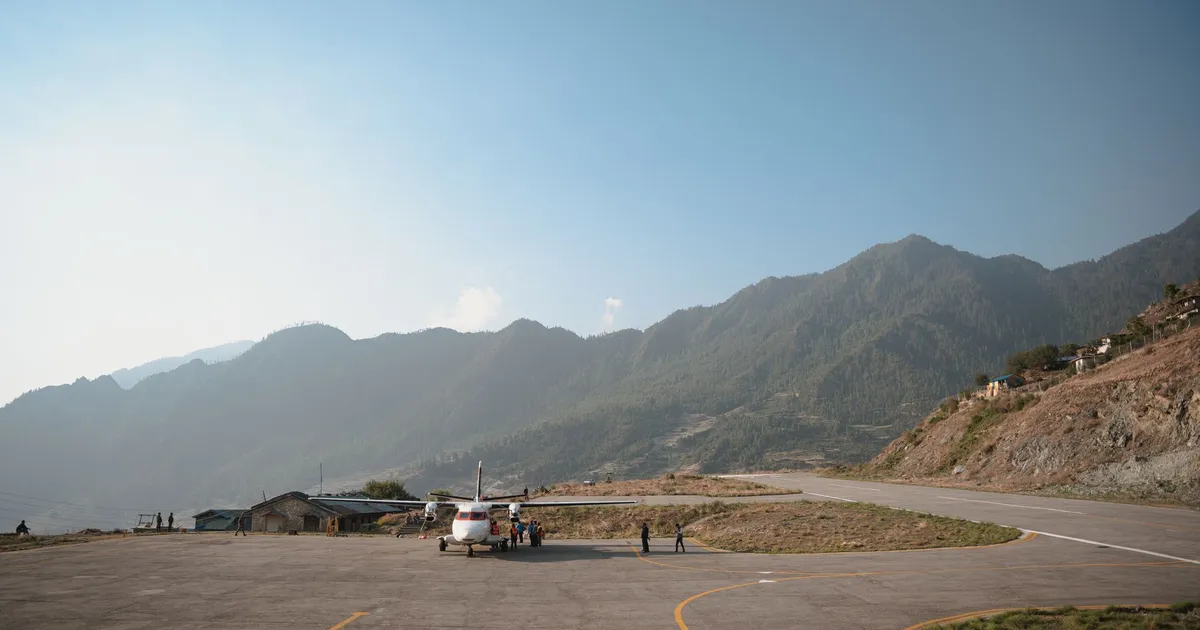
An unnamed airline has met with Wānaka community board members, and discussions about the airport’s future are continuing. No name, no route, no aircraft type. But the timing tells you most of what matters. This is the first real test of whether a small, community-approved airport can attract a commercial operator without anyone reopening the growth fight Wānaka has spent a decade trying to settle.
For tourism operators, accommodation providers and the professional-services firms that have followed residents into the Upper Clutha, a scheduled link to Christchurch is not a luxury. It is the difference between a 45-minute hop and a long drive or a detour through Queenstown. The catch is that two operators have already tried and left.
The ceiling was set on purpose
In March 2026, Queenstown Lakes District councillors voted unanimously to keep Wānaka Airport focused on general aviation while enabling limited scheduled flights to Christchurch, and possibly Wellington. Deputy mayor Quentin Smith called it a “status quo plus” approach. Crucially, the council committed no ratepayer money to airside expansion ahead of proven demand.
That decision came out of a review by consultancy Egis in which more than 1,100 people took part, with a clear preference for a low-impact, community-oriented airport. Larger domestic aircraft, international flights and outright closure were all rejected. The Egis review framed the preferred option around small aircraft serving NZ hubs, with terminal and carpark upgrades deferred until a steady service actually exists.
That is a sensible, fiscally cautious position. It is also a narrow commercial window. The community vision put forward by the Wānaka Stakeholders Group in 2025 stated that residents wished to avoid “growth-at-any-cost and overtourism”. Any operator now at the table is negotiating inside that boundary, not around it.
Demand was never the problem
The uncomfortable history is that Wānaka keeps losing air services for economic reasons, not for lack of passengers. Air New Zealand’s Eagle Air service ended in 2013. Sounds Air then ceased its Wānaka-Christchurch service in September 2025, blaming higher civil aviation fees and maintenance costs despite what it described as strong demand.
When Sounds Air first floated the route in 2020, then-managing director Andrew Crawford proposed up to 15 return flights a week on nine-seat Pilatus PC12s, with fares from $169 to $279 one way and no new infrastructure required. Queenstown Airport Corporation, which then managed Wānaka, was working with Sounds Air toward a launch before Covid derailed wider planning.
Go back further and the ambition was bigger still. In 2018, then-Air New Zealand chief executive Christopher Luxon flagged Wānaka as a port the airline was weighing for Southern Lakes services. The same analysis noted that more than 20% of Queenstown visitors also visit Wānaka. The demand case has been made repeatedly. The unit economics are what keep failing.
The airport needs this more than it admits
The council’s own figures, published in October 2025, showed Wānaka Airport had not been profitable since 2021/22, squeezed by slow tourism recovery and rising insurance, electricity and rates costs. Landings fell from 61,893 in 2019 to roughly 44,000, a drop driven largely by losing scheduled services. Meanwhile the Civil Aviation Authority requires the airport to meet tougher Part 139 standards by July 2027.
So the airport faces fixed compliance costs regardless of traffic. A scheduled operator spreads those costs and justifies them. Without one, ratepayers carry a general aviation facility that runs at a loss. This is not a Wānaka-only problem either. IATA’s work on regional connectivity points to low-volume regional routes across the country being structurally exposed to cost pressures.
What the next operator has to solve
Whoever this airline is, it faces the same arithmetic that beat Sounds Air. Small aircraft mean high per-seat costs. Regulatory fees keep rising. The community has ruled out scaling up to dilute those costs with bigger planes. The tourism base is there, with Lake Wānaka Tourism describing 2023-24 as a strong year for the sector, but tourism demand alone has never been enough.
That makes the commercial terms the whole story. If the council wants a service to survive this time, it will need to think hard about landing charges and compliance cost recovery, rather than treating the operator as a revenue source to fix the airport’s balance sheet. Price it too high and the route dies again. Price it sensibly and a modest, sustainable link becomes possible without a single new jet bay.
Wānaka chose small on purpose, and that is a defensible choice. The next few months will show whether small can also be viable. If this mystery airline walks away like the last two, the community will have to confront a harder question, whether its preferred airport is one nobody can actually afford to fly from.
Sources
- Otago Daily Times: Mystery airline begins discussions for Wānaka airport’s future (2026-11-06)
- Otago Daily Times: Focus on general aviation, flights to Chch ‘supported’ (2026-03-30)
- Scoop: Preferred Operating Scenario Recommended For Wānaka Airport (2026-03-17)
- QLDC: Wānaka Airport Future Review Report (Egis)
- Wānaka Stakeholders Group: A community vision for Wānaka Airport (2025-05-21)
- QLDC: Wānaka Airport Financials and FAQ (2025-10-01)
- Otago Daily Times: Wanaka-Chch air service possible (2020-06-24)
- RNZ: Wānaka Airport owners accused of misleading community
- Crux: Air NZ rewrites the Wanaka Airport playbook (2018-05-17)
- IATA: Regional Air Connectivity in New Zealand
- Lake Wānaka Tourism: Annual Report 2023-24 (2024-09)
Join the discussion
Add useful context, ask a good question, or challenge an idea — keep it specific and respectful.