

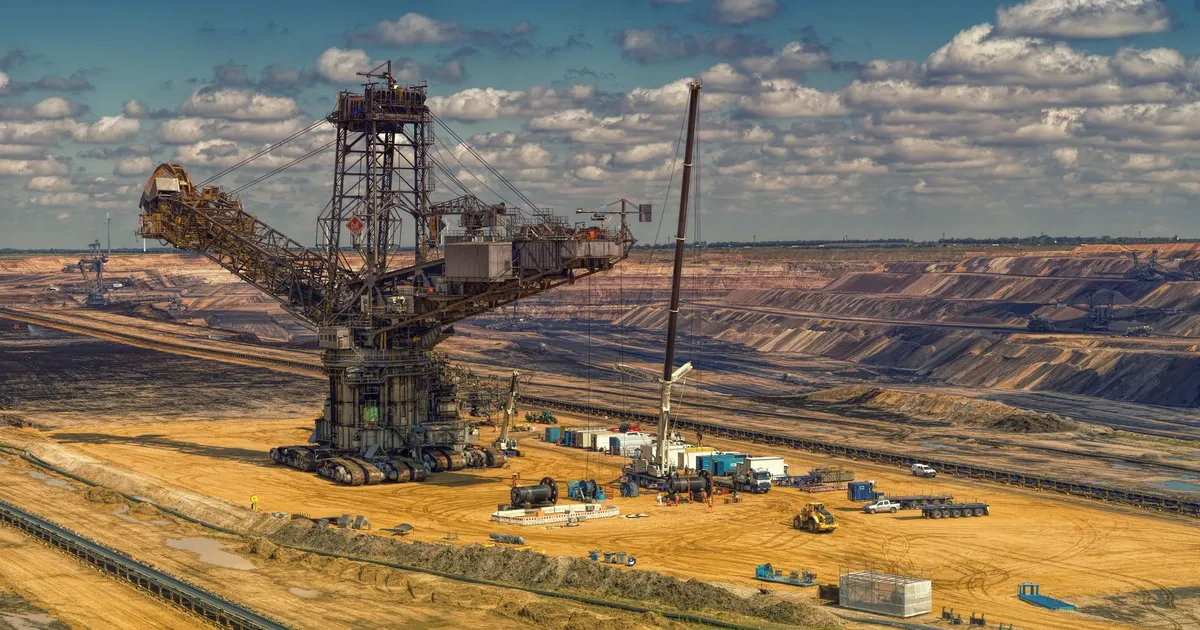
New Zealand’s biggest coal mine is running out of time, and the fast-track regime built to rescue projects like it has not yet produced an answer. Bathurst Resources lodged its application in August to keep mining across the Stockton and Denniston plateaux, seeking 20 million tonnes over 25 years. Its existing licences expire at the end of March 2027, and it employs 390 people in Buller.
That makes this the cleanest test yet of whether New Zealand can turn a resource it already has into export income on a commercial timetable. It also makes it a test of whether the company can put forward a plan that clears a reasonable bar.
Premium coal in a shrinking market
Stockton’s product is not the thermal coal being phased out of Huntly. It is steelmaking coal sold almost entirely offshore. West Coast geologist John Taylor told 1News in July that its coking strength is “unique in the world, that is why it still gets a premium price.”
The government has long treated that premium as strategic. In May 2024, then-Resources Minister Shane Jones said Stockton produced around 80% of New Zealand’s $300 million in premium coal exports, as part of a goal to double minerals export value to $2 billion by 2035.
Domestic coal is a different story. MBIE data showed total coal use fell 10% in 2023, while exports slipped 4% to 1,224kt. The local market is shrinking. The export market is what keeps Westport working.
Forest & Bird’s Scott Burnett disputes how much that matters. He points out that Australia exports 150 times Stockton’s annual volume, which makes Bathurst’s output a drop in the global bucket. He has a point on volume. Price is another matter, and a premium product does not need to be large to be worth keeping.
The bounce wasn’t bureaucratic nitpicking
In September the EPA returned the application as incomplete. By then the proposal had grown to a near-6,500-hectare footprint, with mining running until 2055. The EPA wants the lizard mitigation fixed and written sign-off from Buller District Council for mining on a recreation reserve.
The lizard issue is not a technicality. DOC’s assessment found the plan could save less than 1% of affected lizards, against the 80% normally required. Burnett says Bathurst’s own peer reviewers accept that “85% of bulldozed vegetation cannot be restored” and that 20km of streams cannot regain their original biodiversity.
It is also not the first time. The separate Te Kuha project, a 144-hectare mine for 4 million tonnes of coking coal, was returned as non-compliant in March 2025.
Pro-development readers should be honest about this. Fast-track was designed to compress the timeline, not to approve plans that miss basic benchmarks by a factor of 80. A regime that waves through anything would lose its legitimacy the day the government changes, and every future mine would pay for it. A plan that saves fewer than one lizard in a hundred is a weak plan, not a victim of red tape.
A clock that doesn’t pause for revisions
The trouble is that every resubmission costs time Westport does not have. About 400 jobs are at stake if the mine closes. In 2025, Minerals West Coast manager Patrick Phelps said a quarter of Buller’s economy relied on mining. Jamie Cleine, Buller’s mayor at the time, said a 30-year runway would allow the town to adapt, but “five years would be catastrophic for our town.”
Local support is real. Our Buller Future says 4,787 people signed an open letter backing the proposal. That kind of support does not soften a lizard benchmark, but it does show what is at stake if the process stalls.
Newsroom’s framing of Westport’s economy against untouched wilderness is accurate as far as it goes. The sharper question for business is whether the system can deliver a timely, credible yes or no.
What a serious answer looks like
The ball is in Bathurst’s court first. A resubmission with a mitigation plan that meets DOC’s thresholds, or a smaller footprint that avoids the worst ground, would strengthen its case. Turning up again with the same numbers would not. The company’s case for scarce, premium coal is strong. Its environmental homework has so far been weak.
Once a complete application is lodged, the burden shifts to the process. If fast-track cannot give a clear decision on New Zealand’s most strategically valuable coal before March 2027, it has simply moved the old delays into a new building. Investors in every other resource project will be watching what happens at Stockton, and the result will shape their next decision.
Sources
- Newsroom: A line in the sandstone, the battle for NZ’s best coal (2026-10-28)
- RNZ: Mining company Bathurst Resources lodges fast-track application to extend West Coast coal mining (2026-08-24)
- The Press: Bathurst plans to resubmit 6500ha West Coast coal mine application (2026-09-25)
- 1News: Geologist defends coal’s special properties after ‘greenwashing’ claim (2026-07-03)
- Ministry for the Environment: Te Kuha Coal Project (2025-03-07)
- West Coast NZ: New Zealand’s minerals future (2024-05-24)
- The Press: 250 Westport coal miners face ‘catastrophic’ redundancy if mine doesn’t expand (2025-06-27)
Join the discussion
Add useful context, ask a good question, or challenge an idea — keep it specific and respectful.