

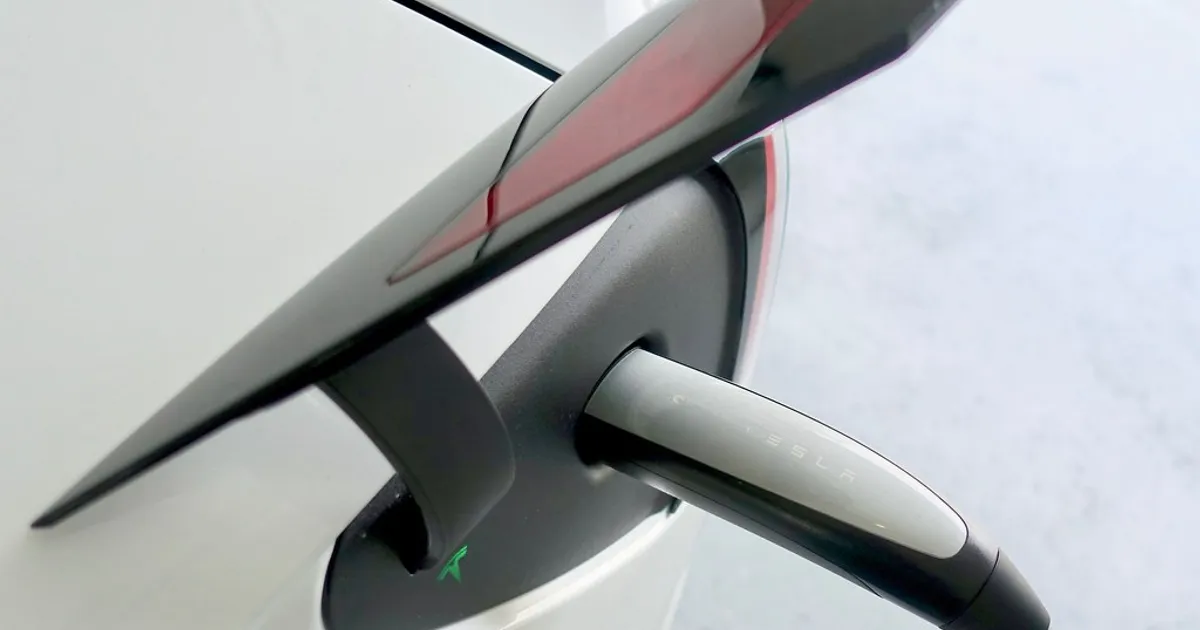
An electrical engineer bought two written-off Tesla Model 3s at auction, repaired them, put them through mandatory inspection and got them legally back on the road. Tesla then switched off their DC fast-charging from afar. The High Court has now dismissed his challenge and ordered him to pay Tesla’s costs.
The ruling turns on a small dispute between one owner and one carmaker. The real issue is bigger. When the manufacturer keeps a hand on the controls after sale, any business buying a software-defined asset has bought something less than it thinks.
A government tick that Tesla ignored
Peter Goodricke bought the two cars from Turners auctions between August and September 2024, according to the High Court judgment. Both were repaired and re-registered. Tesla did not inspect either vehicle. It watched the NZTA register, saw both cars flagged as previously structurally damaged, and pushed over-the-air updates on 26 August and 3 September 2024. The restrictions took effect when Goodricke opened his Tesla app.
The cars still charged from a normal powerpoint, but that reportedly took days. Tesla offered to restore fast-charging for $1,624.43 per car, subject to a dealership inspection.
Tesla’s safety case has some weight. Damaged high-voltage batteries can, rarely, cause catastrophic fires, and internal cell damage can be hard to spot even after repair. But the company relied on a database flag, not an examination of the repaired cars, to override a vehicle the state had already certified as roadworthy.
The court was uneasy and ruled for Tesla anyway
Goodricke argued breaches of the Fair Trading Act and Consumer Guarantees Act. The Disputes Tribunal dismissed his claim in September 2025 and refused a rehearing. Justice David Boldt then rejected his judicial review and ordered him to pay $26,827 in costs plus disbursements.
The judge did not sound comfortable. “Tesla, unlike most car manufacturers, retains the ability to reach into individual vehicles long after their sale and make alterations which limit their functionality,” he wrote. “That power is remarkable and may be exercised only in the most tightly constrained circumstances.”
What saved Tesla was disclosure. Its Unsupported Vehicle Policy sat on its website, and that was enough. The lesson for buyers is blunt. A term you never read, on a site you never visited, can still bind you.
This has happened before
Goodricke is not the first. In 2018, Raglan’s Niall Darwin rebuilt a wrecked Tesla bought in Australia and said a Tesla Sydney executive had assured him by email that Supercharging would remain available. In Hamilton, the car was flagged as unsupported and blocked. After losing his case, Darwin said in 2019 that Tesla had “stonewalled him at every turn”. He paid someone in the United States to hack his own car.
Seven years later the courts have reached the same place, and the tools have only become more powerful.
Ownership is becoming a licence
This is not a Tesla quirk. In 2023, US researchers Aaron Shapiro and MC Forelle described the “subscriptionization” of vehicles. They warned it produces an “exploitative hybridity” of cars that are partly owned and partly rented, with obligations for which owners “accumulate no equity”.
That should concern any business with a balance sheet full of connected assets.
Fleets. Logistics, rental, car-share and delivery operators are exposed to the same mechanism. An automated database check can downgrade an operational, paid-for vehicle without anyone looking at it.
Residual values. A vehicle that can lose core functionality after purchase, with only a fee on offer to restore it, is a different asset to value and depreciate. Lenders and fleet managers should price that in.
Insurance and salvage. Repair-versus-replace decisions assume a fixed car regains its value. If a manufacturer can override a government-certified repair, salvage values for written-off EVs fall, and the auction trade that fed Goodricke’s purchases carries hidden risk.
Due diligence. Anyone buying EVs at auction, especially in bulk, needs to read the manufacturer’s policies first. The court has made clear that website terms count.
Consumer law was built for a different machine
New Zealand’s dispute machinery is already busy. In 2022-23, the Motor Vehicle Disputes Tribunal handled 588 matters, more than double its 2015 caseload. But the Fair Trading Act dates from 1986 and the Consumer Guarantees Act from 1993. Neither was written for goods that the seller can modify after delivery.
Prescriptive regulation is rarely the answer, and Tesla’s battery concern is legitimate. Yet a market only works when buyers know what they own. A rule that lets a manufacturer override a state inspection based on a register flag, with the terms tucked into a web page, does not meet that test.
Justice Boldt’s “remarkable” is the line Parliament should read. Until the law catches up, treat every connected vehicle, machine or device as partly owned by its maker, and price it accordingly.
Sources
- NZ Herald: Tesla remotely disabled fast-charging on damaged cars, owner’s legal challenges dismissed (2026-10-25)
- RNZ: Tesla remotely disabled fast-charging on damaged cars, owner’s legal challenges dismissed (2026-10-26)
- High Court: Goodricke v Disputes Tribunal [2026] NZHC 3185 (2026-10-15)
- The Guardian: Tesla sued over claims it ran man’s dream car project off the road (2018-08-01)
- Raglan Chronicle: Charged-up Raglan engineer wrests back controls of Tesla (2019-01-17)
- Consumer Protection: Motor Vehicle Disputes Tribunal annual report 2022-2023 (2023-06-30)
- Engaging Science, Technology, and Society: Driving into a Paywall, The Subscriptionization of Consumer Vehicles (2023-10-23)
Join the discussion
Add useful context, ask a good question, or challenge an idea — keep it specific and respectful.