

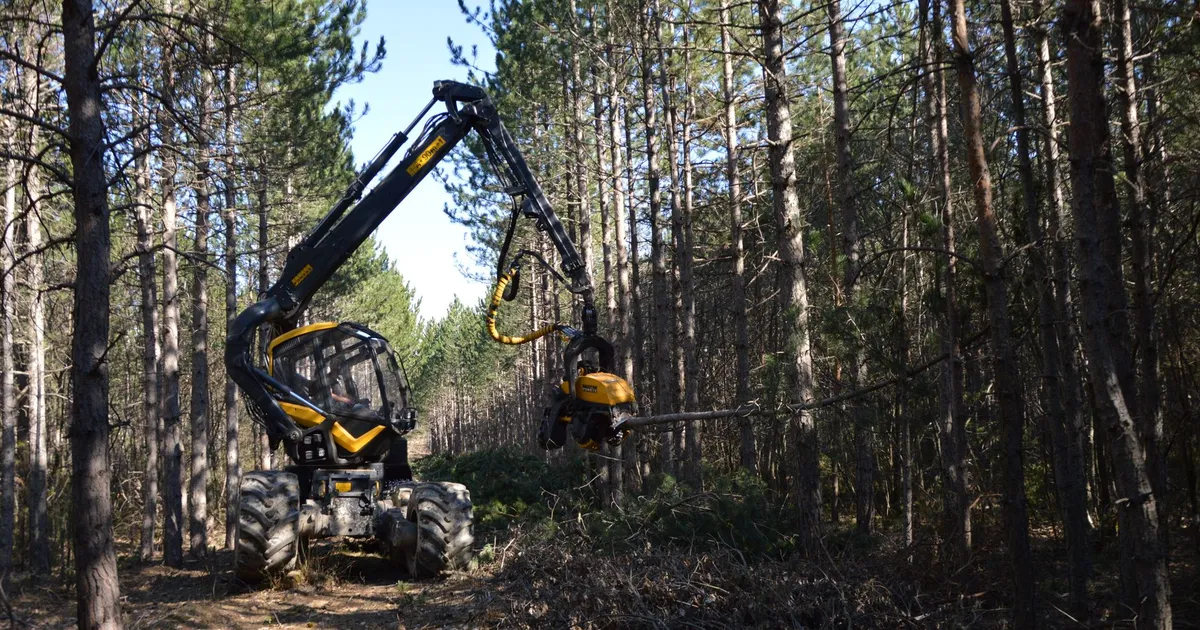
Forestry operators who still send fallers in with chainsaws on difficult ground are making a financial bet as much as a safety one. Coroner Rachael Schmidt-McCleave has found that using a logging machine instead of manual felling would likely have prevented the death of 39-year-old subcontractor Mykhailo (Misha) Tremel, crushed by a wind-damaged tree on a Clevedon block in June 2022. The two companies involved had already been ordered to pay a combined $355,680 in fines and reparations.
The lesson for the sector is blunt. Safety failures are no longer a compliance footnote. They are a line item, and a growing one.
A machine would have changed the outcome
Tremel, a qualified feller and father of two who came to New Zealand from Ukraine in 2016, radioed for help after he was struck. Workers found him down a steep bank with his chainsaw still running. His nominal observer was operating an excavator and could not see him.
Health and safety expert Michael Cosman told the coroner that manual fallers are estimated to be 300 times more likely to die at work than the rest of the workforce, and that death rates have fallen as mechanised felling has spread. The coroner also found better observation, call-in and emergency procedures would probably have improved Tremel’s chances, and recommends WorkSafe make explicit that wind-damaged trees should not be felled by hand, require a dedicated observer, keep a trauma kit within reach, train crews in first aid and mandate site-specific emergency plans with a set helicopter landing point.
None of that is exotic. Most of it is cheap relative to the alternative.
You cannot contract your way out
The sharper commercial point sits in the prosecution. WorkSafe charged both Turoa Logging, which hired Tremel, and Pulley Contracting, which managed the harvest. Its investigation found Turoa had not reassessed its harvest plan after nearby trees were cut by machine, while Pulley had not done enough to identify ongoing risks and should have audited Turoa more thoroughly. Each charge carried a maximum of $1.5 million.
In March 2025, WorkSafe’s then area investigation manager Paul West put it plainly: “Businesses must manage their risks and cannot contract their way out of responsibility.”
That is not a one-off. In September 2025, forestry boss Trevor Beale was ordered to pay more than $260,000 after a worker operating alone was struck by a falling limb and fell from a cliff. Two cases, two six-figure bills, and that is before legal costs, downtime, insurance consequences and the reputational hit with forest owners who choose their contractors.
WorkSafe signalled this direction in its 2024-26 forestry sector plan, which put the sector’s fatality rate at about 20 times the all-industry average, named unclear accountability through the contracting chain as a systemic failing, and committed to holding forest owners, managers and lead contractors to account. Lead firms should read that as a warning about how they audit subcontractors and allocate risk in their contracts.
Four years of regulatory drift
Here the government deserves criticism. Cabinet agreed in May 2021 to draft forestry-specific regulations. Drafting was paused in late 2022 and has stayed on hold. The only guidance on manual felling is a voluntary approved code of practice. A 2021 coronial finding had already urged MBIE to prioritise the sector, and Schmidt-McCleave noted pointedly that decisions on priority “are for the minister, with MBIE providing advice.”
A centre-right instinct to resist new rules is reasonable, and the industry has a real story to tell. Contractors have long credited mechanised harvesting, driven by the industry itself, as the biggest factor in a much-improved record since the dark years of 2013, and Safetree’s data has tracked that shift. But the Forest Industry Safety Council’s own 2024 review conceded performance still lagged Australia and British Columbia, and judged its strategy “not sufficiently specific and targeted”. Self-regulation has done a lot of the heavy lifting. It has not finished the job.
The drift also hurts the good operators. Firms that already mechanise, staff dedicated observers and run proper emergency plans carry costs their cheaper rivals avoid, while the regulatory picture stays uncertain enough that nobody can plan capital spending with confidence.
What operators should do now
Two coronial interventions in five years make binding rules on manual felling and observers a live prospect, not a hypothetical. Insurers and forest owners are likely to price that in before Parliament does. Contractors still relying on chainsaws for wind-thrown or steep-country work should be costing the switch to machines now, and lead managers should be auditing subcontractors as if WorkSafe were already reading the file. The minister can keep the regulations parked. The courts and the coroner have already set the price.
Sources
- 1News: Coroner calls for tougher safety rules after forestry worker crushed by tree (2026-10-25)
- RNZ: Coroner calls for tougher safety standards after forestry worker crushed under falling tree (2026-10-26)
- RNZ: Companies fined over death of Clevedon forestry worker (2025-03-05)
- WorkSafe: Forestry sector plan 2024-26 (2024)
- 1News: Forestry boss ordered to pay $260k after worker’s fatal cliff fall (2025-09-13)
- FICA: Joint submission on health and safety reform
- Safetree: Statistics and reports
- Forest Industry Safety Council: Council’s strategic priorities review 2024 (2024)
Join the discussion
Add useful context, ask a good question, or challenge an idea — keep it specific and respectful.