

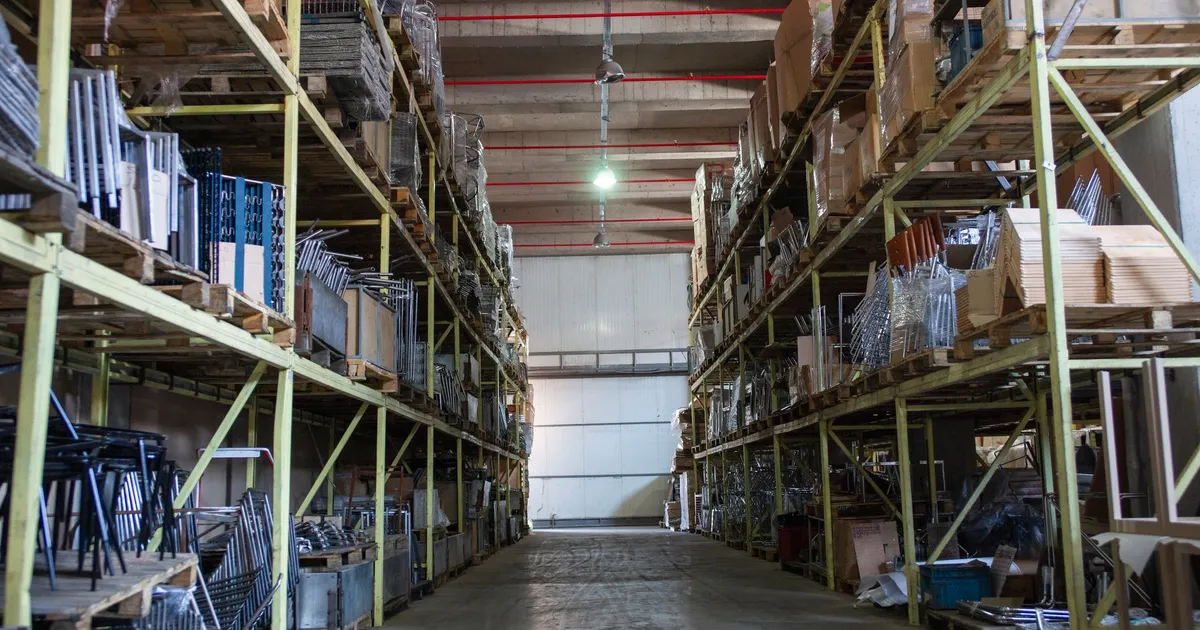
Dunedin’s newest library does not lend books. The Architecture + Design Library on Wharf St, co-founded by Penny Calder and Verity Lawrence, gives builders, designers and renovators access to material samples and surplus stock, so usable product gets a second job instead of a trip to landfill.
The founders’ line, “Dunedin’s been waiting for us”, will read as a sustainability feel-good story to most. It is better understood as a margin story. Surplus materials are working capital sitting in garages and yards, and someone has finally put a shopfront around them.
Builders are paying twice for the same timber
The scale of what is being thrown away is not small. The Ministry for the Environment’s 2025 baseline report found 5.25 million tonnes of construction and demolition waste went to levied facilities in 2023, 69.4% of everything those sites took. Most was soil, but 17% came from buildings, and only 18.5% was diverted through recycling or reuse. The same report noted the oft-repeated claim that construction makes up half of all NZ waste was not fully reliable. The real numbers are big enough without the exaggeration.
Locally, Dunedin City Council said in 2024 that construction and demolition materials made up over a third of what went into the city’s landfill.
The industry voice has shifted accordingly. The Environmental Innovation Centre’s Circular Path programme says plainly that reducing waste “is also becoming a business necessity”, pointing to rising material costs, reduced building activity and tighter margins. Its sharpest line: every skip represents materials “that have already been purchased, transported and paid for literally going to waste.”
The market moved before the masterplan
Here is the part that should interest anyone sceptical of waiting for councils to fix things. Dunedin’s public answer to construction waste is still largely prospective. The EIC’s June 2026 investigation found the city has limited or no local recycling options for treated timber, fibre cement board, plastic pipe, plasterboard, polystyrene and soft plastics. Its proposed fix, backloading waste to Christchurch on under-used rail freight, is pitched as supporting the council’s planned Resource Recovery Park. Planned being the operative word.
The library, by contrast, is open. It does not solve the hard recycling problems, and nobody should pretend a showroom replaces industrial processing. But reuse sits above recycling for a reason: it keeps the full value of a product rather than grinding it down. That same EIC report flagged plastic pipe prices rising by as much as 36% on the back of the Strait of Hormuz closure. When new stock gets that expensive, perfectly good offcuts and surplus lengths stop being rubbish and start being inventory.
The numbers elsewhere already stack up
This is not an untested idea. Back in 2024, a case study of the Mutu surplus-materials platform in Tauranga found it had diverted more than 220 tonnes of material, saving 25-plus customers over $285,000 in procurement costs and $68,000 in disposal costs.
The same year in Nelson, the Reconstruct pilot found a skip of plasterboard cost about $300 per tonne to dump, with several skips needed per house and the bill passed to the client. Then-Nelson Environment Centre chief executive Anton Drazevic pointed to DIY construction material prices rising 25% between 2020 and 2022, and one local firm, Scott Construction, hit 80% diversion on a project.
In April 2025, New Zealand Certified Builders and Mutu took the model to smaller residential builders, with then-NZCB chief executive Malcolm Fleming saying it let SME builders access a programme “normally reserved for larger businesses” for the first time. The pattern is consistent: when someone builds the marketplace, the savings show up on both ends of the transaction.
What this means on site
For builders, the calculation is simple. Over-ordering is often rational because running short stalls a job, but the surplus has usually been written off. A local outlet turns that sunk cost into either recovered cash or avoided disposal fees. For renovators and designers, it means cheaper access to materials and a chance to see product before specifying it. For the council, every tonne that walks out of Wharf St is a tonne it does not have to landfill or truck north.
The test now is volume. A library only works if the shelves keep filling and turning over, which depends on builders changing habits the EIC describes as moving from “how do we dispose of this?” to “how can we keep this material in use?” If Calder and Lawrence can prove the turnover, Dunedin will have a working reuse market in place before its Resource Recovery Park pours a slab. That is not a bad outcome for a city that, by the founders’ account, was waiting.
Sources
- ODT: ‘Dunedin’s been waiting for us’ – Why a ‘library’ for building materials has opened in the city (2026-10-25)
- Ministry for the Environment: New Zealand Construction and Demolition Waste Baseline & Tracking Methodology Report (2025-06-05)
- Building Today: Circular Path – Turning waste into resources in a tough economic environment (2026-08-19)
- Building Today: Rail could be key to unlocking recycling potential in the lower South Island (2026-06-23)
- PriorityOne: Closing the loop – Activating circular economy in Tauranga (2024-04-18)
- Scoop: Reconstruct – Trial To Recycle Construction Waste (2024-04-26)
- NZCB: Mutu and NZCB partner to minimise construction waste (2025-04-08)
Join the discussion
Add useful context, ask a good question, or challenge an idea — keep it specific and respectful.