

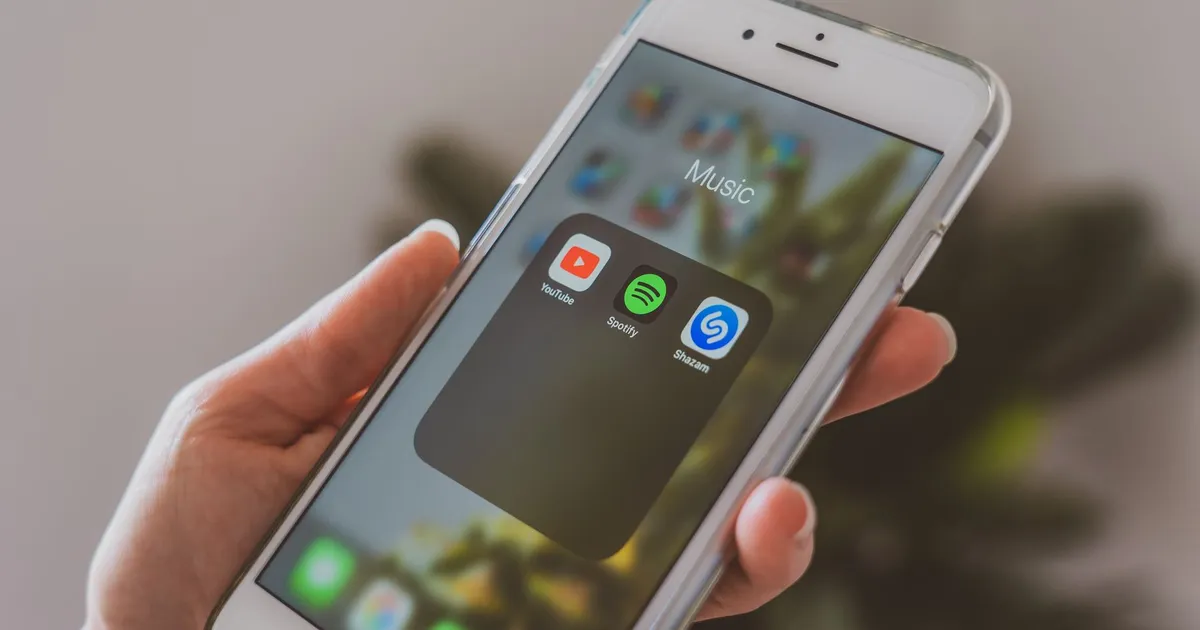
Only 4% of music streamed in Aotearoa in 2025-26 came from local artists, according to APRA AMCOS’ annual results. In the same year the collecting society posted record group revenue of $857.4 million, up nearly 9%, with digital now 53% of the total. Money is flooding into the system. Very little of the home audience is flowing to home-grown product.
The usual explanation is consumer choice. Kiwis simply prefer Taylor Swift. The data does not support that story, and anyone who sells into a platform-controlled market should pay attention to why.
Overseas listeners are finding what locals can’t
APRA’s international revenue earned for Australian and NZ members passed $100 million for the first time, and NZ music is growing its audience share abroad. A product that is gaining ground in competitive foreign markets is not failing on quality.
Anthony Healey, head of APRA NZ, puts it bluntly. “We don’t have a talent problem, but we do here in this country, we’ve got a discoverability problem,” he told RNZ’s Checkpoint, pointing to research by former Spotify chief economist Will Page showing streaming algorithms recognise language but not geography. Italian, Korean or Swedish artists get a natural boundary around their home market. English-speaking New Zealanders get dumped into one giant pool with the entire US and UK catalogue, and scale wins.
The story was quickly picked up on Newstalk ZB’s Sunday Session, but the coverage has mostly treated it as a cultural lament. It is really a lesson in gatekeeper economics.
Standing still is the same as losing
The local share has fallen 28.6% over five years. In 2025, RNZ reported the FY2025 figure at 3.8%, a 33.1% drop since 2021, so this year’s 4% is a plateau, not a recovery.
The NZ Music Commission’s quarterly figures explain the mechanics. In Q4 2025, NZ content streams were essentially flat at 215.5 million, down 0.7%, while total streams rose 8.6% on the previous quarter. Local output held up. The market simply grew around it. On user-generated platforms such as TikTok and YouTube, the local share is just 1.7%.
Plays are not customers
Even success on the platforms does not convert into a business. Lontalius, a songwriter with 300,000 monthly Spotify listeners, says one playlisted track “has been getting lots of plays… but none of those people listening know who I am”. Anonymous streams do not sell tickets, merchandise or the next album.
Singer-songwriter Jan Hellriegel says a single book sale earns her considerably more than streaming, calling the platforms “a marketing tool rather than a viable source of income”, while Auckland pop artist Jason Parker credits direct fan sales and social media for his chart run and wants platforms taxed to fund artists.
The legacy shelf is underperforming too
Before blaming Silicon Valley entirely, look closer to home. Commercial radio runs a voluntary Local Content Code targeting 20% NZ music. Yet in 2025 RNZ reported that only two nationwide commercial stations met it in 2024. NZ On Air’s own measures, which use a different methodology to APRA, put local music at 16.68% of commercial airplay and 6.41% of major-platform streams.
Meanwhile the public money goes almost entirely to supply. NZ On Air funded 214 singles across nine rounds, including 149 New Music Singles from 766 applications. Paying to make more product that nobody can find is not a strategy. It is a subsidy for content that lands on a shelf the taxpayer does not control.
Quotas are the blunt answer
Other countries have reached for regulation. In 2025, The Conversation noted that Australia had committed to local content quotas on international streamers and Canada had introduced revenue sharing, and argued that “it’s hard to see a future where business-as-usual will improve the situation”.
That diagnosis is right. The prescription deserves scepticism. Forcing quotas onto recommendation engines is clumsy, invites retaliation in trade talks and does nothing for artists the algorithm still buries. New digital taxes tend to be passed straight to subscribers. A smarter first move is to redirect a slice of existing funding from production to discovery: marketing, editorial playlist partnerships, data on what actually converts listeners into fans. And commercial radio should hit its own voluntary target before anyone asks Spotify to do better.
A warning beyond music
The wider point applies to any New Zealand business selling through a global platform, whether apps, marketplaces or news. When a few foreign companies own the shelf, “the market decided” means an algorithm with no local incentive decided. Small suppliers in big English-language pools lose by default.
NZ artists have already proved the product works. The next test is whether the industry, funders and broadcasters stop paying to fill a shelf they cannot see and start buying back the visibility that turns a 4% share into a business.
Sources
- 1News: Is streaming making it harder for us to listen to NZ music? (2026-10-24)
- RNZ: Is streaming making it harder for us to listen to New Zealand music? (2026-10-24)
- RNZ Checkpoint transcript: Only four percent of music streamed in NZ made locally (2026-10-22)
- Newstalk ZB: New data reveals only 4 percent of music streamed in NZ made locally (2026-10-25)
- RNZ: Spotify Wrapped ghosted NZ music again. Local artists and audiences deserve more (2025-12-04)
- NZ Music Commission: Q4 2025 report (PDF) (2026-02)
- Recorded Music NZ: Local Content in 2025 (2026-03-25)
- NZ On Air: Music in 2025-26 (2026-10-25)
- The Conversation: Discovering new NZ music in the streaming age is getting harder, what’s the future for local artists? (2025-05-27)
Join the discussion
Add useful context, ask a good question, or challenge an idea — keep it specific and respectful.