

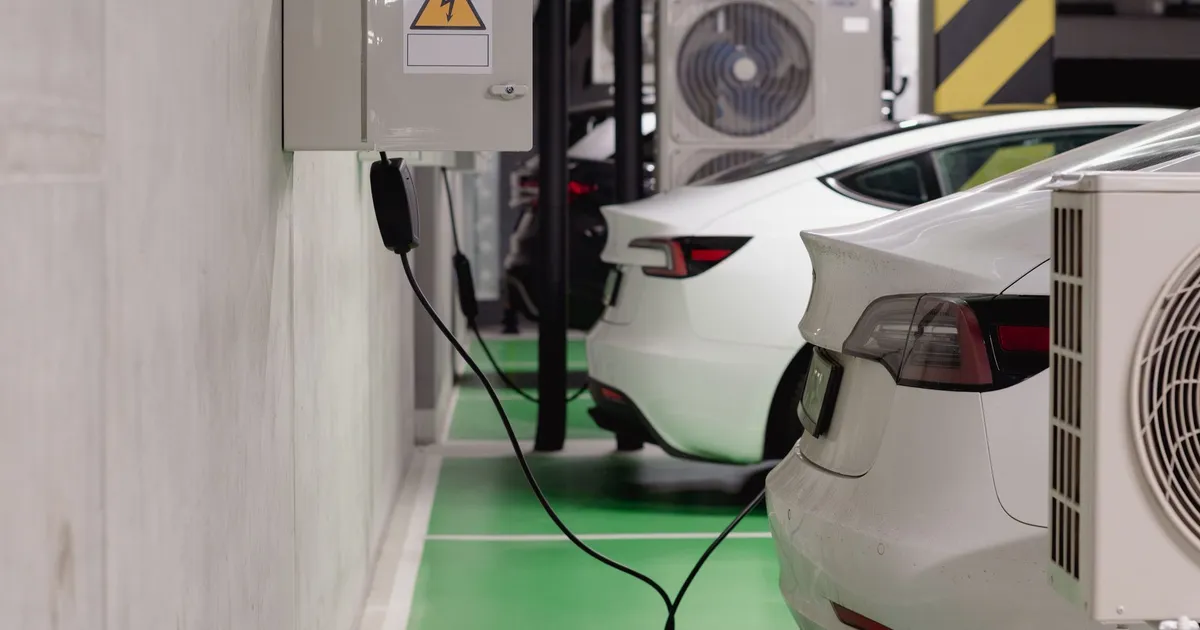
An Auckland family in Remuera has been running its hot water cylinder, oven, dishwasher and TV off a BYD Atto 3 in the driveway since mid-2026, using a $6000 bidirectional charger in a Genesis-managed trial. It is a good story. For business owners, though, the more useful detail is in the second of New Zealand’s three trials.
The real test is at the depot
The Counties Energy and OpenLoop trial, backed by EECA, will install up to 100 chargers across homes, commercial fleets and depot environments, possibly including a small number of heavy vehicle chargers. Counties Energy chief executive Judy Nicholl says it “will test how EVs and two-way chargers support households, businesses, fleets, retailers, aggregators and the electricity network”.
That changes the purchase decision. Fleet vehicles sit idle overnight and through long stretches of the working day. If those batteries can store cheap off-peak power, cover peak demand or keep a depot running through an outage, the vehicle becomes a second asset on the balance sheet, not just a transport cost.
A battery you have already paid for
The resilience case is easy to understand. Counties Energy chief network and digital officer Moonis Vegdani says an average EV can run an average home for about nine hours, or more than a day if used carefully. RNZ’s report on the trial launch was more generous, describing batteries able to run households for up to three or four days. The gap probably comes down to load and battery size. Either way, for a small business that loses a day’s trading every time a storm takes out the lines, those hours count.
The cost savings carry more weight. Concept Consulting modelling cited by Newsroom found two-way charging could save consumers $2,100 a year through lower bills and deferred network spending, with peak shifting potentially sparing Transpower around $3 billion in new poles and wires. Nobody has yet tested what that looks like across a commercial fleet, which is exactly why this trial is worth watching.
The hardware costs more than the car can save, for now
Upfront costs are high. In Queenstown, installation adds $7000 to $8000 on top of the charger, though both figures are expected to fall if the technology goes mainstream. Supply is thin too. As of mid-2026, New Zealand had fewer than 100 two-way chargers installed against roughly 100,000 EVs, most of which already carry bidirectional hardware that carmakers have not switched on. EECA chief executive Marcos Pelenur has said the critical unresolved issue is whether the market structure lets consumers actually capture the returns.
An industry review of EECA’s findings found only two charger models, StarCharge and Sig Energy, available for local trials and only a handful of compatible EV models. EECA strategy manager Murray Bell has acknowledged that very few compatible vehicle and charger combinations exist here, and that manufacturers are uneasy about battery performance when third-party equipment is involved. For a fleet manager, warranty is the dealbreaker. No one will risk a voided battery warranty on a $60,000 work vehicle to save a few hundred dollars on power.
The rules have to catch up with the hardware
The technology works. What is missing is a market that pays for it. The same review concluded that progress needs coordination across manufacturers, charger suppliers, retailers, lines companies, regulators and consumers. Tariffs that reward exporting at peak barely exist, standards are still being settled, and lines crews need certainty that parked vehicles won’t feed power into downed lines during repairs.
The scale needed is smaller than many assume. An earlier RNZ report found only 20,000 to 30,000 V2G-enabled vehicles would be needed to make a material difference to peak demand. That is a fraction of the existing fleet. The barrier is not the number of vehicles but warranties and pricing rules.
This does not call for subsidies. Regulators should let retailers and aggregators price flexibility properly, and push carmakers to honour warranties for certified equipment. Get that right and private capital will do the rest.
What fleet operators should do now
Don’t buy bidirectional chargers for the whole depot yet. Do ask whether any EV you buy supports two-way charging and whether the manufacturer will stand behind it. The Queenstown trial published its first insights report in August, with a final report to come, and the OpenLoop fleet results will show whether the commercial case holds up.
If it does, the next fleet replacement could also be an energy decision. The firms that kept their options open when they bought will be able to take advantage first.
Sources
- NZ Herald: Powering your home with your electric vehicle: Trio of trials underway (2026-10-23)
- EECA: Second two-way EV charging trial will explore how to use EVs to lower power bills (2026-09-29)
- RNZ: EVs being trialled as giant batteries to power homes for less in Auckland (2026-09-29)
- Newsroom: How two-way charging between your garage and the grid will slash power bills (2026-07-17)
- RNZ: Cars could soon be powering your house, and your neighbour’s too (2026-08-25)
- EECA: Two-way EV charging trials (2026-05)
Join the discussion
Add useful context, ask a good question, or challenge an idea — keep it specific and respectful.