

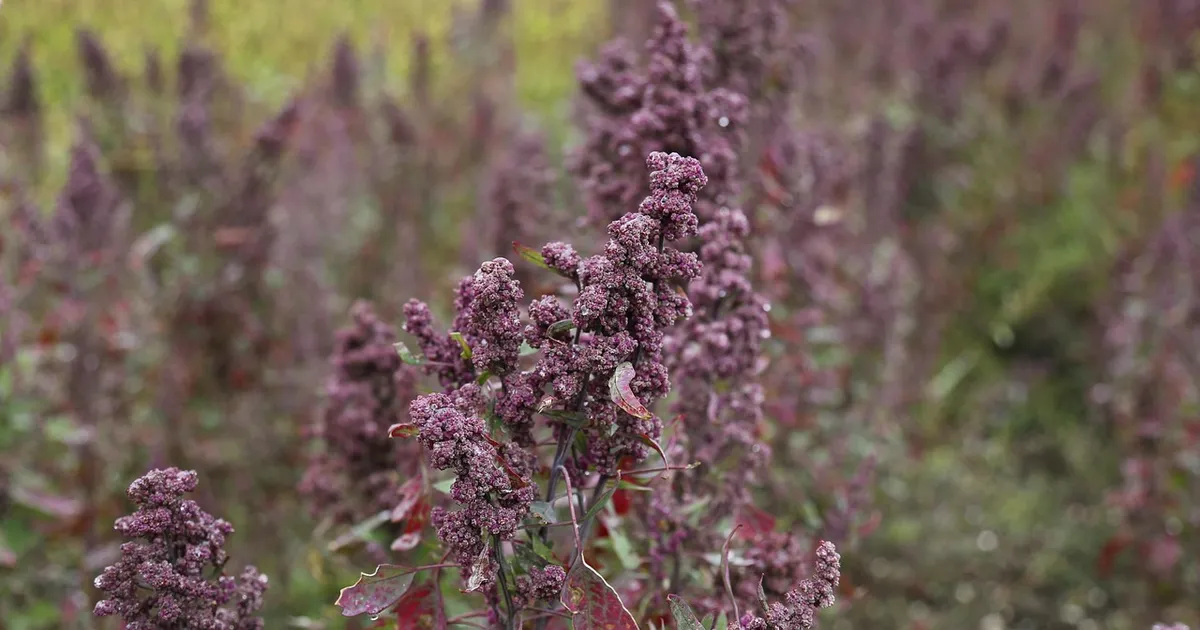
Quinoa has long suffered from a lifestyle-block image, something grown by enthusiasts and sold in health food aisles. That image is now out of date. For arable farmers looking for a contracted, low-input crop that fits an existing rotation, quinoa is starting to look like a commercial proposition a bank manager can actually assess.
The timing matters. The closure of McCain and Watties vegetable processing factories is estimated to have hit 220 growers in Canterbury and 100 in Hawke’s Bay, and Federated Farmers’ September confidence survey found one in four arable farmers making a loss. Those growers need somewhere to put their paddocks, their machinery and their skills.
Europe’s bad weather is New Zealand’s order book
Dan Cottrell of Kiwi Quinoa has grown the crop near Taihape for more than a decade. His company holds the New Zealand licence for saponin-free varieties bred by Wageningen University in the Netherlands, and it grows them counter-seasonally for European companies. It now has 17 contract growers across both islands, a new export contract with a Canadian partner, and is recruiting more.
The demand driver is climate volatility in the Northern Hemisphere. “Essentially we’re growing in their off season to supplement their production due to a variety of reasons – primarily increased demand for them and certainly climatic pressure,” Cottrell told RNZ this week, pointing to “18 months of no rain and then flooding in the south of Spain”. He was candid that the quinoa industry has had a rough few years, but said “we’ve got long term contracts and the demand is increasing.”
That is the hook. Buyers who have watched European harvests fail two or three seasons running will pay for reliable Southern Hemisphere supply. New Zealand is not competing with Spain so much as insuring it.
The numbers a lender can work with
Cottrell says New Zealand yields average three and a half tonnes clean per hectare, with five tonnes reached last season. Inputs are lower than cereals, with no fungicides or herbicides. Planting runs from October to late December, harvest is in April, and some growers have double-cropped quinoa after processed peas, which slots neatly into Canterbury rotations. Processing exists in both Canterbury and the North Island, and Cottrell is ideally after Canterbury growers near the local plant.
The track record backs this up. The Cottrells began on their 600ha Oruamatua farm in 2016 after importing 45kg of European seed, and in 2020 reported one hectare typically yielding over a tonne of finished product. By 2019 they had scaled from a 3ha trial to 30ha and a 70-tonne harvest. That same year Cottrell said his mixed sheep, cattle and cropping system used just 15 percent of European growers’ fertiliser inputs while matching their mid-to-upper yields.
In Taranaki, sheep and beef farmers Kate and Hamish Dunlop saw yields climb from 1.5 to 3.5 tonnes per hectare over three seasons by 2018. The learning curve is real, but it flattens.
A niche, not a rescue
Honesty is needed on scale. Seventeen contract growers cannot absorb 320 displaced vegetable growers, and nobody should pretend otherwise. National arable export revenue was $345 million in 2024, with MPI forecasting $370 million for 2026, and that growth came from vegetable, ryegrass and clover seed, not quinoa. MPI’s reporting does not even track quinoa separately, so its contribution cannot be measured.
That data gap is an old complaint. In 2020, Methven grower Andrew Currie said marketing was hard because nobody, including MPI, could say how much quinoa New Zealand imported versus grew. The domestic retail path he and the Dunlops pursued was always going to be thin-margin and small.
What has changed is the model. Kiwi Quinoa’s export contracts put a buyer in place before the seed goes in, which is precisely what was missing when processors walked out of Canterbury and Hawke’s Bay. For an individual grower, that converts a speculative crop into a contracted one.
What happens next
The sensible play for affected growers is to treat quinoa as one piece of a diversified rotation, not a replacement for a lost processing contract. Ask about contract length, pricing mechanics, proximity to processing and what happens if Europe has a good year. Those answers determine whether the crop is bankable on your farm.
For the wider sector, the lesson is bigger than quinoa. Food and fibre made up 81.1 percent of goods exports in the year to June 2024, and Northern Hemisphere buyers facing repeated climate shocks will increasingly pay a premium for dependable off-season supply. Growers who line up those contracts early will be the ones still cropping when the next processor leaves town.
Sources
- RNZ: Growing quinoa ‘very real, new option’ for struggling arable farmers (2026-10-19)
- Rural Delivery: Taihape farmers supplying locally grown quinoa to New Zealand (2020-06)
- NZ Herald: Behind the Taihape farm producing 70 tonnes of quinoa a year (2019-11-15)
- Idealog: Kiwi Quinoa, taking the super food to the masses (2019-11-03)
- RNZ: Taranaki farmers reap benefit of keen appetite for quinoa (2018-10-08)
- MPI: Situation and Outlook for Primary Industries December 2024 (2024-12)
- MPI: Data used in primary industry export reports (2026-06)
- Rural News Group: Quinoa growers urged to band together and take on the world (2020-05-07)
Join the discussion
Add useful context, ask a good question, or challenge an idea — keep it specific and respectful.