

Stats NZ’s latest environmental-economic accounts will be read as good news. Household road transport emissions fell 5.7% in the June quarter, in line with lower fuel sales. But nobody engineered that result. Motorists looked at the pump and stayed home.
That is demand destruction, not decarbonisation. The difference matters for every business that moves goods, staff or customers, because one makes the economy cleaner and the other just makes it smaller.
The pump did the work
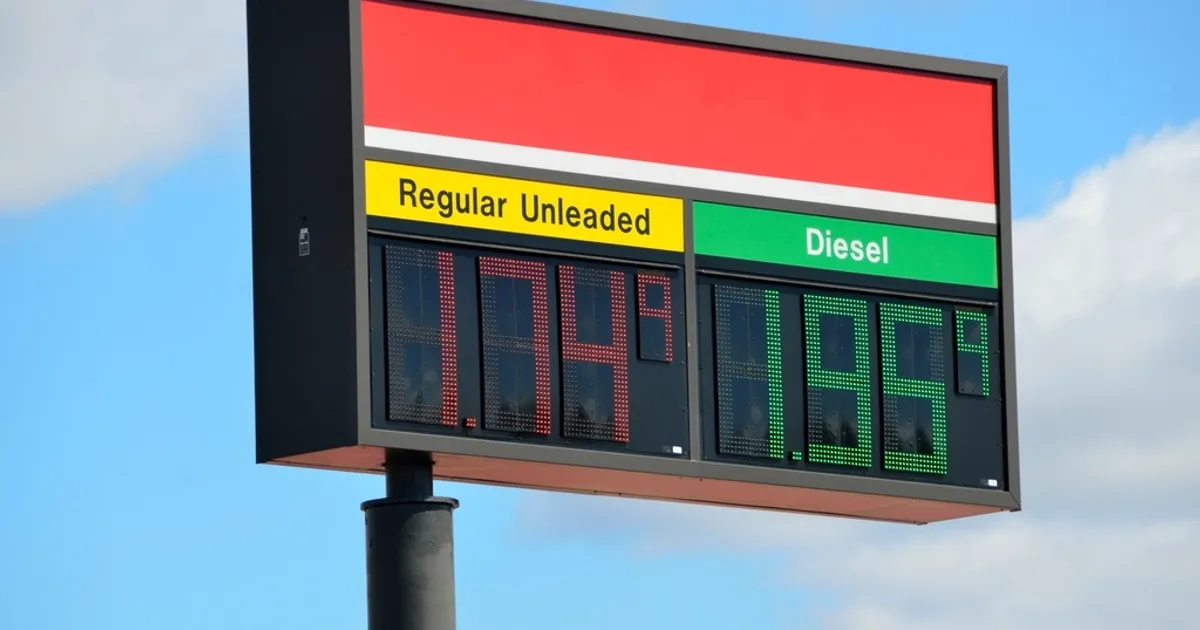
By early October, 91 octane was averaging $3.52 a litre nationwide, up 15.9% in 28 days, and Z Energy was reporting falling petrol and diesel demand. For perspective, a 2022 Ministry of Transport report charted nominal petrol prices across 2006 to 2019 in a band of roughly $2.00 to $2.42 a litre. Current prices sit well outside anything the past two decades prepared households for.
The behavioural response has been visible all year. In March, NZTA data already showed Auckland light vehicle traffic down 2.2% and Wellington down 4.5%, with Simplicity chief economist Shamubeel Eaqub reading it as people responding to higher prices and supply uncertainty. Those who could work from home did. Those who could not kept driving and paid.
None of this is surprising. A 2023 Motu paper tracked New Zealand petrol demand back to 1974, including the 2018 Auckland regional fuel tax that lifted prices 5-8%. Drivers respond to price. They always have. A falling emissions line that tracks the pump almost perfectly is evidence of elasticity, not of a climate programme working.
The annual number is a grid story
Here is the detail the headlines skip. Over the year to June, gross emissions fell 2.9% to 75 million tonnes, mostly because electricity, gas, water and waste emissions dropped 30.5%, as renewables took a bigger share of generation. Transport helped in the latest quarter, but the year-on-year progress was a power-sector achievement.
That is the kind of emissions cut business should want. Cleaner generation lowers the carbon footprint of the whole economy without asking anyone to do less. A tradie who skips a job to save on diesel cuts emissions too, but he also cuts GDP, his own income and his customer’s productivity.
It is also a reminder of where the pressure points remain. The same sector’s emissions rose over the past two quarters as winter hydro conditions pushed more thermal generation into the mix. Firming a renewable grid through dry winters is where serious investment and policy attention belongs.
Regional firms are carrying the bill
Eaqub says prices are “already past the point where it had effect on the normal functioning of the economy”, with the pain concentrated in provincial areas where essential workers drive 40km or more a day for work.
This is the part of the emissions story that looks least flattering. The people cutting their driving fastest are those with the least room to absorb the cost. Rural contractors, freight operators, regional retailers and service businesses have no bus route to switch to and no option to send the excavator over Zoom. They are paying higher input costs with zero productivity offset. Call it what it is, a regressive tax on distance, collected by the oil market rather than the government.
It vanishes when prices fall
Auckland University’s Tim Welch warned in July that while the changes were heartening, research suggested they would be “extremely short-lived” beyond a month or two if fuel prices dropped. His proposed fix included raising fuel tax to lock the habits in, which is a candid admission that the gain cannot sustain itself.
History backs him. Stats NZ’s 2019 accounts found household emissions rose 19.3% over the decade to 2017, driven overwhelmingly by road transport. The long-run trend only reversed under financial duress. Remove the duress and the trend is likely to return.
Better levers exist
The answer is not to cap prices either. Back in 2022, a piece in The Conversation argued that letting the Commerce Commission set “fair” fuel prices would undermine climate targets by keeping driving artificially cheap. Fair point. Price signals work and should be left alone.
But a signal is not a strategy. Academic work in Policy Quarterly has argued that emissions pricing cannot do it alone and needs pairing with policy that makes cleaner choices genuinely available. For business, that means faster grid build-out and firming, a charging network that works outside the main centres, fleet renewal that makes economic sense, and flexible work rules that let people cut trips without cutting output.
The test comes when prices ease. If transport emissions bounce straight back, the June quarter will have been a recession in miniature for drivers, not a step towards net zero. Climate progress that depends on $3.52 petrol is progress that depends on households and small firms getting poorer, and no government should be comfortable claiming credit for that.
Sources
- ODT: Emissions fall as fuel prices deter Kiwi motorists (2026-10-21)
- RNZ: Emissions fall as fuel prices deter motorists (2026-10-21)
- ODT: Pain at the pump, Kiwis choosing not to drive (2026-10-06)
- RNZ: Fuel prices keep drivers off roads (2026-03-25)
- RNZ: ‘Put the price of fuel up’ – raising taxes could lock in transport habit changes (2026-07-13)
- Ministry of Transport: The Distributional Impacts of Transport-related Carbon Policy (2022-09)
- Motu: Domestic transport charges, estimation of transport-related elasticities (2023-10)
- Stats NZ: Environmental-economic accounts 2019 (data to 2017) (2019-06-27)
- The Conversation: Why giving the Commerce Commission the power to set ‘fair’ fuel prices is unfair on NZ’s climate targets (2022-11-10)
- Policy Quarterly: Why Emissions Pricing Can’t Do It Alone
Join the discussion
Add useful context, ask a good question, or challenge an idea — keep it specific and respectful.