

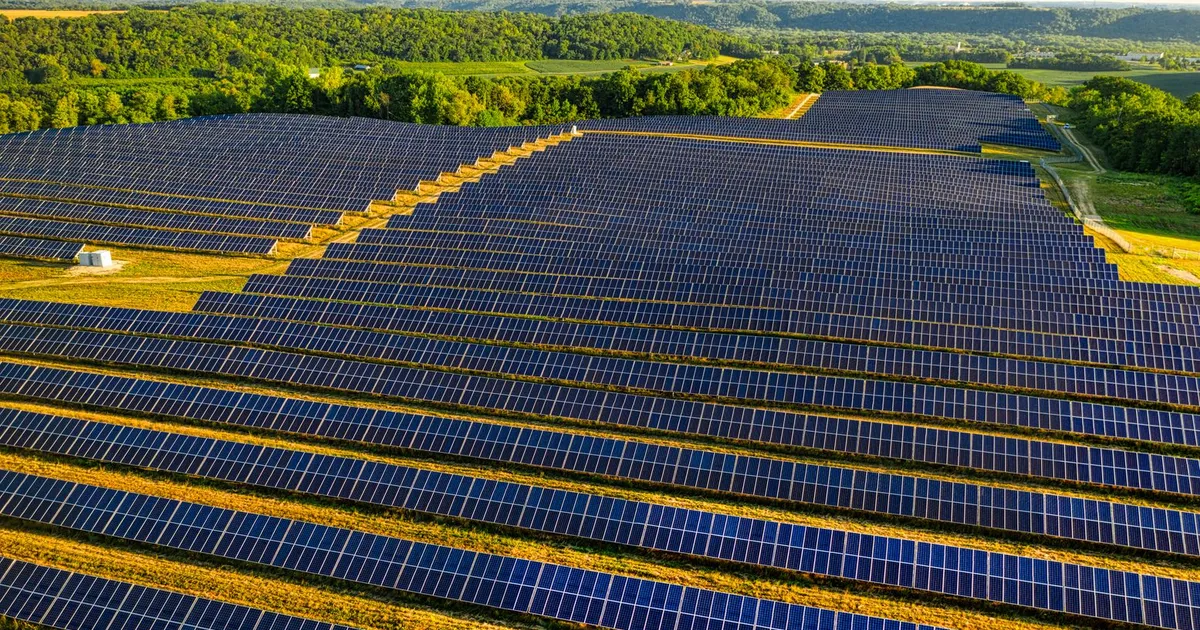
Lodestone Energy’s debut on the NZX Main Board is being covered as a renewable energy story. It is really a capital markets story. The solar developer raised $75 million at $2.25 a share, giving it a market value of about $440 million, in what is the exchange’s first significant IPO in roughly five years. For a developed economy’s main bourse, that gap is embarrassing. Lodestone now carries the burden of proving the public route still works for New Zealand growth companies.
A genuine float, finally
The distinction matters. NZX activity in recent years has leaned on compliance listings and backdoor deals that bring no new capital. BusinessDesk columnist Eden Bradfield put it bluntly: “After about five years (five years!), the NZX has a new listing,” stressing this was a true IPO rather than a change of listing. Advisers on the deal describe it as the first significant IPO since Winton Land in 2021.
NBR goes further, framing Lodestone as a test of whether recent regulatory changes to capital markets have actually made it easier for growth companies to raise public money. That is the right question. Reform that produces one listing in five years is not yet a reform that has worked.
Retail investors turned up
The most encouraging number is the shareholder count. Around 10,000 new shareholders joined the register, with almost half the money coming from new retail investors and the balance from institutions and existing holders. Founder and managing director Gary Holden said the offer “does truly cover the spectrum of the investment community from all over the country.”
That undercuts a lazy assumption in New Zealand business circles: that Kiwi savers only want property and term deposits. Given a credible, locally relevant growth story, they will write cheques. The offer was pitched at a range of $75-100 million, implying a valuation of $440-465 million. Landing at the bottom of that range is not a triumph, but it is a real raise in a market that has had none.
The numbers behind the pitch
Lodestone is not a pre-revenue moonshot. Its FY26 results show energy revenue of $25.1 million, up 106%, and a net loss narrowed to $0.9 million from $35.8 million the year before. Its average customer sales price rose from $114/MWh to $136/MWh. Holden’s argument for listing now is that cash flow from existing farms is starting to cover operating costs, the “magic moment where we could self-fund going into the future.”
The business runs five farms with 169 MWdc of capacity, a sixth under construction in Hawke’s Bay, and a target of 16 to 18 operating farms by FY32, riding MBIE’s forecast of 21% electricity demand growth between 2025 and 2035. Holden says nearly all the new money goes into projects, not to departing shareholders.
Where it could go wrong
The sceptics have a case. Bradfield flagged gross debt of $185.3 million, including a junior facility at a punishing 10.91%, and questioned the pricing against Meridian Energy’s 15.1x EV/EBITAF multiple. Paying a premium to an established, profitable generator for a company still building scale is a bold call.
Then there is the pivot. Lodestone gained authorised retailer status in April 2025 and is pushing into mass-market retail electricity, a brutally competitive space, while trying to build two or three farms a year.
Liquidity is the other worry. Gertjan Verdickt, a former University of Auckland finance lecturer, warned the relatively small float could create small-cap liquidity problems. Generate investment specialist Greg Smith was more upbeat, noting utility-scale solar had never been directly investable on the NZX, but cautioned that execution risk and wholesale price exposure come with the territory.
Why founders should care
If Lodestone trades steadily and delivers its pipeline, it becomes the reference deal: proof that a mid-sized Kiwi growth company can raise nine figures locally, from a broad base of retail and institutional money, without selling to private equity or heading to the ASX. Joint lead managers Forsyth Barr and Jarden will be pitching that template to every board in the country.
If it stumbles on debt costs or the retail push, it reinforces every reason founders have given for avoiding the NZX, from thin liquidity to punishing scrutiny of small caps.
The 206.7 million shares quoted at a $2.25 reference price now set the scoreboard. The next 12 months of that share price will say more about the health of New Zealand’s capital markets than any regulatory review. The drought is broken. Whether it rains again depends on Lodestone.
Sources
- RNZ: Lodestone Energy to make NZX debut after $75m IPO (2026-10-22)
- RNZ: Lodestone is listing: Should you buy shares? (2026-09-30)
- Simpson Grierson: Lighting up the NZX – Simpson Grierson advises on Lodestone Energy’s landmark solar IPO (2026-10-22)
- BusinessDesk: Carry that Lode (2026-10-11)
- Lodestone Energy: Product Disclosure Statement (2026-09-28)
- NZX: Lodestone Energy Limited – Listing Analysis (2026-10-22)
- NZX: Updated Listing and Quotation Notice – LOD (2026-10-19)
Join the discussion
Add useful context, ask a good question, or challenge an idea — keep it specific and respectful.