

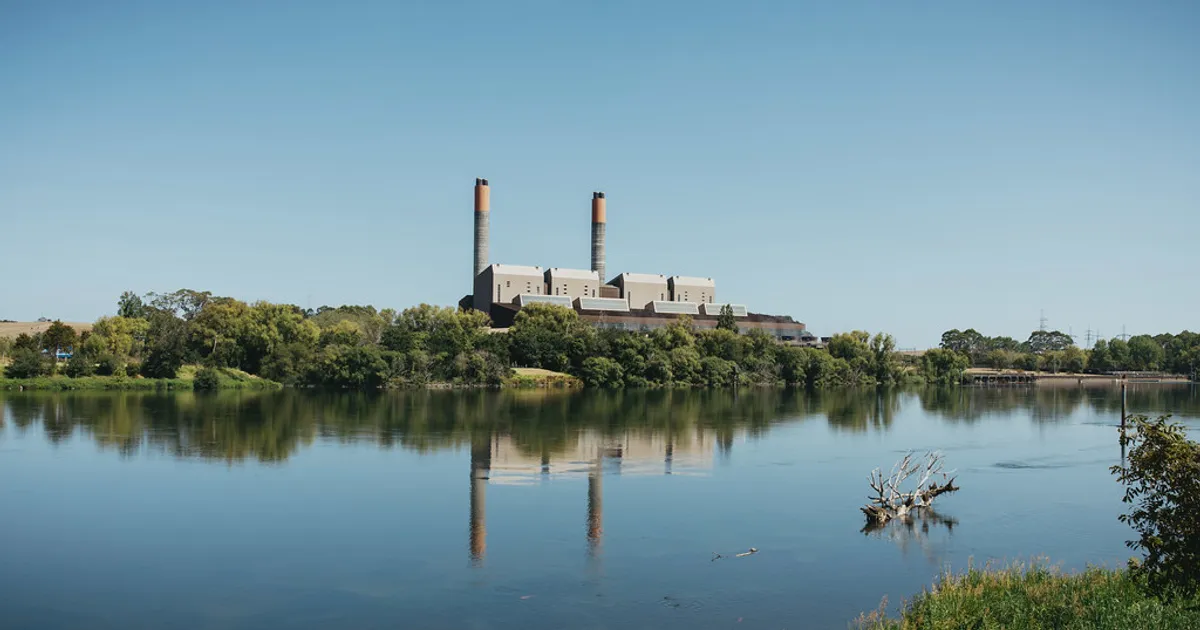
Genesis Energy has put New Zealand’s single most important piece of thermal backup on the international market’s radar. Chief executive Malcolm Johns told shareholders on Monday that a 12-month review of the 403MW Huntly Unit 5 includes selling it offshore, because it is “challenging to currently see an attractive commercial case for Unit 5 beyond the very near term”.
This is not corporate theatre. It is a rational company telling the government, its 51% owner, that the market as designed does not pay for insurance. Either someone pays, or the insurance leaves.
A turbine too big to lose
Unit 5, commissioned in 2007, is the country’s largest and most efficient thermal unit. Transpower data shows it accounts for about 45% of remaining gas generation capacity since Contact retired its Taranaki Combined Cycle plant, and on its own can meet roughly 7% of national peak demand.
That is the capacity the system leans on in a dry year, a windless week or when another big plant trips. Take it out and the safety margin for every large power user in the country gets thinner, with no replacement of comparable scale on the horizon.
Why running it less made Genesis more money
Here is the uncomfortable part. Genesis did better in FY26 precisely because Unit 5 sat idle. The company redirected 3.7 PJ of gas to commercial and industrial users while the turbine was offline for much of the second and third quarters, chasing better margins with full hydro lakes doing the heavy lifting. By its April filing, third-quarter thermal generation had fallen to 236 GWh, down 716 GWh on the prior year.
The result was ebitdaf of $518 million, up 14%. Shareholders should be pleased. That is the market working as intended: scarce gas flowed to its highest-value use.
The engineering does not help either. Unit 5 has a minimum output of about 180MW, which makes it clumsy as a peaker in a grid increasingly shaped by variable wind and solar and fast-response batteries. Johns has said the plant needs contracted long-term revenue, reliable and competitively priced fuel, and fuel flexibility to stay viable. New Zealand currently offers none of the three.
The minister wants it, but isn’t buying
Energy Minister Simeon Brown said in August he would not be comfortable with an overseas sale, calling Unit 5 “a critical piece of kit” and adding that “we need that turbine because ultimately we need to have backup energy, and that’s why we’re procuring LNG.”
Discomfort is not a contract. The government’s answer, LNG import infrastructure, is a multi-year project that does nothing to settle whether Unit 5 is still here when the review ends. Leaning on a majority-owned company to hold a loss-making asset out of patriotic duty is the worst kind of policy: opaque, unpriced and unfair to minority shareholders.
The fix already exists elsewhere
US energy economist James Bushnell of the University of California, Davis, visiting as a guest of the Electricity Retailers’ and Generators’ Association, argued in September that keeping Huntly available should come before underwriting LNG. He pointed to American “reliability must-run” contracts, where a plant’s fixed costs are covered if it is essential to system security: “when people get nervous, there’s generally sort of an insurance that can be had by paying to keep stuff from retiring.”
The private sector has already shown this can work locally. Contact, Meridian and Mercury each hold 50MW of Huntly Firming Options under 10-year deals that keep the coal-and-gas Rankine units ready through 2035, including a strategic coal stockpile. Those units were already running less often because of constrained gas, as a 2025 Commerce Commission draft determination noted. Nothing equivalent exists for Unit 5.
That is the gap. It is not a case for nationalising backup or bolting on a capacity market. It is a case for a transparent, priced standby arrangement, ideally contracted between market participants, with the Crown stepping in only if they will not. Paying a known fee to keep an existing turbine available is almost certainly cheaper than building new firming from scratch.
What large users should do now
For manufacturers, processors and anyone with big electricity exposure, the next 12 months carry real uncertainty. If Unit 5 goes, dry-year price spikes get sharper and the backstop for low-wind winters shrinks. Businesses should be stress-testing contracts for that scenario now, and pushing hedges further out while firming is still on the system.
Genesis has been honest about the economics. The question for the government is whether it will be equally honest about the price of security. If it wants the turbine, it should pay for the turbine. Otherwise someone offshore will, and New Zealand will learn the value of its spare capacity the expensive way.
Sources
- NZ Herald: Genesis Energy considers international sale of Huntly Unit 5 turbine (2026-10-19)
- The Post: ‘Critical piece of kit’: Energy minister would not be comfortable with Genesis selling NZ’s largest turbine (2026-08-31)
- BusinessDesk: Genesis Energy reviews future of Huntly Unit 5 as gas role shrinks (2026-08-27)
- BusinessDesk: Huntly a ‘no-brainer’ before LNG, US expert says (2026-09-07)
- NZX: Genesis Energy announcement (2026-04-22)
- Commerce Commission: Draft Determination on Genesis Energy Authorisation (2025-09-29)
Join the discussion
Add useful context, ask a good question, or challenge an idea — keep it specific and respectful.