

Christchurch biotech Precision Chroma has raised US$7.3 million (NZ$12.8 million) in a seed round led by M Ventures, the corporate venture arm of German pharmaceutical giant Merck KGaA. Local firms Bridgewest Ventures NZ and Icehouse Ventures joined in, as did Crown agency New Zealand Growth Capital Partners through its Aspire fund.
This is a good news story, and it should be read as one. A New Zealand university produced world-class intellectual property, a Kiwi founder turned it into a company, and that company is building its manufacturing base in Canterbury. But it is also a reminder of an uncomfortable pattern. New Zealand is good at the science. It is still not good at leading the money that turns science into a business.
A faster way to make biological medicines
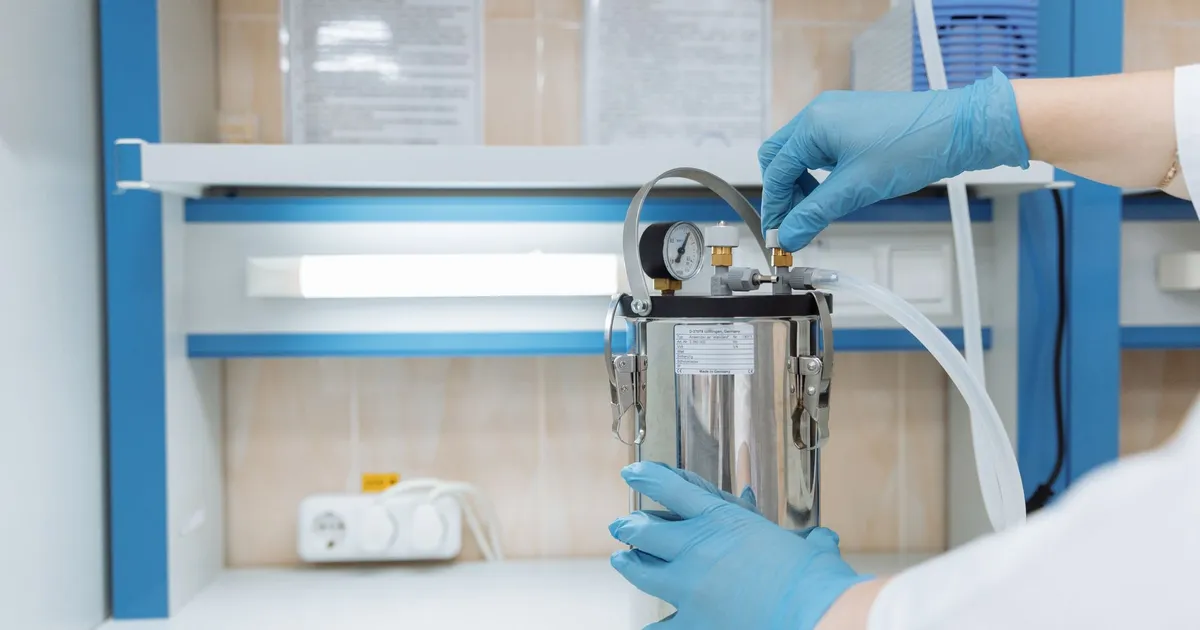
Precision Chroma’s technology, called Printed Monolith Adsorption, is a patented 3D-printed chromatography system designed to speed up the purification of proteins, antibodies, vaccines and gene therapies. It replaces the packed-particle columns that drug makers have relied on for decades, which are slow, expensive and lose product along the way.
The idea grew out of more than ten years of University of Canterbury research led by Professor Conan Fee, with founder and chief executive Sean Feast developing it through his postgraduate and postdoctoral work. UC and Bridgewest formally launched the company in January 2022, with Feast as founding CEO and Fee as technical adviser.
Purification is one of the costliest bottlenecks in biologics manufacturing. Anyone who can make it cheaper and faster is selling into a market Feast describes as worth billions globally.
The validation all comes from offshore
The Merck cheque is not the only vote of confidence. Precision Chroma is running validation trials with AstraZeneca and has already received funding from the US Biomedical Advanced Research and Development Authority, the agency responsible for pandemic and bioterrorism countermeasures. Feast told the Herald the company aims to sell product for research-only clinical work by the end of 2027, ahead of a full commercial launch.
Notice the common thread. Merck, AstraZeneca and BARDA are all foreign. New Zealand investors are at the table, which matters, but the institutions doing the heavy lifting on credibility and commercial proof are overseas.
Dealroom’s coverage of the deal, which put the raise at US$8.41 million, notes the round sits in the top 4% of all seed rounds raised by New Zealand health start-ups. That is the most telling number in the story. A raise of roughly $13 million is modest by global biotech standards. Here, it is an outlier.
The jobs are staying, for now
The new money will fund a manufacturing plant in Christchurch and lift headcount from six staff, plus four being onboarded, to 17 or 18. Feast says the company will stay based in Canterbury.
That deserves credit. Plenty of New Zealand deep-tech firms have followed their lead investors and big customers to Boston, San Francisco or Europe. High-value manufacturing jobs built on locally developed IP are exactly what a small, distant economy needs more of. But the decision rests with the founder and his backers. As later rounds get bigger, and lead investors get more foreign, the gravitational pull offshore only gets stronger.
Ambition on paper, thinner funding in practice
The government says it wants more of this. Its Science Investment Plan 2026-2036 puts annual investment across the science, innovation and technology portfolio at around $1.9 billion, including the Research and Development Tax Incentive. A new national IP management policy took effect on 1 July 2026 to better reward researchers for commercialising their work.
The same plan concedes that core science and research funding is projected to decline in future years, a hangover from earlier savings. Headline investment rises mainly because more firms are claiming the RDTI, a demand-driven tax credit, not because the Crown is putting more into the research pipeline that produced companies like this one.
That is not an argument for open-ended government spending. A centre-right view would say the state’s job is to fund good basic research and get the settings right, then let private capital do the rest. The problem is the private capital part. New Zealand’s pool of domestic growth money, from KiwiSaver funds to wholesale investors, still rarely backs early deep tech at scale.
Not a weak economy problem
This gap is not explained by a broader slump. Stats NZ data shows business sales hit $214 billion in the June 2026 quarter, up 8.9% on a year earlier, with operating profit up 7.9%. There is money in the economy. Very little of it is finding its way into commercialising university IP.
Precision Chroma is a genuine win for Christchurch, for UC and for the local investors who backed it. The test comes at Series A, when the cheques get bigger and the question of who leads becomes a question of who owns the upside. If New Zealand wants the next round led from here, the time to build that capital base is before Merck comes back for more.
Sources
- NZ Herald: Merck leads $13m raise for Christchurch start-up Precision Chroma (2026-10-11)
- Dealroom: Merck venture arm leads $7.3M seed round into NZ biotech Precision Chroma (2026-10-11)
- University of Canterbury: Precision Chroma, improving biological medicine manufacture (2026-10)
- Stats NZ: Business financial data, June 2026 quarter (2026-09-08)
Join the discussion
Add useful context, ask a good question, or challenge an idea — keep it specific and respectful.