

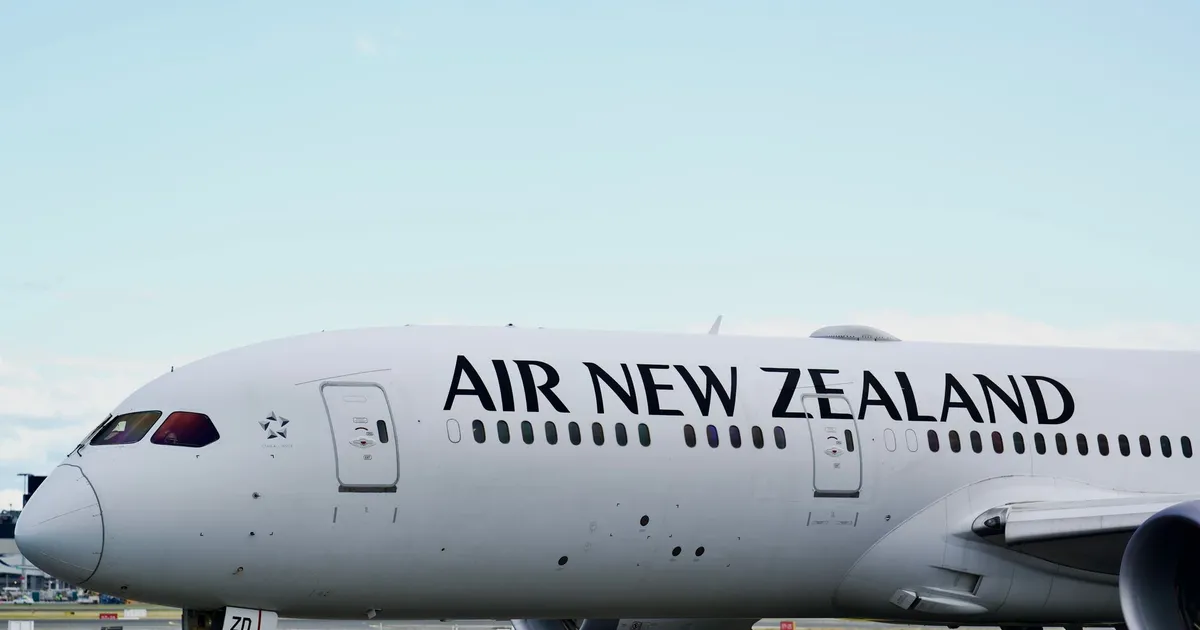
New Zealand is heading into its strongest tourism summer since Covid, and this time the numbers are backed by aircraft already scheduled. Aviation consultancy ISD Partners forecasts the country will see 400,000 more overseas passengers than last summer, with pre-Covid passenger peaks expected early next year. Christchurch is singled out for a particularly large jump in international routes.
For South Island operators, the recovery has moved past the forecasting stage. It is now about rosters, fleet sizes, room rates and whether regional businesses can capture the spend before it flies home.
The seats are already sold to airlines
Christchurch Airport will offer 1.27 million international seats between November and March, 21 percent more flights than last summer. Chief executive Justin Watson calls it the biggest summer the airport has ever had.
The mix matters more than the total. Long-haul services are up 54 percent, adding 130,000 seats, while Tasman and Pacific services rise 11 percent. Air New Zealand is launching 787-9 Dreamliner services direct from Christchurch to Singapore from 28 October, Tokyo Narita from 28 November and Perth from 30 November. Cathay Pacific returns on 2 November with five weekly Hong Kong flights, China Southern is adding extra Guangzhou services over peak, and Qantas is stretching its third daily Sydney service from six weeks to 14.
That is a structural shift. A visitor from Tokyo or Singapore can now land in Canterbury without touching Auckland, cutting a domestic leg and a day of friction from a South Island itinerary. Regions that used to be the second stop are becoming the front door.
Last summer was the dry run
Anyone tempted to dismiss this as airport marketing should look at what happened over the 2025/26 season. Christchurch’s international visitor numbers rose 22 percent to 287,000, contributing an estimated $861 million to the South Island economy. Australian arrivals rose 17 percent, and Chinese arrivals more than doubled to 38,400, helped by visa settings letting Chinese travellers enter on an Australian visa.
That growth came despite war in the Middle East and soaring jet fuel prices. In April, Watson noted airlines were trimming schedules rather than cancelling major routes, and fares had not risen markedly.
The annual data confirms it. South Island airports recorded 1.05 million overseas visitor arrivals in the June 2026 year, up from 881,300. Christchurch led with 547,800, up 21 percent, while Queenstown hit a record 493,500.
Tourism Industry Aotearoa chief executive Rebecca Ingram put the momentum down to deliberate effort, not luck: extra air capacity, targeted investment in events, better China visa settings and regional marketing. Policy that reduces friction for visitors works, and it is working here.
Fewer bodies, fatter wallets
There is a useful reality check in the national figures. Total arrivals reached 3.67 million, up 9 percent, but still sit at 95 percent of pre-Covid levels. Volume has not fully come back.
Value has. MBIE’s International Visitor Survey shows annual spend jumped 20 percent to $14.3 billion, keeping tourism the country’s second-largest export earner behind dairy. Median spend per visitor reached $2,428, or 106 percent of 2019 levels, and Australians alone spent $4.4 billion.
That is the more important number for operators. A business built for yield, not footfall, is already ahead of where it was before the pandemic.
Four months of profit is the real constraint
Tourism Holdings chief executive Grant Webster, whose company sees about two-thirds of its bookings for South Island activities, cuts to the problem. Many tourism businesses only make money four months of the year. Stretch that to six and the industry becomes far more efficient.
That is where the opportunity sits. A short, intense peak forces operators to hire seasonally, overpay for scarce staff, and carry idle assets for eight months. New long-haul routes from Asia, where travel seasons do not mirror Australia’s, give the South Island a genuine chance to fill the shoulders.
The pressure points are familiar. In April, Ingram warned that operating costs had risen sharply and that investment across the tourism system needed to keep pace with growth. Rental fleets, accommodation, hospitality staff and regional infrastructure all have to scale before the visitors arrive, not after.
In April, Webster said there was no reason to be anything but optimistic. Six months on, the aircraft are confirmed. The first Singapore Dreamliner lands in under three weeks. The operators who win this summer will be the ones who have already hired, priced for yield, and started selling April and October as hard as January.
Sources
- Newstalk ZB: South Island set for a bumper summer as forecasts show surge in tourists (2026-10-09)
- NZ Herald: Christchurch Airport set for biggest international summer with 1.27 million seats (2026-08-18)
- Christchurch Airport: Christchurch Airport’s biggest ever international summer takes flight (2026-08-19)
- RNZ: Strong summer travel season in South Island with Christchurch Airport seeing ‘exceptional’ growth (2026-04-13)
- Christchurch Airport: International visitor numbers surge 22% in standout summer for Christchurch Airport (2026-04-13)
- Stats NZ: Annual visitor arrivals up 9 percent (2026-08-14)
- Stats NZ: International travel: June 2026 (2026-08-14)
- MBIE: IVS Release – Key Highlights: International visitor spend and arrivals continue to grow (2026-09-01)
- Inside Tourism: Tourism is back, now comes the hard part (2026-04-16)
- Newstalk ZB: Tourism operators optimistic about future summers after Christchurch Airport saw 22% increase (2026-04-14)
Join the discussion
Add useful context, ask a good question, or challenge an idea — keep it specific and respectful.