

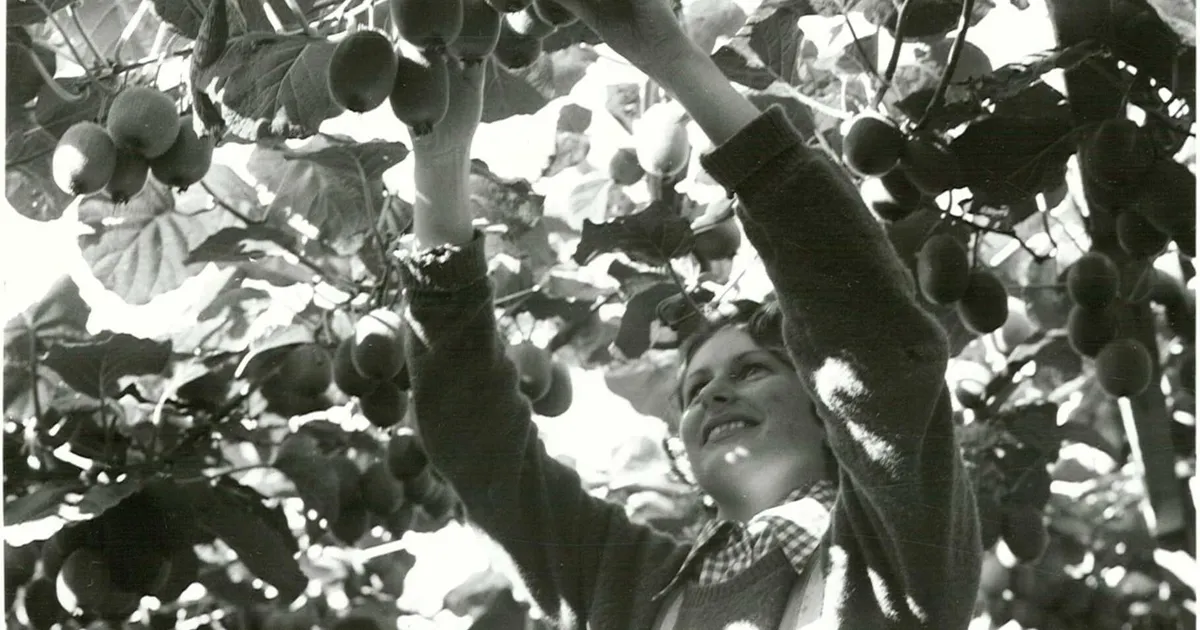
VentureFruit, the variety-commercialisation arm of T&G Global, has launched ADORE, a family of apples bred to handle hotter growing conditions. The headline is climate adaptation. The business story is better than that. New Zealand-origin genetics are being licensed into overseas orchards, and around 120 hectares are already signed up in Catalonia before a single commercial New Zealand block is in the ground.
That sequencing is worth understanding. Most climate stories are written as cost lines, such as compliance, emissions pricing and adaptation spend. This one is a revenue line.
Built for Spain’s heat, sold as a premium apple
ADORE was unveiled at Fruit Attraction in Madrid, the right stage for a product aimed at European regions where summers are already punishing traditional varieties. It starts with two apples, HOT03A1 and an unnamed variety that ripens four to six weeks earlier than standard fruit, with more in development.
The clever part is the umbrella brand. Rather than launching one variety and hoping it suits every climate, growers can choose the variety or mix that fits their heat profile and harvest window, all sold under one consumer name. That is how you build a brand that scales across hemispheres.
VentureFruit general manager Morgan Rogers is clear that heat tolerance on its own is not the pitch. “The climate resilience really is a grower-based benefit. But what we’re doing at the same time is making sure the fruit can compete with those super-premium and premium varieties around the world,” he says. The fruit was consumer-tested in Europe and Asia before launch.
That distinction matters. A hardy apple nobody wants to pay for is a science project. A hardy apple that sits on the premium shelf is an asset.
A market worth chasing
T&G frames the opportunity with hard numbers, a global premium apple market projected to grow from US$13 billion in 2025 to US$19 billion by 2030. IRTA, the Catalan public research institute that co-owns the breeding programme, says the Catalan plantings show immediate commercial traction in the regions most affected by warming.
The climate case is not new for VentureFruit either. Back in 2025, Rogers said the industry was seeing “constant reminders of the need for climate-resilient varieties” as intense weather hit production in both hemispheres. ADORE is the next product off a production line built on that thesis, not a reaction to a single bad season.
The licence is the product
No grower can simply plant ADORE. They need a licence for the genetics and the brand name. That is the engine. The Hot Climate Partnership, which brings together VentureFruit, IRTA and New Zealand’s Crown-owned Bioeconomy Science Institute, has been running since 2002. Two decades of patient breeding is now being monetised through royalties and exclusive plantings rather than shipped out as a one-off commodity sale.
The numbers suggested the model was turning a corner. In 2024, VentureFruit grew revenue 44 percent to $13.0 million while its operating loss narrowed to $4.3 million, down from $14.7 million in 2023. The same 2024 report showed earlier hot-climate apple TUTTI had reached 120 commercial hectares in Europe and a 300-hectare Latin American licence. ADORE is following the same playbook, only faster.
Why home orchards are second in line
The honest tension is that New Zealand growers are not first to benefit from New Zealand-bred genetics. Local trials exist, but the trees are young and Rogers says meaningful results are several years away.
That is less of a problem than it sounds. Hot-climate apples are, by definition, most valuable where it is already hot, and Catalonia is a far harsher test than Hawke’s Bay today. Licensing into those markets first earns royalties, proves the fruit commercially and builds consumer recognition before local growers need it.
And the home industry is hardly struggling in the meantime. Apple exports rose 29 percent to $1.259 billion in the year to November 2025, driven by both higher volumes and higher unit prices, inside a fruit export sector that topped $6.1 billion. A sector winning on price as well as volume is exactly where premium, protected varieties earn their keep.
What this means for business
For anyone thinking about where New Zealand’s next export dollars come from, ADORE is a useful template. It is weightless, it is protected, and it earns money in someone else’s orchard. It also shows public research and private commercialisation working together over a long horizon, which is rarer than it should be.
The test now is execution. Catalan fruit is expected to reach European shoppers over the next few years, and the market will decide whether the premium positioning holds. If it does, the warming climate becomes something New Zealand sells answers to, not just something it pays for. That is a far better trade.
Sources
- RNZ: VentureFruit launches family of apples bred to cope with hotter growing conditions (2026-10-07)
- IRTA: Hot Climate Partnership presents ADORE, a global brand of premium apples featuring new varieties adapted to hot climates (2026-10-07)
- T&G Global: VentureFruit launches ADORE apples, a global premium programme uniting new climate-resilient varieties under one brand (2026-10-07)
- Fruitnet: More climate-resilient fruit varieties will be required in future says Tutti developer VentureFruit (2025-10-08)
- T&G Global 2024 Annual Report (2025-03)
- Stats NZ: Fruit exports surpass $6 billion for the year ended November 2025 (2025-12-19)
Join the discussion
Add useful context, ask a good question, or challenge an idea — keep it specific and respectful.