

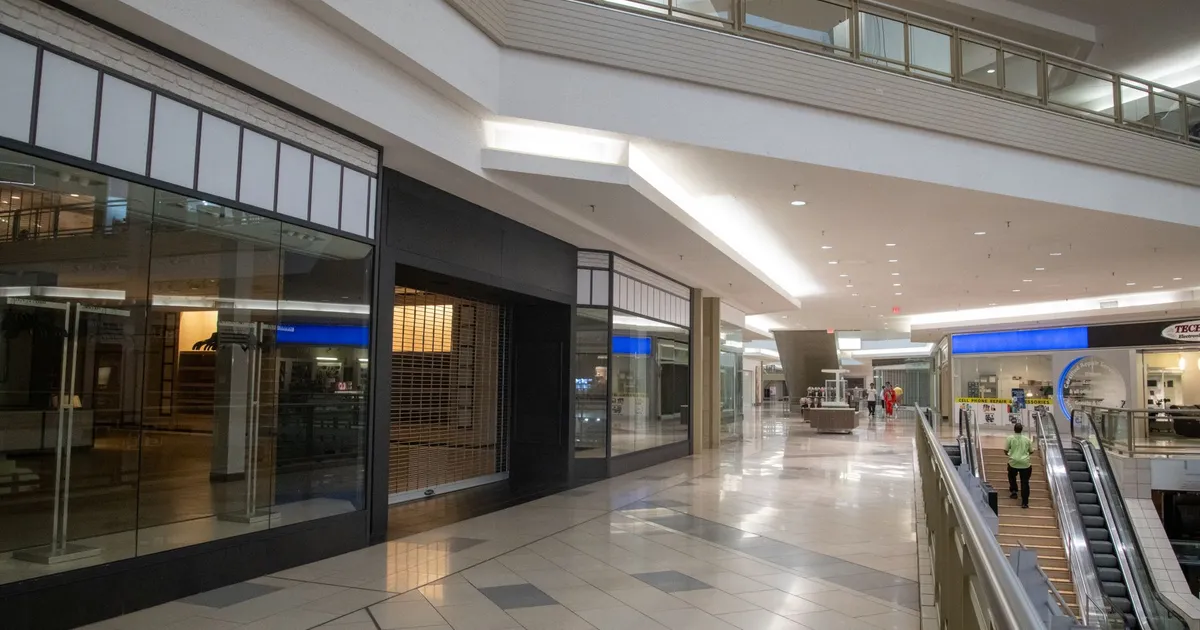
A retail empire that was really 33 companies
The collapse of the Yoyoso, Miniso and Acecco retail chains looks, at first glance, like another casualty of a brutal year for physical retail. It is much more than that. According to the NZ Herald’s investigation published on 8 August 2026, at least 33 companies linked to directors Lin Liu and Qin Ding have gone into liquidation or receivership, almost all in the final months of 2025, with total debts across the network exceeding $61.7 million and more than $33 million owed to external creditors.
The pair held more than 60 land titles personally or through companies, almost all in Auckland, and at least 10 have already been sold by mortgagee sale. Yoyoso operated a prominent two-storey store on Queen St and a branch at Sylvia Park. To a commercial landlord, a tenant like that reads as substance. In reality it was one node in a sprawling, heavily leveraged network that was quietly falling apart.
The lease was with the entity, the risk was with the network
This is the part that should worry anyone leasing commercial space. A landlord who signed with “Yoyoso Sylvia Park Limited” had a contract with a single company. The risk sat with the entire structure behind it. When the High Court placed ANCZ Limited, the parent of 23 entities, into liquidation on 17 December 2025, liquidators Keaton Pronk and Steve Farquhar of McDonald Vague estimated unsecured creditors might receive zero cents in the dollar. Eight stores were still trading when they were appointed.
On 12 January 2026, a NZ Gazette notice formally listed 30 companies entering liquidation, spanning 13 Yoyoso entities, six Miniso entities, three Acecco entities and related companies. Weeks earlier, China Construction Bank (NZ) had appointed Grant Thornton receivers to Yoyoso Main Store Limited after Acecco Holdings failed to repay $2.95 million under a security deed.
None of this was hidden. The Companies Office register is free and publicly searchable. A director search on either Lin Liu or Qin Ding would have revealed the full portfolio of company roles, including entities already in trouble. BusinessDesk’s reporting documented how Lin Liu’s trail of debt across multiple entities illustrated exactly this kind of director concentration risk.
Where landlords rank when the music stops
When a tenant fails, a landlord’s claim for future rent is a contingent, unsecured claim. It sits behind secured creditors like the banks and preferential creditors like Inland Revenue and employees. In the ANCZ liquidation, preferential creditors were owed $131,654, including $107,871 to IRD, while unsecured creditors were told to expect nothing.
Tax arrears are the warning sign landlords rarely see. Earlier NZ Herald reporting estimated the two main entities owed IRD $1.09 million through failure to account for tax, while RNZ put the Yoyoso group’s exposure at around $940,000 in GST, PAYE and payroll deductions. Those figures were accumulating well before the formal collapse.
Blame Temu if you like, but that is not the whole story
The convenient narrative is that budget physical retail selling cheap imported goods got crushed by online platforms like Temu. That structural pressure is real. But a $61.7 million failure across 33-plus companies, a property empire of 60-plus titles, mortgagee sales, and near-$1 million IRD non-compliance is not simply market disruption. It raises hard governance questions.
University of Auckland academic Benjamin Liu wrote in March 2026 that sections 135 and 136 of the Companies Act exist precisely to stop directors shifting downside risk onto “suppliers, employees and Inland Revenue once insolvency looms.” He noted corporate insolvencies had reached their highest levels in 15 years in 2025.
The wave is not over
This collapse sits inside a sustained insolvency surge. Retail NZ chief executive Carolyn Young noted in January 2026 that 61 stores across two national businesses announced liquidations or closures in the first 10 days of the year, adding that without rent reductions there would be more to come. McDonald Vague’s Pronk warned in January 2026 that appointments would stay elevated into the middle of 2026.
The practical lesson is cheap and immediate. Before signing a lease, search the directors, not just the brand. Look for IRD arrears, look for the parent structure, and assume that a flashy fit-out tells you nothing about the balance sheet behind it. Property held by a tenant’s directors is not proof of substance if that property is itself leveraged and heading for a mortgagee sale.
Sources
- Yoyoso, Miniso and Acecco collapse: The $61m fall and mortgagee sale at the centre of it (2026-08-08)
- Yoyoso group liquidation: Supermarkets, retail stores put into liquidation with millions owed
- Yoyoso parent Acecco in receivership with $11.6m debts, repayments unlikely
- ANCZ LIMITED and related companies in liquidation (2026-01-12)
- YOYOSO MAIN STORE LIMITED in receivership (2025-12-22)
- Yoyoso, Miniso in liquidation – Temu gets the blame again
- Lin Liu, director of liquidated Yoyoso/Miniso, leaves debt trail
- Insolvency spikes put company law in spotlight (2026-03-12)
- Liquidations, rents and the ‘disappointment gap’ holding back Kiwi retail (2026-01-29)
- 61 shops announce closures in 10 days: Will liquidation numbers get worse before they improve? (2026-01-10)