

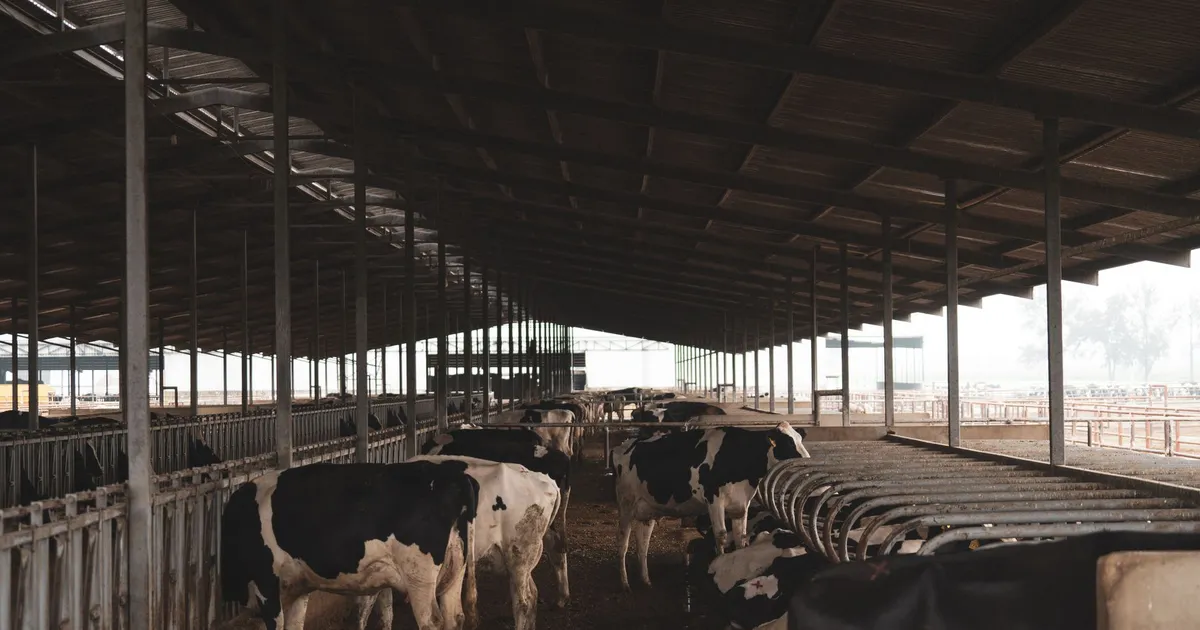
Environmental compliance on dairy farms used to sit somewhere between the effluent pond and the filing cabinet. It now belongs on the balance sheet. Penalties under the Resource Management Act can reach seven figures, and the law bars insurers from paying them. Farmers, lenders and corporate dairy operators should be treating effluent infrastructure as a capital risk, not a chore.
Three days of neglect, $97,500
The first Waikato test of the new regime landed on a modest operation. Wayne Maurice Clarke was convicted and fined $97,500 for discharging dairy effluent on his 170-cow, 70-hectare farm at Te Kowhai, near Hamilton. Council officers who inspected the farm in September 2025 found effluent ponding on saturated soils. The bladder storage system was inadequate. Irrigation ran unmonitored for three days while the manager was off, and the owner did not check it despite wet weather.
Judge Melinda Dickey called the conduct “highly careless”. Waikato Regional Council investigations team leader Evan Billington said the breach was “entirely avoidable” after decades of ownership without enough investment in effluent systems. He said the fine “in part reflected the increase in the penalties”, adding that “it’s now gone up to a million dollar fine or 18 months imprisonment”.
Parliament finally caught up with 1999
The Resource Management (Consenting and Other System Changes) Amendment Act 2025 passed in August 2025. It was the first review of RMA maximums since 1999. According to the Ministry for the Environment, the Act lifted the individual maximum from $300,000 to $1 million and the company maximum from $600,000 to $10 million. That makes corporate exposure close to 17 times higher than before.
Instant fines rose as well. From September 2025, the revised infringement schedule set $1,500 for individuals and $3,000 for companies for discharging contaminants into water. In 2025, Otago Regional Council noted that one fee had risen 900%, from $300 to $3,000. It also cited a 2023 ministry review which found the old fees were often lower than the cost of complying in the first place.
That last point justifies the whole reform. When breaking the rules costs less than following them, the rules only bind people who would have behaved well anyway. The farmers who invested properly in storage were effectively subsidising those who didn’t. Speaking for the regional sector in 2025, Te Uru Kahika’s Gina Ferguson said the changes “support the polluter pays principle”. That is a fair description, and a sound one.
The insurer can’t write the cheque
The higher ceilings drew the headlines. The more important change got less attention. The reform made it unlawful for insurance to indemnify the penalty itself, although defence and remediation costs remain insurable. A poor compliance history can also now count against future consent applications.
In 2025, Waikato Regional Council’s then-compliance manager Patrick Lynch put it bluntly. Farmers would learn they “just can’t run that risk” because “there’s no insurance companies to bail them out”. He also said some farmers were “dragging their heels” on infrastructure. His council oversees roughly 3,700 dairy and forestry operations.
An uninsurable fine comes straight out of farm equity. For a family farm already carrying debt, a six-figure penalty can compete directly with the next interest payment.
A higher ceiling, no clear floor
The government deserves criticism here. Parliament raised the maximums sharply but did not set a sentencing framework to scale penalties to the size of the offender. Insurance law firm Wotton Kearney notes that starting points for small commercial operators used to range from $50,000 to $100,000. It says recent cases show prosecutors seeking a 10-fold uplift on those ranges.
Clarke’s $97,500 sits at the top of the old band. That suggests courts are increasing penalties gradually rather than jumping to seven figures for first prosecutions. But a single data point is not case law. Until the courts settle a scale, a 170-cow family operation and a corporate milking platform face the same unknown range. Uncertainty like that makes compliance planning harder, even for operators acting in good faith.
Lenders should be asking about the pond
For banks financing farm purchases and conversions, effluent storage capacity and compliance history are now credit questions. A borrower’s insurance policy no longer protects the lender from an RMA penalty. Equity partnerships and farming companies face the $10 million company ceiling, so investors and directors should expect harder due diligence. Insurers will still price defence and remediation cover, and they have good reason to look closely at the infrastructure behind it.
The practical response is not complicated. Farmers need adequate storage, monitoring that doesn’t stop when the manager takes a day off, and a paper trail showing both. That work costs money, though usually far less than a prosecution.
Clarke’s case sets the price of moderate, avoidable carelessness at under $100,000, for now. The first serious or repeat breach by a corporate operator will show where the new scale really tops out. Farmers who wait for that ruling before upgrading their effluent systems are carrying a risk no insurer is allowed to cover.
Sources
- RNZ: Environmental breaches on dairy farms leading to bigger fines (2026-11-02)
- RNZ: Waikato Regional Council hopes for fewer RMA breaches amid ‘enormous’ new fines (2025-09-03)
- Ministry for the Environment: Compliance and Enforcement – Resource Management (Consenting and Other System Changes) Amendment Act 2025 (2025-08-20)
- Otago Regional Council: Fines for environmental breaches rising from Sept (2025-12-12)
- Scoop: Stronger RMA Infringement Regime Starts Today (2025-09-04)
- Wotton Kearney: New $10 million environmental fines – What dairy farmers and SMEs need to know (2026-08-14)
Join the discussion
Add useful context, ask a good question, or challenge an idea — keep it specific and respectful.