

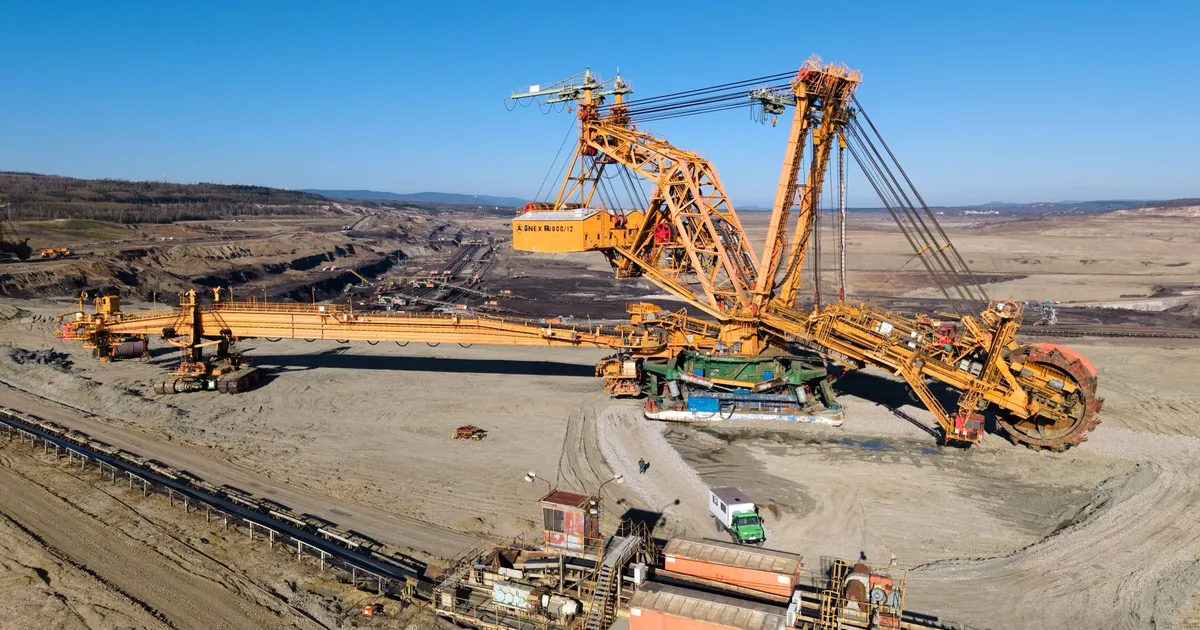
Allan Blood wants two things from New Zealand. The first is permission to build a coal-to-fertiliser plant in Southland. The second, according to official documents, is a guarantee that no future government can take that permission away. The first is a fair ask of a fast-track system built to back big investment. The second is not, and how the system handles the difference will tell business a great deal about what fast-track consenting actually is.
A dinner ticket and a request for insulation
Blood, the 73-year-old Perth-based executive director of Victorian Hydrogen, bought a $2,000 ticket to a NZ First fundraising dinner last month specifically to discuss his project with Resources Minister Shane Jones. Newsroom puts the price tag at $3.7 billion and reports Blood is happy to pay for access to Labour and other parties’ fundraisers too. The plant would sit behind the Tiwai Point smelter.
That is the kind of access buying New Zealand tolerates. What came next is not. Over nine months, Blood repeatedly raised with Jones’s office the idea of a special state agreement, with handwritten meeting notes recording phrases including “protect from change of government” and “to protect investment”. He suggested financing could hinge on such protection and claimed these deals are standard in Australia.
Jones deserves credit for his answer, “we’re not Venezuela”, and Blood says the idea never went beyond preliminary talk. But The Press also notes that on a roughly 90-day statutory timeframe, any fast-track decision would likely land with the next government. The whole exercise is aimed squarely at outlasting the electoral cycle.
The fertiliser case is not nonsense
Strip away the lobbying and there is a genuine problem here. New Zealand imports 500,000 tonnes of urea a year and makes 265,000 tonnes domestically, and falling gas supply means local production may end altogether. For an economy built on pastoral exports, that is a real supply-chain vulnerability.
Victorian Hydrogen says its plant would produce 1.5 million tonnes of urea a year, enough to make the sector self-sufficient, using technology Blood says is already running in Zambia. Note the numbers drift: in April the project was pitched at $3 billion, not $3.7 billion. A 23% jump before a single study is finished is worth watching.
Southland Business Chamber chairman Chris Hughes calls it “a potentially transformative opportunity for Southland”, with substantial work across engineering, construction, transport and maintenance. He is right to want it tested seriously.
The environmental bill is just as real
The feedstock is lignite, the lowest grade of coal. Subsidiary Pacific Fertilisers has applied for an exploration permit covering 3,161 hectares bordering the Awarua-Waituna wetland, one of the country’s largest remaining wetland complexes, and plans to mine about 3.5 million tonnes a year. Blood has said he achieved more here in months than in years in Victoria, where he spent over $40 million before walking away.
That is precisely the profile that demands a rigorous, visible assessment rather than a quiet one.
Fast-track works when it looks boring
The model itself has a decent record. Under the Covid-era regime, 168 projects were lodged and 108 referred between 2020 and 2023, with applicants reporting an average saving of 18 months against standard consenting. When the current regime opened in 2024, it drew 392 applications, with 199 recommended for the most streamlined pathway, including ten mining and quarrying projects such as Te Kuha coal near Westport.
The design depends on ministers referring projects to an expert panel for assessment. That panel is the legitimacy engine. Its independence is what lets a pro-growth government argue that fast-track speeds decisions without rigging them.
Certainty is earned, not negotiated
Here is the irony for Blood. The only durable protection against a hostile future government is a consent so well-evidenced that nobody can credibly claim it was bought. Asking for a bespoke shield, after paying for dinner with the responsible minister, does the opposite. It hands every opponent of fast-track a ready-made story, and puts at risk the hundreds of ordinary projects queued behind him.
Investors do need regulatory stability. New Zealand provides it through courts, clean process and rules that apply to everyone, not side letters for well-connected applicants. If this project stacks up, it should win on the numbers in front of an expert panel. If it needs political immunity to get financed, that tells you something about the numbers.
Victorian Hydrogen has yet to formally lodge for fast-track. When it does, the next government will inherit the decision, and the rest of the business community will be watching whether the process looks like an assessment or an auction.
Sources
- Newsroom: Political donor to seek fast-track approval for $3.7b coal-to-fertiliser project (2026-09-27)
- The Press: Coal developer sought deal to shield $3b project from future governments (2026-09-28)
- RNZ: Australian company plans $3b lignite-to-fertiliser plant in Southland (2026-04-22)
- Carbon News: Planned coal mine borders internationally significant wetland (2026-04-22)
- Otago Daily Times: $3b fertiliser plant proposed (2026-04-22)
- Ministry for the Environment: Programme Report 2020/2023 – COVID-19 Recovery Fast-track Consenting (2023-09-06)
- Ministry for the Environment: Fast-track Projects Advisory Group Report to Ministers (2024)
Join the discussion
Add useful context, ask a good question, or challenge an idea — keep it specific and respectful.