


U.S. inflation climbed to 3.8% in April, reaching its highest level in nearly a year, as rising energy and food prices continued to place renewed pressure on households across the country.
The latest consumer price index data showed a clear acceleration from 3.3% in March, pointing to a broad increase in the cost of living rather than isolated price shocks. Consumers faced higher prices for everyday essentials, with fuel and groceries among the most significant contributors to the uptick.
According to the U.S. Bureau of Labor Statistics, almost half of the monthly increase was driven by higher energy costs, while housing and food also added to the upward pressure. Economists said the data suggested inflationary forces remain embedded across multiple parts of the economy.
Energy markets have been unsettled in recent weeks by geopolitical tensions involving Iran, including disruption to shipping routes through the Strait of Hormuz, a vital corridor for global oil supplies. The resulting rise in crude prices has fed through quickly to domestic fuel costs in the United States, pushing petrol prices higher nationwide.
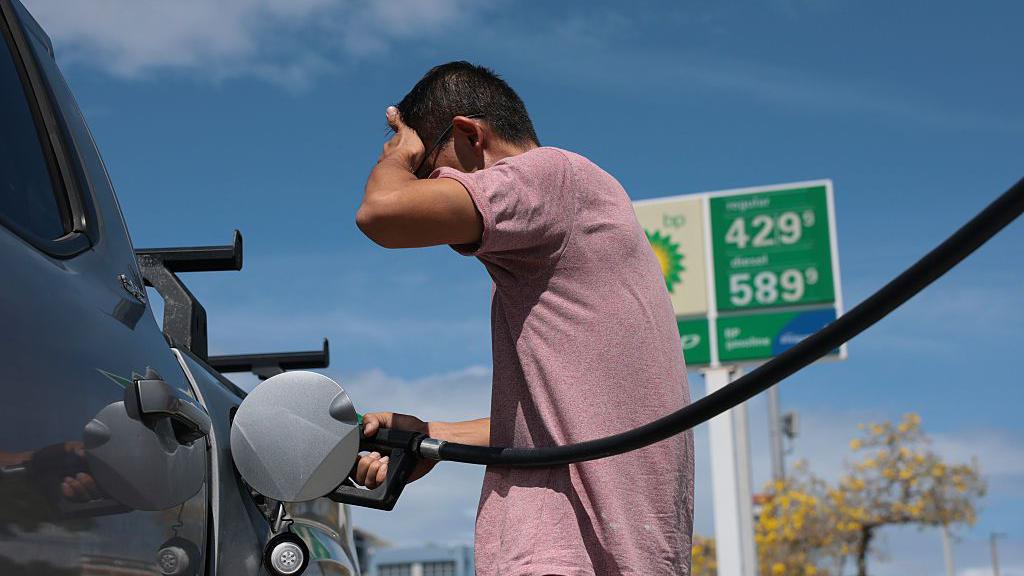
Motorists are now paying an average of $4.50 per gallon for regular unleaded fuel, the highest level since July 2022, according to industry data. The increase has also lifted transport and distribution costs, adding further pressure to prices across goods and services.
The stronger-than-expected inflation reading has complicated the outlook for U.S. monetary policy. Expectations of interest rate cuts later this year have eased, with some analysts suggesting the Federal Reserve may have less room to relax policy if price pressures persist. In some scenarios, further rate increases are now seen as a possibility.
Isaac Stell, an investment manager at Wealth Club, said the latest figures leave policymakers with limited flexibility, adding that inflation risks have put potential rate rises “firmly on the table.”
The report also comes at a politically sensitive moment ahead of a leadership change at the U.S. central bank, with Kevin Warsh expected to succeed Jerome Powell as chair. Analysts expect the incoming leadership to inherit a challenging economic environment, with inflation still above target and growth uneven.
Stell said the new chair would have “little room for manoeuvre,” reflecting the difficult balance between controlling inflation and supporting economic activity.
The inflation data is likely to intensify political debate ahead of the upcoming midterm elections, where the cost of living remains a key issue for voters. President Donald Trump has previously made reducing inflation a central promise of his economic agenda, and he described the latest increase as “short-term,” while arguing that attention should remain on preventing Iran from developing nuclear weapons.
He also noted that inflation remained below its peak under Joe Biden, when it reached 9.1% in mid-2022.
Markets reacted negatively to the report, with major U.S. indices falling in early trading as investors reassessed the likelihood of sustained high rates. The S&P 500 slipped 0.6%, while the Dow Jones Industrial Average fell 0.7%.
Elsewhere in the data, air fares and clothing prices rose over the year, while new car prices recorded a slight decline. Airline tickets saw one of the sharpest increases, driven by higher jet fuel costs that carriers have increasingly passed on to customers.
Wage growth also lagged behind inflation for the first time in three years, with average pay rising 3.6%, compared with the 3.8% increase in prices, suggesting that real incomes may once again be under pressure.