

Sold out, then more expensive
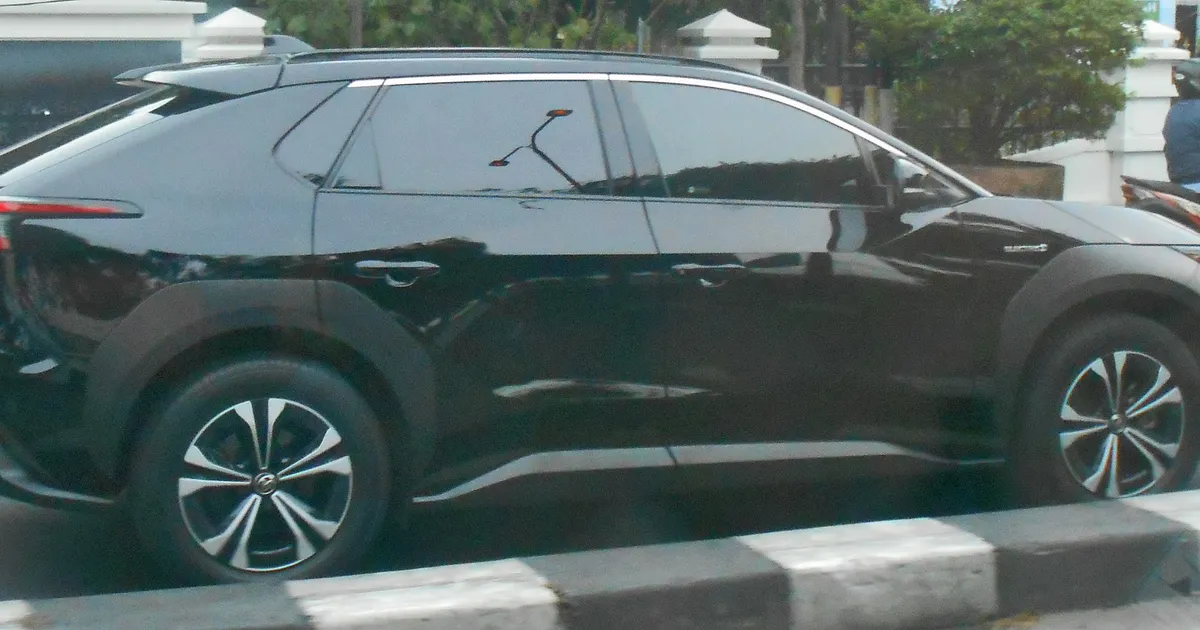
Toyota New Zealand has just done something that tells you exactly where the EV market has moved. After selling out its entire updated bZ4X allocation within weeks of the model landing in dealerships last month, it raised prices across the range by $2,000. The entry-level bZ4X Pure now starts from $58,990 drive away, with the flagship Touring at $71,990. New orders for the standard bZ4X will not be filled until early 2027.
Toyota was candid about what happened. “With the rapid increase in petrol prices due to global events, as many brands found, interest and sales of EVs increased,” the company said, noting it had sold “four months of stock in a few weeks”. It also conceded it cannot promise more, because “Toyota Motor Corporation needs to allocate stock accordingly” across markets all chasing the same vehicles.
Don’t read the price rise as a retreat on affordability. The original bZ4X launched in NZ in 2024 at $72,990 for entry-level. Even after the increase, the updated model is roughly $14,000 cheaper. The $2,000 bump is a demand signal, not a reversal.
The demand is real and it is accelerating
This is no longer a niche market. New Zealand’s new vehicle market grew 13.5% year-on-year in June 2026, with 2,738 battery EVs registered in the month, up from 1,072 a year earlier. Electrified vehicles hit 38% of passenger registrations in June, the highest share since before the Clean Car Discount ended. Year to date, electrified vehicles made up 19.7% of passenger registrations, more than double the 9.2% of the first half of 2025.
Motor Industry Association chief executive Aimee Wiley said in July 2026 that “plug-in vehicles have continued to command a greater share of the market… against a backdrop of fuel supply concerns and increased model availability”. Tellingly, she noted much of the growth in BEV registrations came from private buyers, which means the fleet buying wave is still largely ahead of us.
Why the shelves are empty
The shortage was predictable, and predicted. Wiley warned back in April 2026 that “the pace of change had been faster than supply conditions could immediately accommodate” and that New Zealand is “a long lead-time market” where pipelines were set against subdued demand.
The root cause is straightforward. When demand cratered after the Clean Car Discount was scrapped, distributors slashed orders. EV imports fell 57% to $395 million in the year to June 2025, the trough that set up today’s squeeze. As the MIA put it, “the repercussions of distributors being far more cautious about EVs… will hang over their ability to supply going forward”. You cannot rebuild a pipeline overnight, and Toyota’s empty order books are the proof.
The fleet planning problem
Here is the bit that should worry any business running a vehicle fleet. The economics of switching to EVs are increasingly compelling on fuel and servicing costs. But the most trusted brand in the country cannot deliver its only battery-electric passenger car inside a normal replacement cycle. The bZ4X is Toyota’s sole full BEV here, and it accounted for just 1.6% of the brand’s H1 2026 sales – not because nobody wants it, but because there is none to sell.
A business deciding to electrify today faces three options: join the 2027 queue, pay up for whatever is available now, or keep the existing petrol and diesel vehicles running longer. The MIA flagged one competitive wrinkle worth noting – brands sourcing from Asia, particularly China, have “one of the least troubled stock replenishment arrangements”. For fleet buyers who need metal on the ground, that matters.
Toyota is at least widening the net. Its Hilux BEV has opened for pre-orders, pitched squarely at commercial operators with a 2,000kg braked towing capacity, and the bZ4X Touring is still tracking for a September or October 2026 arrival. But volumes will start small.
The demand question has been answered. When a credible brand brings a credible EV to market, buyers turn up in numbers that empty the lot. The unresolved question is supply, and it will not fix itself before 2027. Fleet managers waiting for the market to settle should stop waiting and start deciding which of the three bad options they can live with.
Sources
- Toyota bZ4X prices hiked as EV sells out in weeks, buyers face 2027 wait (2026-07-19)
- Toyota bZ4X prices hiked as EV sells out in weeks, buyers face 2027 wait (2026-07-20)
- NZ vehicle market undergoing structural changes, Toyota says (2026-07-03)
- Toyota widens its EV net with bZ4X Touring, Hilux BEV and Urban Cruiser on the horizon (2026-05-16)
- Passenger Vehicle Demand Leads New Vehicle Market Higher In June (2026-06)
- Electric vehicle imports lose charge as volumes drop (2025-07-22)
- EV demand will outpace supply (2026-04-03)
- MIA: EV momentum continues despite economic headwinds (2026-07-03)