

The bill that keeps growing
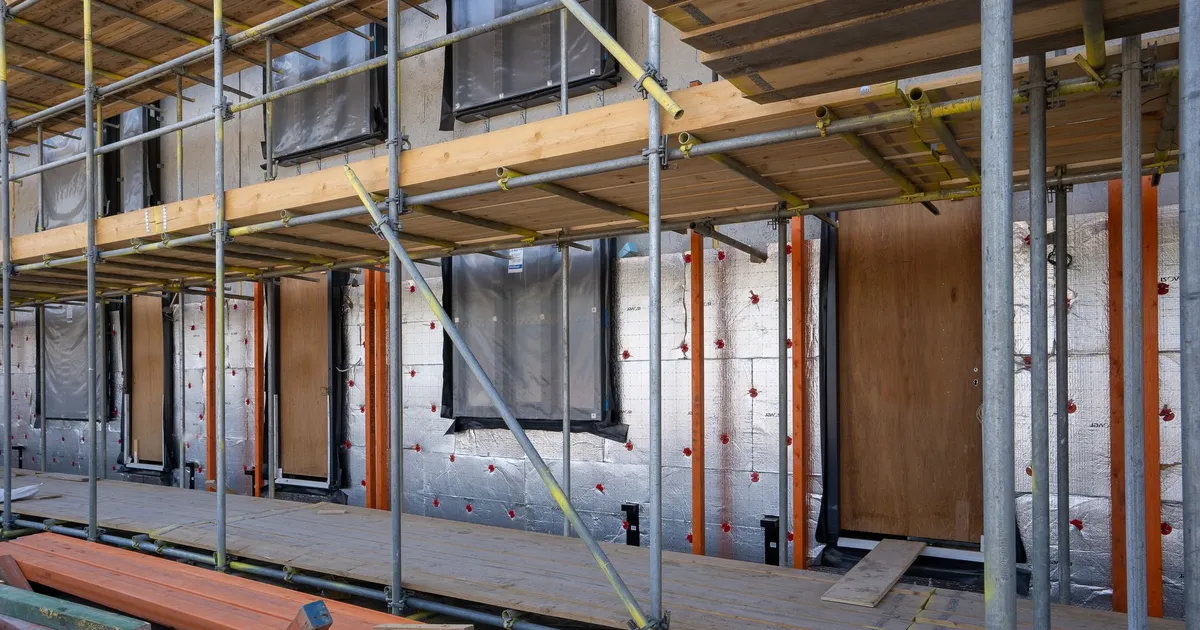
New Zealand’s biggest leaky building remediation has turned into a financial catastrophe for the people unlucky enough to hold the deeds. The repair budget at St Lukes Garden Apartments in Auckland has blown out from an original $85m estimate to more than $240m, nearly three times the figure owners were quoted when a $70m Auckland Council settlement was reached in 2019. Work on the 17-building, 285-unit complex is not expected to finish until mid-2027, more than a decade after leaks were first detected in August 2013.
The High Court has now appointed Deloitte as administrators to secure external finance and drag the project over the line. Body corporate levies alone can no longer cover it.
What it looks like at the coalface
The human cost is brutal. Kim Stewart, a 53-year-old owner, paid $355,000 for a three-bedroom apartment shortly before the leaks surfaced. She is now bankrupt, owes the bank close to $500,000 and owes the body corporate more than $700,000 in levies. The Official Assignee is expected to force a sale. “Your house is your safeguard. It’s your security for your children. And now I’ve got nothing,” she told the Herald. “I’ll never own a house again.”
She is not an outlier. Of the $240m budget, roughly $155m falls on current owners through levies. Around $27m of those levies is already in arrears, and recovery action has begun against owners who cannot pay. Earlier reporting put individual instalment invoices at between $135,000 and $196,000, with total per-unit remediation costs of $605,000 to $826,000.
The risk travels with the title
Here is the lesson for anyone in property, lending or insurance. Latent defect risk does not expire when the builders walk away. It attaches to whoever holds the title today, regardless of when they bought, what they paid, or whether they had anything to do with the original defective construction.
The builders are gone. The council settled. What is left is a nine-figure bill landing on people whose only mistake was buying an apartment. For lenders, that means a mortgage secured against an asset that is illiquid, depreciating in real terms and exposed to escalating levy calls that can bankrupt the borrower. For insurers, writing cover over a body corporate mid-remediation is a risk many simply will not take. And for investors, the message is unambiguous: apartment due diligence has to go well past the LIM into body corporate minutes, levy history, remediation status and any live litigation. Miss that, and you inherit the liability at settlement.
The reforms may make it worse
The timing is awkward for the Government, which is overhauling the Building Act. The centrepiece is a shift from joint and several liability to proportionate liability, alongside mandatory warranties on new work over $100,000.
The intent, cutting councils’ exposure as the deep-pocketed last man standing, is defensible on its own terms. The problem is what it does to owners. Under the current regime, an owner can pursue the council for the full amount even where the council was only partly at fault. Under proportionate liability, if the developer has collapsed, the owner may recover only the council’s share, potentially a fraction of the loss. Leaky building lawyers have warned this could leave New Zealand with “ghost buildings, abandoned by their owners as they couldn’t afford repairs”.
Warranties would fill the gap only if insurers show up to write them. The industry has signalled it will not offer blanket cover, and annual underwriting models sit uneasily against 10-year warranty commitments. Cap the council’s liability while the insurance market declines to backfill it, and the exposure does not disappear. It just lands harder on the title-holder.
MBIE’s own work has already found that in 17% of building defect cases, claimants recovered too little to cover their losses, an extrapolated $458m in unrecovered damage across the sector.
Not ancient history
The temptation is to file leaky buildings under early-2000s history. St Lukes says otherwise. This is a live case, with a Deloitte-run administration, $27m in arrears and repairs running years behind schedule. The era never ended. The only thing that changed is who pays, and under reforms now on the table, that burden is set to sit even more squarely on the people holding the keys.
Sources
- St Lukes Garden Apartments: Owners trapped by $240m leaky building repair nightmare (2026-08-07)
- St Lukes Garden Apartments owners lose leaky building conspiracy case, face $636k levy bill
- Leaky homeowners at St Lukes Garden Apartments face invoices of up to $195k after repair costs blowout
- Proportionate liability – changes coming to accountability for defective work
- Leaky home lawyers fear mandatory warranties on new builds won’t be enough to protect home owners
- Jury is out over whether homeowners will be left in the cold under Chris Penk’s building regime overhaul