

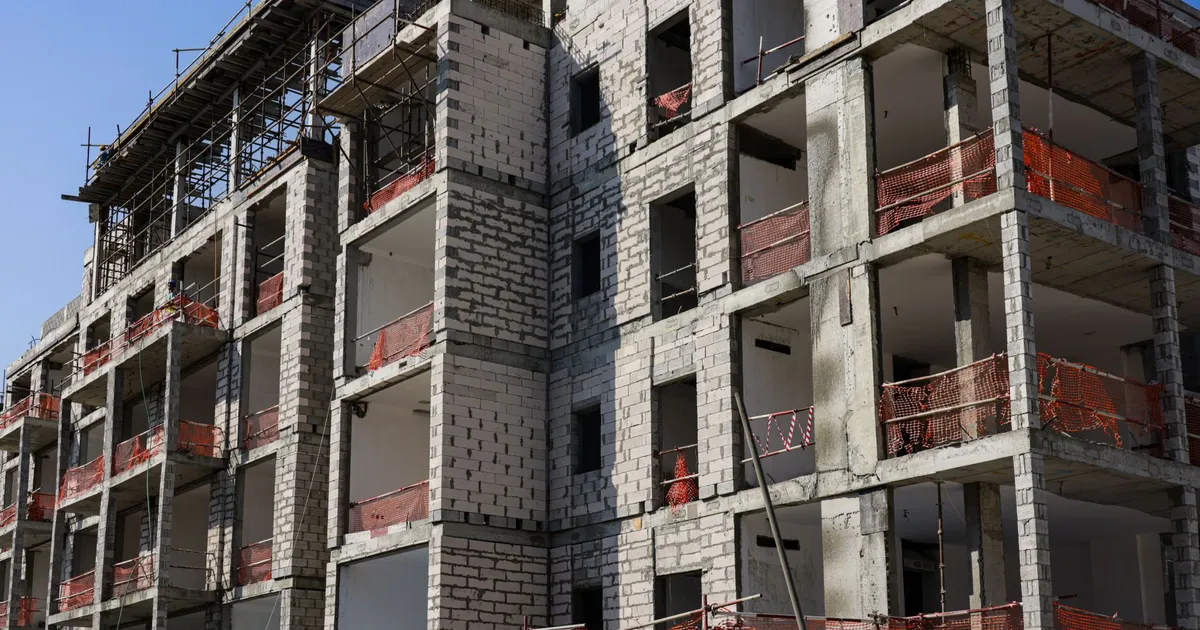
The frame stands, the finances didn’t
The Seascape tower on Auckland’s Customs Street East is a strange kind of ruin. The 56-storey, 221-apartment building was meant to be New Zealand’s tallest residential tower. The structural frame is up. The concrete is poured. And yet it has sat exposed to the harbour weather since construction halted in August 2024, a monument to what happens when a project’s money runs out before its building does.
There is finally a path forward. Bayleys is on track to name a preferred buyer by mid-September, after shortlisted bidders were given until 28 August 2026 to complete due diligence. But before anyone celebrates a rescue, the numbers underneath this tower deserve a hard look, because they carry a warning for every developer, lender and investor watching large residential projects.
Nearly double the project value in debt
The first receivers’ report, released in May 2026, laid it out. Total creditor exposure sits at $589 million against a project valued at $300 million. That gap, nearly twice the asset’s worth, is the whole story.
Break the creditor pool down and it gets more revealing. China Construction Bank, the secured primary lender, is owed $133 million, rising to $171.1 million once a separate Shundi project is included. Unsecured creditors are owed $71 million. Employees have preferential claims of $409,000.
But the number that matters most is the $372 million owed to related parties, intercompany obligations within the Shanghai-based Shundi group. That means the bulk of Seascape’s funding wasn’t arm’s-length lending at all. It was debt layered on debt inside one corporate family.
How a contractor dispute became a collapse
Here is why funding structure trumps everything else. In 2024, a tribunal ruled Shundi Customs owed main contractor China Construction NZ roughly $33 million. That debt was never paid. Work stopped. And a project carrying half a billion dollars in obligations, most of it internal, had no buffer to absorb a single disputed bill.
Covid delays and cost escalation pushed Seascape years past its 2021 completion target. But delays alone don’t sink a building. A financial architecture with almost no external shock absorption does. When the frame that mattered, the capital structure, gave way, China Construction Bank placed Shundi into receivership in March 2026. Calibre Partners took over.
The market still sees value
The genuinely good news is that the market disagrees with the doomsayers. Bayleys and Knight Frank launched an international sale campaign in April 2026, and by July 50 international and local groups had submitted bids. That is a serious field for a distressed, weather-exposed tower.
Bayleys managing director Mike Bayley moved to calm fears about the building’s state, telling RNZ that while exposure to the elements causes degradation, “it’s not as far reaching as some may have speculated”. Auckland deputy mayor Desley Simpson said the council is “backing a solution every step of the way” and wants a conclusion soon after the August deadline.
What a buyer actually inherits
Winning the bid is only the start of the spending. Remaining completion costs are estimated at between $120 million and $300 million, with Icon Construction reportedly bidding around $180 million to finish the job. The wide range reflects real uncertainty over saltwater degradation of steel reinforcing and whether curtain wall panels need wholesale replacement.
One live option is converting the tower into a hotel of 500-plus rooms, sidestepping the pre-sale apartment market entirely. The government’s 2024 amendments to the Overseas Investment Act, which streamlined consent for build-to-rent developments of 20 or more dwellings, may also smooth a foreign buyer’s path.
The 166 left waiting
Spare a thought for the roughly 166 buyers who paid 10% deposits, some $12 million in total, years ago. Their claims sit near the bottom of a creditor queue dominated by secured institutional lenders. Whether they get apartments, refunds or nothing depends entirely on what a new owner agrees to. On the current hierarchy, the purchase price flows almost entirely to the bank before anyone else sees a cent.
That is the lesson Seascape leaves on the waterfront. The concrete was never the problem. A single unpaid bill toppled a structure that was standing perfectly well, because the money behind it was built to fall. A preferred buyer by mid-September is realistic and welcome. But for anyone funding a large development on layers of related-party debt, the tower is a $300 million warning that construction risk is rarely what gets you.
Sources
- Buyer sought for unfinished Seascape tower on Auckland waterfront (2026-08-14)
- Creditors owed nearly $600m on Auckland’s Seascape tower (2026-05-11)
- Auckland’s 56-storey Seascape tower goes on the international market as receivers launch a sale campaign (2026-04-24)
- Fact sheet: Unlocking investment in housing – Amending the Overseas Investment Act 2005 to Support Investment in Build-to-Rent (2024-06)
Join the discussion
Add useful context, ask a good question, or challenge an idea — keep it specific and respectful.